Artificial intelligence (AI) servers continue to evolve toward higher computing density, increased power consumption, and more advanced cooling architectures. Modern GPU servers, high-performance computing (HPC) systems, and AI accelerator platforms integrate multiple high-power components within increasingly compact enclosures. As system complexity grows, mechanical structures are expected to support not only physical assembly but also thermal management, serviceability, and long-term operational reliability.
Among the materials commonly used for server chassis, aluminum remains an important engineering choice because it combines relatively low weight, good thermal conductivity, corrosion resistance, and manufacturing flexibility. Rather than functioning solely as a structural material, aluminum often contributes to the interaction between mechanical design and thermal management.
This article examines the thermal-mechanical role of aluminum in AI server chassis design and discusses how material selection influences structural performance, cooling integration, manufacturing, and system development.
Understanding the AI Server Chassis
A server chassis forms the mechanical foundation of an AI computing system.
Typical functions include:
- Supporting processors and accelerator cards
- Holding storage devices and power supplies
- Integrating cooling equipment
- Providing mounting interfaces
- Protecting internal components
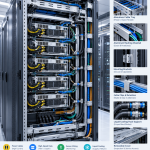
- Supporting cable routing
- Maintaining dimensional stability
As AI hardware becomes more powerful, chassis design increasingly influences overall system integration rather than simply serving as an enclosure.
Why Aluminum Is Commonly Used
Aluminum alloys have long been used in electronics, industrial equipment, and computing infrastructure.
Several engineering characteristics contribute to their widespread application.
Lightweight Construction
Aluminum has a lower density than steel while providing useful structural strength for many chassis applications.
Lower structural weight may contribute to:
- Easier equipment installation
- Reduced handling effort
- Improved modular assembly
- Simplified maintenance
Weight reduction can also become important when large numbers of servers are deployed within modular rack systems.
Thermal Conductivity
One of aluminum’s most important characteristics is its relatively high thermal conductivity compared with many structural materials.
Although a chassis is not intended to replace dedicated cooling devices such as heat sinks or cold plates, aluminum structures may assist by:
- Distributing localized heat
- Reducing thermal concentration
- Supporting heat transfer paths
- Providing stable mounting surfaces for cooling assemblies
Thermal performance depends on the complete system design rather than on material selection alone.
Manufacturing Versatility
Aluminum supports numerous industrial manufacturing processes, including:
- CNC machining
- Extrusion
- Sheet metal fabrication
- Die casting
- Precision drilling and milling
These manufacturing options allow engineers to develop customized chassis designs for different AI server platforms while maintaining production efficiency.
Thermal-Mechanical Integration
Modern AI servers increasingly require close coordination between mechanical engineering and thermal management.
Rather than treating these disciplines independently, many chassis designs integrate both functions from the early stages of development.
Supporting Cooling Components
AI servers commonly incorporate cooling hardware such as:
- Heat sinks
- Cold plates
- Liquid cooling manifolds
- Fans
- Air ducts
Aluminum chassis components provide stable mechanical interfaces that help position these cooling elements accurately.
Proper mechanical alignment contributes to consistent thermal contact and reliable assembly.
Managing Thermal Expansion
During continuous operation, AI servers experience temperature changes that may cause components to expand or contract.
Mechanical designers consider:
- Material properties
- Fastener locations
- Assembly tolerances
- Interface stability
Appropriate design helps maintain alignment while reducing unnecessary mechanical stress during thermal cycling.
Structural Support Under High Component Density
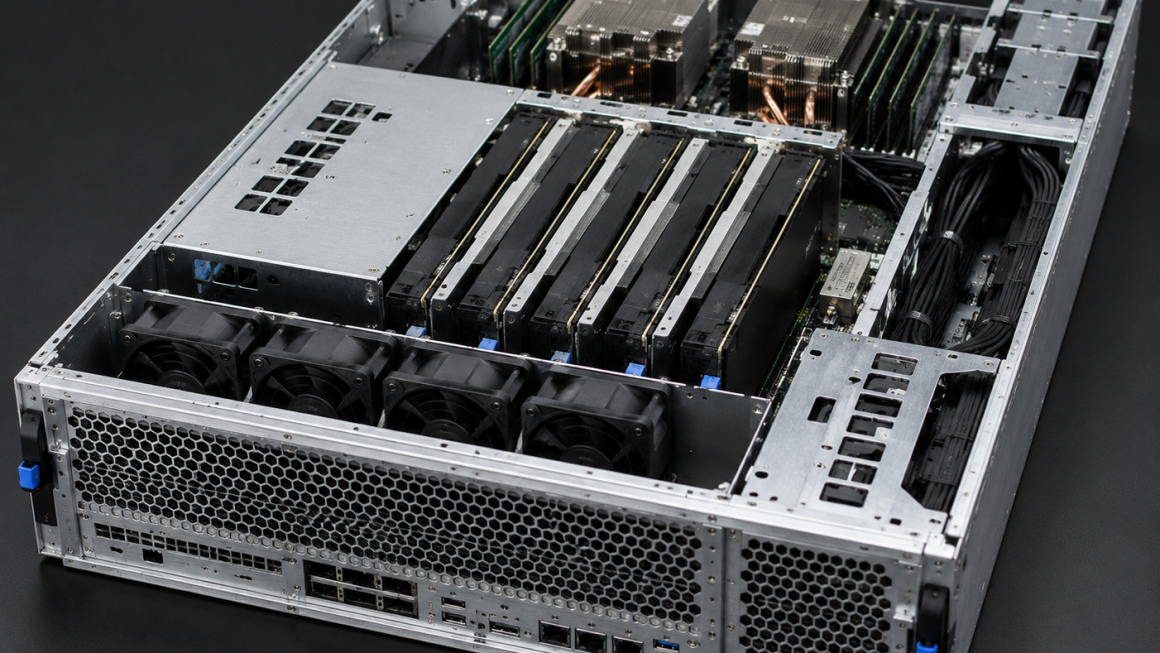
High-density GPU servers may contain:
- Multiple accelerator cards
- High-capacity memory modules
- Large power supplies
- Complex cooling systems
The chassis must maintain rigidity while supporting increased component weight and minimizing deformation.
Mechanical Design Considerations
Structural Rigidity
Mechanical stiffness contributes to:
- Component alignment
- Connector reliability
- Cooling interface stability
- Assembly accuracy
Engineers typically evaluate structural geometry alongside material selection to achieve the desired mechanical performance.
Accessibility and Maintenance
Data centers often require rapid maintenance and hardware replacement.
Mechanical design may therefore prioritize:
- Tool accessibility
- Modular assemblies
- Removable panels
- Service-friendly layouts
Aluminum fabrication methods can support these design objectives through precision machining and modular construction.
Cable Management
Modern AI servers contain large numbers of:
- Power cables
- Signal cables
- High-speed interconnects
- Cooling pipes
The chassis frequently incorporates dedicated routing channels and mounting features to improve organization and serviceability.
Aluminum in Air-Cooled and Liquid-Cooled Systems
Air-Cooled Servers
In air-cooled systems, aluminum chassis structures may support:
- Airflow channels
- Fan mounting brackets
- Heat sink attachment points
Mechanical layouts influence airflow distribution throughout the enclosure.
Liquid-Cooled Servers
Liquid cooling introduces additional mechanical requirements.
Examples include:
- Cold plate mounting
- Pipe routing supports
- Manifold brackets
- Sealing interfaces
Precision aluminum components are commonly used where accurate positioning and repeatable assembly are important.
Manufacturing Considerations
CNC Machining
Precision-machined aluminum parts are frequently used for:
- Prototype chassis
- High-performance server frames
- Cooling interface structures
CNC machining provides flexibility for customized or lower-volume production.
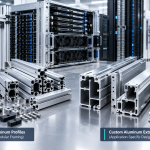
Aluminum Extrusion
Extruded profiles are often selected for:
- Modular server frames
- Structural rails
- Rack interfaces
Extrusion enables standardized cross-sections while allowing different lengths and assembly configurations.
Surface Treatment
Surface finishing methods may include:
- Anodizing
- Powder coating
- Protective conversion coatings
The appropriate treatment depends on application requirements, appearance, environmental conditions, and manufacturing objectives.
Design Challenges
Several engineering challenges influence chassis development.
Higher Power Density
Increasing processor power places greater demands on:
- Structural integration
- Cooling system compatibility
- Mechanical precision
Multi-System Integration
Mechanical structures must coordinate with:
- Thermal systems
- Electrical systems
- Networking hardware
- Power distribution
- Monitoring equipment
This requires multidisciplinary engineering during product development.
Manufacturing Scalability
Designs developed during prototype stages should also consider:
- Production feasibility
- Quality control
- Assembly efficiency
- Supply chain availability
Balancing customization with manufacturability is often an important engineering objective.
Future Trends
Several developments are expected to influence aluminum chassis design for AI infrastructure.
Integrated Structural-Thermal Design
Mechanical structures may increasingly serve both structural and thermal functions within a unified system architecture.
Hybrid Material Solutions
Future server chassis may combine aluminum with:
- Steel
- Engineering polymers
- Composite materials
- Thermally conductive composite panels
Each material may be selected according to its role within the system.
Modular Manufacturing
Modular aluminum structures may simplify product upgrades, maintenance, and future hardware expansion.
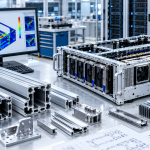
Digital Engineering
Simulation technologies such as:
- Finite element analysis (FEA)
- Computational fluid dynamics (CFD)
- Digital twin modeling
are increasingly used to evaluate structural and thermal performance before production.
Aluminum plays an important thermal-mechanical role in modern AI server chassis design. Beyond providing structural support, aluminum contributes to cooling integration, manufacturing flexibility, modular assembly, and overall system engineering.
As AI computing platforms continue to increase in complexity, successful chassis design depends on the integration of materials, mechanical engineering, thermal management, and manufacturing processes rather than on any single design factor.
Through careful engineering and application-specific material selection, aluminum structural systems continue to support the development of reliable and scalable AI server infrastructure.