
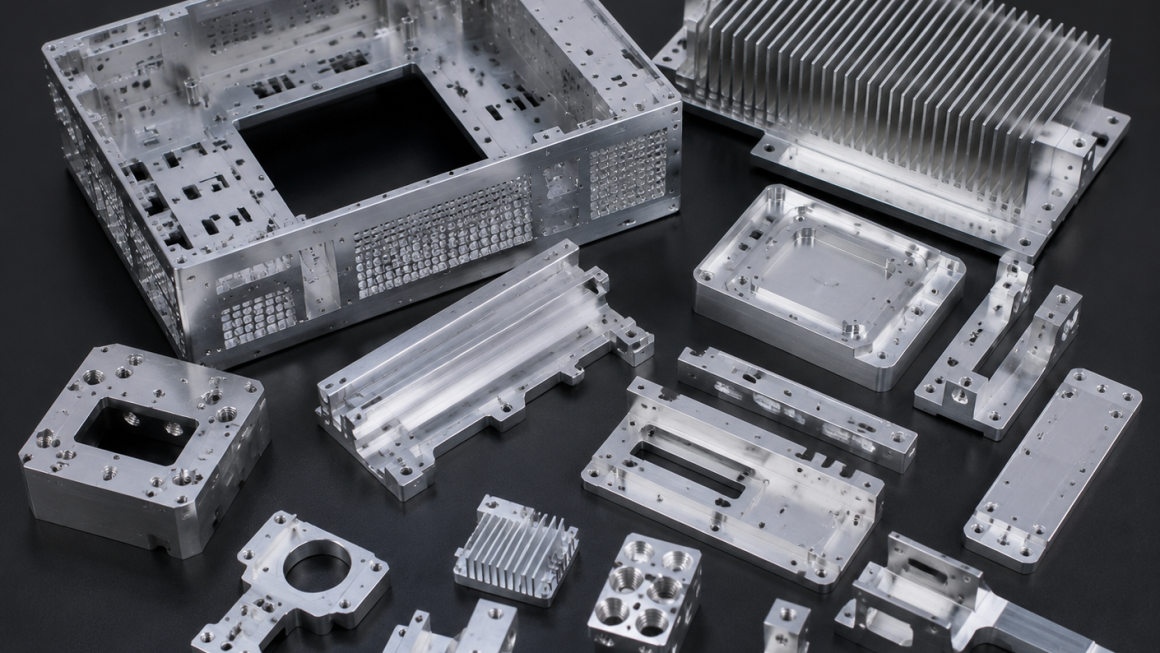
The development of artificial intelligence (AI) hardware has increased demand for precision mechanical components that can support high-performance computing systems. While processors, memory, and electronic components define computing capability, mechanical parts provide the foundation for reliable assembly, thermal integration, and long-term operation.
AI servers, GPU platforms, liquid cooling systems, and high-performance computing (HPC) equipment often require customized aluminum components with complex geometries, tight assembly requirements, and consistent manufacturing quality.
Precision CNC machining is one of the important manufacturing technologies used to produce these components. It enables manufacturers to create customized aluminum parts for applications where dimensional accuracy, mechanical stability, and design flexibility are important considerations.
This article explores the role of precision CNC machined aluminum components in AI hardware systems and discusses key engineering and manufacturing considerations.
The Role of Aluminum Components in AI Hardware
Modern AI hardware systems consist of many mechanical components that support electronic and thermal functions.
Typical aluminum components include:
- Server chassis parts
- GPU mounting brackets
- Heat sink bases
- Cold plate structures
- Cooling system supports
- Structural frames
- Precision mounting plates
- Equipment enclosures
- Cable management components
Although these components may not perform computing functions directly, they influence system assembly, thermal integration, and operational reliability.
Why CNC Machining Is Used for AI Hardware Components
CNC (Computer Numerical Control) machining provides a flexible manufacturing approach for complex aluminum parts.
Compared with conventional fabrication methods, CNC machining offers advantages in areas such as:
- Complex geometries
- Customized designs
- Rapid design modification
- Prototype production
- Small and medium production volumes
These characteristics make CNC machining suitable for AI hardware development, where product designs may continue to evolve during engineering validation.
Advantages of Aluminum for CNC Machining
Lightweight Structural Performance
Aluminum alloys provide a useful balance between:
- Low density
- Mechanical strength
- Manufacturing flexibility
This makes aluminum suitable for components where weight reduction and structural performance are both considered.
Applications include:
- Server frames
- Mounting structures
- Internal supports
- Cooling components
Thermal Management Compatibility
AI hardware increasingly faces thermal challenges due to higher power density.
Aluminum components may contribute to thermal system design through:
- Heat spreading
- Stable mounting surfaces
- Integration with cooling assemblies
For example, precision-machined aluminum parts may be used as structural supports around cold plates or thermal interfaces.
Actual thermal performance depends on the complete system design, including cooling method, interface materials, and operating conditions.
Manufacturing Flexibility
CNC machining allows engineers to produce parts with:
- Internal channels
- Precision holes
- Complex mounting structures
- Custom interfaces
This flexibility is valuable when developing application-specific AI hardware systems.
CNC Machined Aluminum Components in AI Applications
GPU Server Structural Components
High-density GPU servers require precise mechanical structures to maintain component alignment.
Examples include:
- GPU support brackets
- Accelerator card mounting plates
- Structural reinforcement parts
- Internal chassis components
Dimensional accuracy helps ensure compatibility between mechanical and electronic assemblies.
Liquid Cooling Components
Liquid cooling systems introduce additional requirements for mechanical precision.
CNC-machined aluminum parts may be used for:
- Cold plate structures
- Manifold components
- Pump mounting brackets
- Cooling system supports
Important considerations include:
- Surface quality
- Channel geometry
- Sealing interfaces
- Assembly compatibility
Thermal Management Components
Some AI hardware designs use aluminum components as part of thermal management assemblies.
Examples include:
- Heat sink bases
- Thermal spreaders
- Cooling brackets
Machining quality can influence contact surfaces and assembly consistency.
Precision Enclosures
Customized aluminum enclosures may provide:
- Mechanical protection
- Component mounting
- Electromagnetic considerations
- System integration support
Applications include edge AI equipment, industrial AI devices, and specialized computing platforms.
Key CNC Machining Considerations
Material Selection
Common aluminum alloys used in precision machining include different grades selected according to application requirements.
Selection factors may include:
- Strength requirements
- Thermal properties
- Machining performance
- Surface finishing requirements
The appropriate alloy depends on the specific engineering objectives.
Dimensional Accuracy and Tolerance Control
AI hardware components often involve multiple assembly interfaces.
Manufacturing considerations include:
- Drawing requirements
- Datum reference design
- Inspection methods
- Process stability
Tolerance requirements should be defined according to actual application needs rather than applying unnecessarily strict specifications.
Surface Treatment
After machining, aluminum components may receive surface treatments such as:
Anodizing
Common benefits include:
- Improved surface protection
- Enhanced durability
- Consistent appearance
Coatings
Additional coatings may be considered depending on:
- Environmental conditions
- Functional requirements
- Appearance requirements
From Prototype to Production
AI hardware development often follows several manufacturing stages.
Engineering Prototype
CNC machining is frequently used during early development because it allows:
- Fast design iteration
- Functional testing
- Assembly verification
Pilot Manufacturing
Before larger production, pilot manufacturing helps evaluate:
- Process consistency
- Quality control procedures
- Manufacturing efficiency
Production Scaling
For higher volumes, manufacturers may combine CNC machining with other processes such as:
- Aluminum extrusion
- Die casting
- Sheet metal fabrication
The optimal manufacturing approach depends on component complexity, production volume, and cost requirements.
Quality Control for CNC Aluminum Components
Quality management is an important part of precision manufacturing.
Typical inspection methods may include:
- Dimensional inspection
- Surface inspection
- Material verification
- Assembly testing
Depending on customer requirements, additional testing procedures may be considered.
CNC Machining Challenges for AI Hardware
Increasing Design Complexity
AI systems require increasingly integrated mechanical designs combining:
- Structural support
- Thermal management
- Electrical integration
This increases machining complexity.
Balancing Customization and Cost
Highly customized components may require additional engineering and production resources.
Manufacturers often evaluate:
- Design optimization
- Material utilization
- Production volume
- Process selection
to achieve practical manufacturing solutions.
Supply Chain Coordination
AI hardware projects often involve multiple suppliers.
Effective coordination between:
- Mechanical designers
- CNC manufacturers
- Material suppliers
- System integrators
helps improve development efficiency.
Future Trends
Integrated Mechanical and Thermal Design
Future AI hardware components may increasingly combine structural and thermal functions.
Examples include:
- Aluminum cooling structures
- Integrated heat spreading components
- Hybrid mechanical-thermal assemblies
Advanced Manufacturing Technologies
Emerging technologies may complement CNC machining, including:
- Automated machining systems
- Digital manufacturing workflows
- Advanced inspection technologies
Hybrid Material Integration
Future systems may combine aluminum with:
- Composite materials
- Engineering polymers
- Carbon-based materials
to achieve application-specific performance goals.
Precision CNC machined aluminum components play an important role in the development of AI hardware systems. Their value lies in providing accurate mechanical interfaces, supporting thermal integration, and enabling flexible product development.
From GPU server structures and liquid cooling components to customized enclosures and mounting systems, CNC aluminum parts support many aspects of modern computing infrastructure.
As AI hardware continues to evolve, successful manufacturing will depend on the combination of material knowledge, precision machining capability, quality control, and close collaboration between engineering teams and manufacturing partners.