The rapid growth of artificial intelligence (AI), cloud computing, and high-performance computing (HPC) is driving continuous expansion of data center infrastructure.
Unlike traditional computing environments, modern AI facilities require increasingly complex physical systems that support:
- High-density server deployment
- Large-scale power distribution
- High-speed network communication
- Advanced cooling architectures
As data centers expand, cable infrastructure must be designed not only for current requirements but also for future modifications and capacity increases.
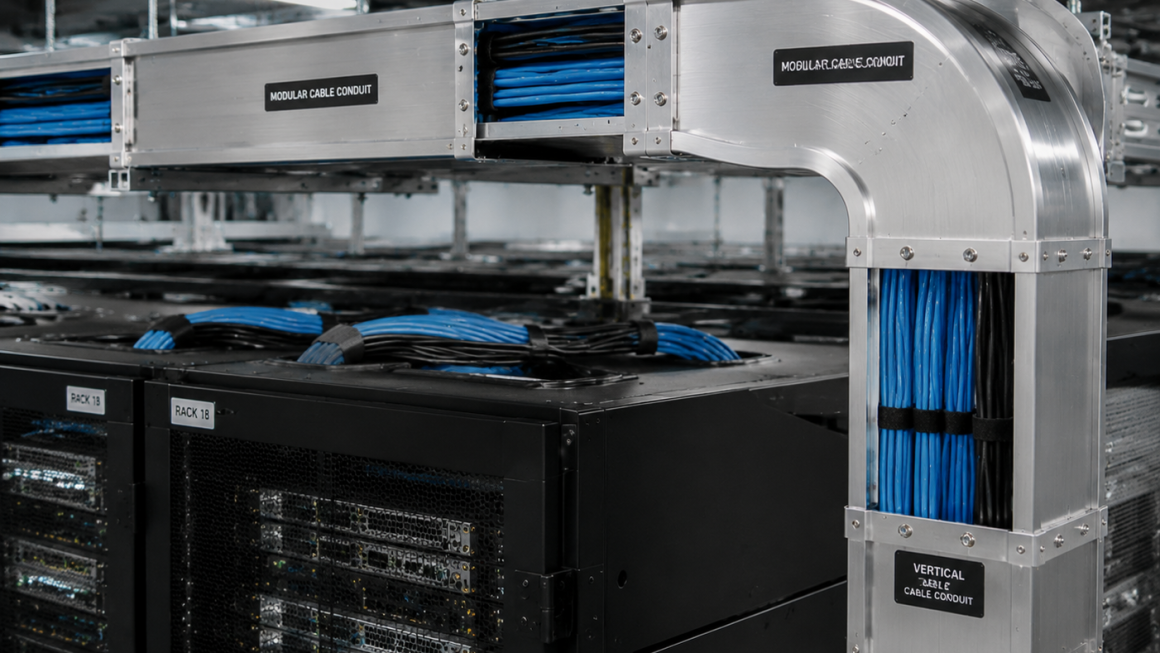
Modular cable conduit systems provide a structured approach for organizing, protecting, and routing cables while allowing infrastructure expansion with reduced disruption.
This article explores the design principles, structural requirements, material considerations, and manufacturing approaches for modular cable conduit systems used in modern data center environments.
The Role of Cable Conduit Systems in Data Centers
Cable conduits provide protected pathways for electrical and communication cables.
Typical functions include:
- Cable routing
- Mechanical protection
- Organization
- Separation of cable groups
- Support during installation and maintenance
In high-density AI environments, conduit systems become part of the overall physical infrastructure design.
They must coordinate with:
- Server racks
- Cable trays
- Power distribution systems
- Cooling infrastructure
- Facility layouts
Why Modular Design Matters for Data Center Expansion
Data centers are rarely static environments.
Infrastructure requirements may change due to:
- New server generations
- Increased computing capacity
- Additional networking requirements
- Facility expansion
A fixed cable infrastructure may require significant modification when equipment changes.
Modular conduit systems are designed to support more flexible deployment approaches.
Advantages of Modular Cable Conduit Systems
Flexible Installation
Modular systems allow infrastructure teams to configure cable pathways according to specific requirements.
Potential benefits include:
- Easier installation planning
- Reduced modification effort
- Improved organization
Easier Expansion
When additional equipment is installed, modular components may allow:
- Additional conduit sections
- New routing paths
- Modified cable layouts
without completely redesigning the existing structure.
Maintenance Accessibility
A well-designed modular system can support easier access to:
- Cable pathways
- Connection points
- Service areas
This is important for large-scale computing environments where maintenance efficiency is a key consideration.
Structural Requirements for Modular Cable Conduits
Mechanical Strength
Cable conduit systems must support the weight and movement of installed cables.
Design considerations include:
- Cable load
- Mounting method
- Support spacing
- Environmental conditions
Dimensional Stability
Data center infrastructure requires consistent component dimensions.
Important factors include:
- Connection compatibility
- Assembly accuracy
- Long-term structural stability
Protection Capability
Cable conduits may help protect cables from:
- Mechanical impact
- Abrasion
- Accidental contact
- Installation damage
The required protection level depends on the application environment.
Cable Types Supported by Conduit Systems
Power Cables
AI infrastructure requires significant electrical distribution capacity.
Cable conduit design should consider:
- Cable size
- Heat generation
- Installation space
- Maintenance requirements
Network and Fiber Cables
High-speed communication systems require careful routing.
Considerations include:
- Bend radius
- Connector protection
- Separation from power cables
Control and Monitoring Cables
Modern facilities include many monitoring and management systems.
Organized conduit routing can help maintain:
- Clear identification
- Easier troubleshooting
- Better system organization
Aluminum Modular Cable Conduit Systems
Aluminum is an important material option for customized conduit structures.
Potential applications include:
- Cable channels
- Protective covers
- Routing profiles
- Structural support components
Advantages of Aluminum in Cable Conduit Applications
Lightweight Structure
Aluminum provides a favorable strength-to-weight ratio.
Potential advantages include:
- Easier transportation
- Simplified installation
- Reduced structural loading
Custom Extrusion Capability
One of the key advantages of aluminum is extrusion manufacturing.
Custom profiles can incorporate:
- Internal cable channels
- Mounting grooves
- Reinforcement structures
- Connection features
This allows manufacturers to develop application-specific conduit designs.
Surface Protection
Aluminum components may use surface treatments such as:
- Anodizing
- Protective coatings
depending on environmental requirements.
Modular Connection Design
A modular conduit system requires reliable connection methods.
Possible approaches include:
Mechanical Fasteners
Advantages:
- Simple installation
- Easy replacement
- Flexible configuration
Snap-Fit or Clip-Based Systems
May support:
- Faster installation
- Reduced assembly steps
The appropriate method depends on structural requirements and application conditions.
Integrated Mounting Features
Extruded aluminum profiles can include:
- T-slots
- Mounting channels
- Attachment points
to simplify system integration.
Integration With AI Data Center Infrastructure
Rack Integration
Cable conduit systems may connect with:
- Server racks
- Rack frames
- Vertical cable managers
Cooling System Coordination
Modern AI infrastructure increasingly uses liquid cooling.
Cable conduit layouts should consider:
- Cooling pipes
- Manifolds
- Service access areas
The goal is to avoid interference between electrical and cooling infrastructure.
Facility Expansion Planning
Modular conduit systems can support phased deployment strategies.
For example:
Initial stage:
- Basic cable pathways
Expansion stage:
- Additional routing modules
Upgrade stage:
- Modified cable configurations
Manufacturing Considerations
Aluminum Extrusion
Extrusion is suitable for producing:
- Long conduit sections
- Cable channels
- Structural profiles
Benefits include:
- Repeatable geometry
- Custom design capability
- Efficient production
CNC Machining
CNC machining may be used for:
- Connection parts
- End brackets
- Precision interfaces
Fabrication and Assembly
Additional processes may include:
- Cutting
- Drilling
- Surface treatment
- Assembly
The manufacturing approach depends on product requirements and production volume.
Design Challenges
Increasing Cable Density
AI systems continue to increase:
- Power requirements
- Network complexity
- Cable quantity
Future conduit systems must balance:
- Space efficiency
- Protection
- Accessibility
Mixed Infrastructure Systems
Modern AI facilities combine:
- Electrical systems
- Cooling systems
- Mechanical structures
Cable conduit design must consider the complete infrastructure environment.
Standardization vs Customization
Standard components provide:
- Easier deployment
- Compatibility
Customized solutions provide:
- Optimized installation
- Application-specific designs
A balance between both approaches is often required.
Future Development Trends
Integrated Infrastructure Components
Future designs may combine:
- Cable routing
- Structural support
- Protection functions
into integrated systems.
Lightweight Modular Structures
Aluminum and advanced materials may continue to support lightweight infrastructure solutions.
Digital Manufacturing
CAD-based design and flexible manufacturing may enable:
- Faster customization
- Improved production consistency
- Shorter development cycles
Conclusion
Modular cable conduit systems provide an adaptable approach for managing cable infrastructure in expanding data center environments.
As AI computing continues to increase infrastructure complexity, cable systems must support not only current deployment requirements but also future modifications and upgrades.
Through appropriate structural design, material selection, and manufacturing capability, modular conduit solutions can contribute to more organized, maintainable, and scalable data center infrastructure.
Aluminum-based conduit profiles, customized extrusion solutions, and precision mechanical components represent potential opportunities for suppliers supporting next-generation AI infrastructure development.