

The rapid development of artificial intelligence (AI) infrastructure has significantly increased the complexity of electrical and communication systems inside modern data centers.
High-density AI servers require:
- Higher electrical power delivery
- Faster network communication
- Increased cable density
- More complex rack-level integration
As more electrical and communication components operate in close proximity, electromagnetic interference (EMI) and electromagnetic compatibility (EMC) become important considerations in cable infrastructure design.
Electromagnetic shielding is an engineering approach used to reduce unwanted electromagnetic coupling between cables, devices, and surrounding systems.
In AI infrastructure, shielding solutions are not only related to cable materials but also involve:
- Cable routing
- Structural components
- Grounding strategies
- Shielding materials
- Mechanical integration
This article discusses the role of electromagnetic shielding in AI system cable infrastructure and the design considerations for reliable implementation.
Why Electromagnetic Shielding Matters in AI Infrastructure
Modern AI computing systems contain multiple high-speed and high-power electrical pathways.
Examples include:
- Power supply cables
- GPU interconnects
- High-speed network cables
- Fiber communication systems
- Control wiring
These systems may operate in environments with complex electromagnetic conditions.
Potential sources of electromagnetic interference include:
- Power conversion equipment
- High-current cables
- Switching electronics
- Data transmission systems
Proper infrastructure design helps manage electromagnetic interactions between different systems.
Understanding EMI and EMC
Electromagnetic Interference (EMI)
EMI refers to unwanted electromagnetic energy that may affect the operation of electronic systems.
Interference may occur through:
- Conducted coupling
- Radiated coupling
Electromagnetic Compatibility (EMC)
EMC refers to the ability of equipment and systems to operate properly within their electromagnetic environment.
A well-designed AI infrastructure should consider both:
- Limiting unwanted emissions
- Maintaining system performance
Electromagnetic Shielding Principles
Electromagnetic shielding generally works by using conductive or magnetic materials to reduce electromagnetic energy transfer.
Common shielding approaches include:
- Reflection
- Absorption
- Grounding
- Structural isolation
The effectiveness of shielding depends on:
- Material properties
- Frequency range
- Shield geometry
- Connection quality
- System design
Cable Shielding Applications in AI Systems
Power Cable Protection
High-power AI racks require substantial electrical infrastructure.
Shielding considerations may include:
- Cable arrangement
- Separation distance
- Protective structures
Mechanical cable protection systems may also incorporate shielding functions.
High-Speed Data Cable Protection
AI clusters rely heavily on high-speed communication.
Examples include:
- Ethernet cables
- Optical modules
- Accelerator interconnect systems
Shielding design may help manage electromagnetic environments around sensitive communication pathways.
Control and Monitoring Cables
Data centers also contain many low-power signal cables.
These may require consideration of:
- Signal integrity
- Environmental interference
- Routing separation
Materials Used for Electromagnetic Shielding
Different materials provide different shielding characteristics.
Material selection depends on:
- Frequency range
- Mechanical requirements
- Weight considerations
- Manufacturing feasibility
Aluminum for EMI Shielding Structures
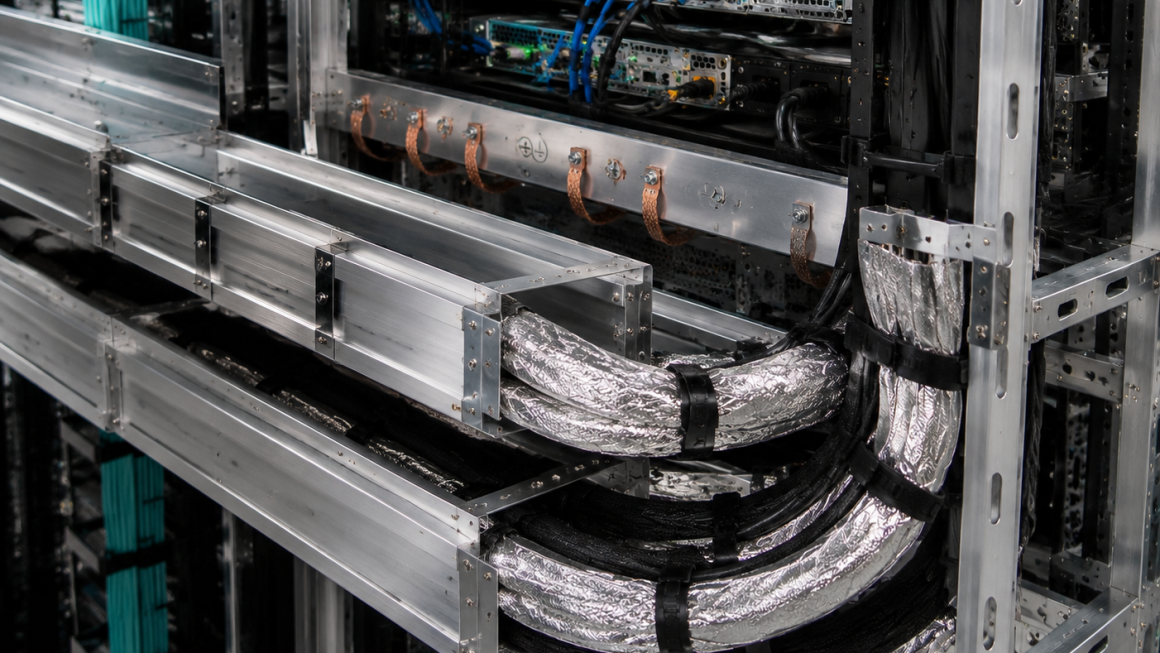
Aluminum is commonly considered for electromagnetic shielding applications due to its electrical conductivity and lightweight characteristics.
Potential applications include:
- Cable shielding channels
- Protective enclosures
- Rack components
- Structural shielding parts
Advantages of Aluminum
Lightweight Characteristics
Compared with some heavier metals, aluminum provides a lower-density option for infrastructure components.
Potential benefits include:
- Easier installation
- Reduced structural load
- Flexible system integration
Electrical Conductivity
Aluminum can contribute to shielding structures when properly designed and integrated.
Shielding performance depends on:
- Material thickness
- Geometry
- Connection quality
- Grounding design
Manufacturing Flexibility
Aluminum supports manufacturing processes such as:
- Extrusion
- CNC machining
- Sheet fabrication
This enables customized shielding structures.
Other Shielding Materials
Copper
Copper provides high electrical conductivity and is widely used in specialized shielding applications.
Potential considerations include:
- Higher material density
- Cost factors
- Mechanical requirements
Conductive Coatings
Some applications may use conductive coatings on:
- Polymer components
- Structural parts
- Protective covers
Performance depends on:
- Coating quality
- Surface preparation
- Application conditions
Composite Materials
Composite shielding materials may combine:
- Lightweight structures
- Conductive fillers
- Mechanical reinforcement
They may be considered for specialized applications requiring customized properties.
Structural Design Considerations
Electromagnetic shielding is not only a material issue. Mechanical design also plays an important role.
Important factors include:
Shielding Continuity
Gaps and discontinuities may influence shielding effectiveness.
Design considerations include:
- Connection points
- Seams
- Openings
- Fasteners
Cable Routing Design
Routing strategy affects electromagnetic interaction.
Considerations include:
- Cable separation
- Parallel cable length
- Crossing arrangements
- Grounding paths
Integration With Rack Structures
Shielding components must integrate with:
- Server racks
- Cable trays
- Aluminum frames
- Cooling systems
A practical design must balance:
- Shielding requirements
- Installation convenience
- Maintenance accessibility
Combining Mechanical Protection and EMI Shielding
Modern cable protection systems often require multiple functions.
A single component may need to provide:
- Physical protection
- Thermal management
- Electromagnetic shielding
Examples include:
- Aluminum cable channels
- Shielded cable covers
- Conductive protective sleeves
- Metalized flexible conduits
Integrated designs may reduce installation complexity.
Manufacturing Considerations
Aluminum Extrusion
Extrusion is suitable for:
- Shielding channels
- Cable guides
- Structural profiles
Advantages include:
- Custom cross-sections
- Consistent production
- Scalable manufacturing
CNC Machining
Used for:
- Precision shielding components
- Connection interfaces
- Mounting structures
Surface Treatment
Depending on requirements, aluminum components may use:
- Anodizing
- Conductive treatments
- Protective coatings
The selected treatment should consider both environmental durability and electrical requirements.
Testing and Validation
Shielding performance should be evaluated according to application requirements.
Possible evaluation methods may include:
- EMC testing
- Conductivity measurement
- System-level verification
Actual performance depends on complete system design rather than individual materials alone.
Challenges in AI Infrastructure Shielding
Increasing Power Density
Higher power systems may increase electromagnetic complexity.
Future designs must consider:
- More cables
- Higher currents
- More compact layouts
Space Constraints
AI racks have limited internal space.
Shielding solutions must balance:
- Protection performance
- Weight
- Installation space
Mixed Material Systems
AI infrastructure commonly combines:
- Aluminum
- Copper
- Steel
- Polymers
Engineers must consider:
- Electrical compatibility
- Mechanical interfaces
- Corrosion risks
Future Development Trends
Integrated Shielding Structures
Future AI infrastructure may combine:
- Cable management
- Mechanical protection
- EMI shielding
into integrated components.
Lightweight Shielding Solutions
Aluminum and advanced composite materials may support lighter infrastructure designs.
Customized Manufacturing
AI infrastructure suppliers may increasingly require:
- Custom profiles
- Precision shielding parts
- Application-specific designs
Flexible manufacturing capability will become increasingly important.
Electromagnetic shielding is becoming an important consideration in cable infrastructure for AI systems as computing density, power requirements, and communication speeds continue to increase.
Effective shielding requires a combination of:
- Appropriate materials
- Structural design
- Cable routing strategies
- Grounding considerations
- System validation
Aluminum-based shielding structures, customized cable channels, and integrated protection solutions provide potential approaches for supporting next-generation AI infrastructure.
Rather than relying on a single material or component, successful electromagnetic management requires coordinated engineering across the entire physical infrastructure system.