The rapid growth of artificial intelligence (AI) computing has significantly increased the thermal management requirements of modern data centers. High-performance GPUs, AI accelerators, and advanced computing systems generate substantially higher heat loads compared with traditional enterprise servers.
As computing density increases, conventional air cooling may face greater engineering challenges in certain high-performance applications. As a result, liquid cooling technologies are receiving increasing attention in AI data center design.
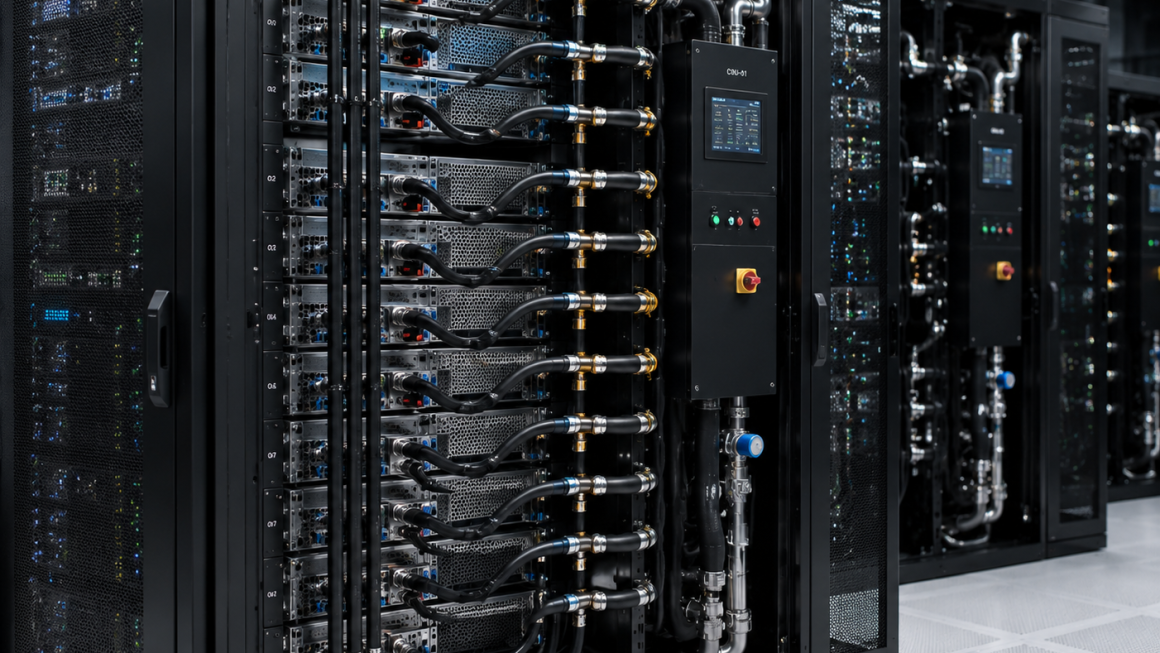
However, liquid cooling is not a single component or standalone technology. It is a complete infrastructure system involving heat transfer components, fluid distribution networks, mechanical structures, monitoring systems, and operational procedures.
This article provides an overview of liquid cooling infrastructure in AI data centers, focusing on system architecture, major components, material considerations, and engineering challenges.
Why Liquid Cooling Is Becoming Important in AI Infrastructure
AI computing systems require increasingly powerful processors and accelerators.
Modern AI servers may include:
- Multiple GPUs
- High-performance CPUs
- Accelerator modules
- High-speed networking components
These systems generate significant heat during operation.
Thermal management objectives include:
- Maintaining suitable operating temperatures
- Supporting reliable equipment operation
- Managing heat removal from high-density systems
- Improving infrastructure efficiency
Liquid cooling is one approach being evaluated and deployed for applications where traditional cooling methods may not meet specific system requirements.
Understanding Liquid Cooling as a System
A liquid cooling infrastructure consists of multiple interconnected subsystems.
A typical architecture may include:
- Heat transfer components
- Fluid distribution systems
- Cooling distribution equipment
- Heat rejection systems
- Monitoring and control systems
- Mechanical support structures
Each subsystem must work together to achieve reliable thermal management.
Main Types of Liquid Cooling Systems
Direct-to-Chip Liquid Cooling
Direct-to-chip cooling is one of the commonly discussed approaches for high-performance computing.
In this configuration:
- Cooling plates are attached directly to heat-generating components
- Liquid absorbs heat through the cooling interface
- Heated fluid is transported away through the distribution system
Typical components include:
- Cold plates
- Manifolds
- Pumps
- Distribution units
- Piping systems
Rear Door Heat Exchangers
Rear door systems are installed at the rack level.
They capture heat from exhaust airflow and transfer it through a liquid-based heat exchanger.
Applications may include:
- Existing data centers
- Hybrid cooling environments
- Rack-level thermal management
Immersion Cooling
Immersion cooling places electronic components directly into dielectric cooling fluids.
This approach involves different mechanical designs and operational considerations compared with direct liquid cooling.
Liquid Cooling Infrastructure Components
Cold Plates
Cold plates are thermal transfer components positioned close to heat-generating devices.
They typically require:
- High-quality manufacturing
- Controlled internal channels
- Reliable sealing
- Compatible materials
Aluminum and copper are commonly considered materials depending on thermal requirements and system design.
Coolant Distribution Units (CDUs)
CDUs manage the connection between facility cooling systems and rack-level cooling loops.
Functions may include:
- Fluid circulation management
- Heat exchange
- Monitoring
- Flow control
Manifolds and Piping Systems
Fluid distribution networks require carefully designed:
- Manifolds
- Tubing
- Connectors
- Valves
- Fittings
Mechanical reliability is important because these systems operate continuously.
Mechanical Support Structures
Liquid cooling introduces additional structural requirements.
Examples include:
- Pipe support brackets
- Manifold mounting frames
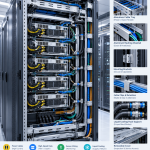
- Rack integration structures
- Cable and tube management systems
Aluminum components may be used in these applications due to their manufacturing flexibility and corrosion resistance characteristics.
Material Considerations in Liquid Cooling Systems
Material selection is an important part of liquid cooling engineering.
Aluminum
Aluminum may be used for:
- Cold plate structures
- Mounting components
- Support brackets
- Distribution components
Advantages include:
- Lightweight characteristics
- Good machinability
- Manufacturing flexibility
Copper
Copper is widely recognized for high thermal conductivity.
It may be selected for applications where thermal transfer requirements are a primary consideration.
Engineering Polymers
Polymer materials may be used for:
- Tubing
- Insulating components
- Connectors
Selection depends on:
- Chemical compatibility
- Temperature range
- Mechanical requirements
Mechanical Design Challenges
Leak Prevention
One of the most important considerations in liquid cooling systems is maintaining reliable fluid containment.
Engineering considerations include:
- Connection design
- Sealing methods
- Material compatibility
- Inspection procedures
Thermal Expansion Management
Liquid cooling systems experience temperature changes during operation.
Design considerations include:
- Expansion allowance
- Flexible connections
- Mechanical stress management
Maintenance Accessibility
Data center systems require serviceability.
Liquid cooling designs consider:
- Component replacement
- Connector access
- Inspection points
- Modular maintenance procedures
Integration With AI Data Center Structures
Liquid cooling cannot be separated from mechanical infrastructure.
The interaction between cooling and structure includes:
Rack Integration
Rack systems must support:
- Cooling pipes
- Manifolds
- Power systems
- Server modules
Cable and Pipe Management
High-density AI racks contain both:
- Electrical cables
- Liquid cooling lines
Proper organization is important for:
- Maintenance
- Safety
- System accessibility
Structural Reinforcement
Additional cooling equipment may increase mechanical requirements.
Design considerations include:
- Load distribution
- Mounting points
- Frame rigidity
Manufacturing Considerations
Liquid cooling infrastructure involves multiple manufacturing processes.
Precision Machining
Used for:
- Cold plates
- Manifolds
- Connection components
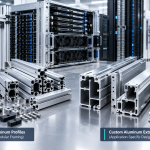
Aluminum Extrusion
Used for:
- Support frames
- Structural profiles
- Mounting systems
Surface Treatment
Surface engineering may be considered for:
- Corrosion control
- Durability improvement
- Environmental compatibility
Challenges in Liquid Cooling Deployment
System Complexity
Liquid cooling introduces additional engineering considerations compared with traditional air cooling.
These include:
- Fluid management
- Maintenance procedures
- Component integration
Qualification and Reliability
Before deployment, systems typically require evaluation of:
- Mechanical reliability
- Thermal performance
- Material compatibility
- Long-term operation
Infrastructure Adaptation
Existing data centers may require modifications to support liquid cooling systems.
Considerations include:
- Rack design
- Facility piping
- Maintenance processes
Future Development Trends
Higher Integration
Future AI infrastructure may see closer integration between:
- Server structures
- Cooling systems
- Power delivery
- Monitoring platforms
Modular Cooling Architecture
Modular liquid cooling solutions may provide flexibility for different deployment scales.
Advanced Materials
Future development may involve evaluation of:
- Improved aluminum alloys
- Composite materials
- Functional coatings
for specific cooling applications.
Liquid cooling infrastructure is becoming an increasingly important consideration in the development of high-performance AI data centers. It represents a complete engineering system involving thermal components, fluid management, mechanical structures, materials, and operational processes.
Successful implementation depends not only on cooling technology itself but also on reliable integration with server structures, rack systems, manufacturing processes, and maintenance strategies.
For suppliers involved in AI infrastructure components, opportunities exist in supporting areas such as aluminum structures, precision mechanical parts, cooling system supports, cable and pipe management, and customized manufacturing solutions.
As AI computing continues to evolve, liquid cooling infrastructure will remain an important area of engineering development focused on improving system integration, reliability, and scalability.