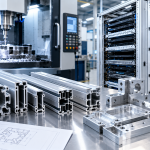
The rapid development of artificial intelligence (AI) and high-performance computing (HPC) is creating new requirements for the physical infrastructure surrounding high-density computing equipment.
Modern AI systems increasingly combine high-power electronic hardware with advanced thermal management technologies. In many applications, liquid cooling is being considered or deployed to manage heat from high-performance processors and other densely packed components.
At the same time, aluminum remains an important engineering material for structural components because of its relatively low density, established manufacturing processes, and suitability for extrusion and machining.
This creates an opportunity to consider aluminum structures and liquid cooling components as an integrated mechanical system.
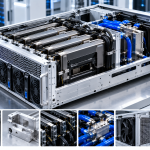
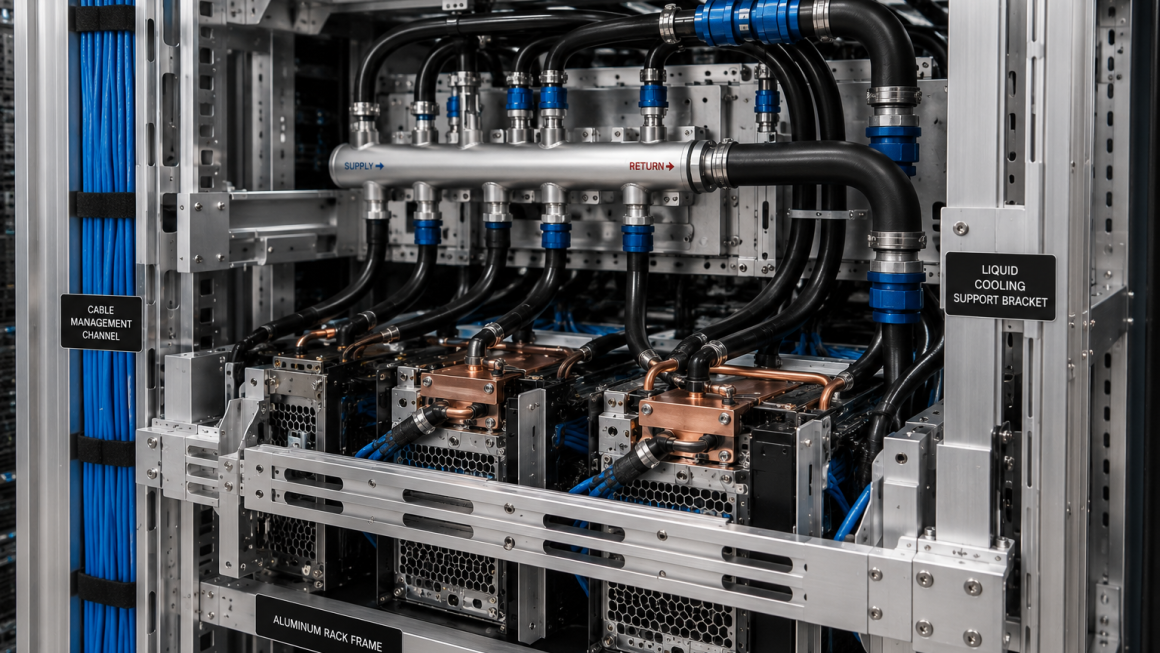
An Aluminum + Liquid Cooling Hybrid Structural System does not refer to a single standardized product. Instead, it describes an infrastructure architecture in which aluminum structural components are mechanically integrated with liquid cooling hardware and related interfaces.
This approach can include:
- Aluminum rack structures
- Cooling support brackets
- Cold plate mounting structures
- Manifold supports
- Pipe and hose routing
- Cable management interfaces
- Customized mechanical connectors
The objective is to coordinate structural and thermal infrastructure while maintaining practical requirements for installation, maintenance, and manufacturing.
Why Aluminum and Liquid Cooling Need to Be Considered Together
Liquid cooling changes the mechanical environment around high-density computing equipment.
Traditional air-cooled systems primarily require consideration of:
- Server mounting
- Airflow paths
- Cable management
- Fan and duct arrangements
Liquid-cooled systems introduce additional physical components, including:
- Cold plates
- Coolant manifolds
- Hoses or tubing
- Quick-connect interfaces
- Coolant distribution structures
These components occupy space and require mechanical support.
Therefore, rack and infrastructure design should consider the cooling architecture at an early stage rather than adding cooling components after the mechanical structure has already been finalized.
What Is a Hybrid Structural System?
A hybrid structural system combines different physical functions within a coordinated infrastructure architecture.
For AI data center applications, this may involve:
Structural Layer
- Aluminum rack frames
- Mounting rails
- Support brackets
- Equipment platforms
Thermal Layer
- Cold plates
- Manifolds
- Cooling channels
- Coolant distribution components
Infrastructure Layer
- Cable trays
- Protective channels
- Hose supports
- Service-access structures
The individual components may be manufactured separately, while their interfaces are designed to work together as part of the same mechanical architecture.
The Role of Aluminum Structural Components
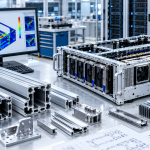
Aluminum can be used for a wide range of supporting structures.
Typical applications include:
- Rack frames
- Equipment supports
- Cable management structures
- Cooling brackets
- Mounting plates
- Protective covers
One important advantage is manufacturing flexibility.
Aluminum components can be produced using:
- Extrusion
- CNC machining
- Sheet fabrication
- Cutting and drilling
- Surface treatment
This allows structural components to be adapted to different rack and cooling configurations.
Aluminum Extrusion for Liquid Cooling Support Structures
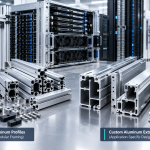
Aluminum extrusion is particularly suitable for components with long, consistent cross-sections.
Potential applications include:
- Cooling pipe support profiles
- Manifold mounting rails
- Rack cross-members
- Cable and hose management channels
Custom profiles can incorporate:
- Mounting grooves
- Reinforcement ribs
- Fastener channels
- Modular connection features
This can reduce the number of separate brackets required in some designs, although the actual design should be determined by load, installation, and manufacturing requirements.
Aluminum Cold Plates and Cooling Components
Aluminum can also be used in certain liquid cooling components, including cold plates and cooling channels.
A cold plate generally provides a thermal interface between a heat-generating component and a liquid cooling circuit.
Its design may involve:
- Internal flow channels
- Fluid inlet and outlet ports
- Sealing interfaces
- Mounting features
- Thermal interface surfaces
The appropriate material and internal geometry depend on the cooling fluid, operating conditions, corrosion considerations, manufacturing process, and required thermal performance.
Mechanical Integration of Cold Plates
A cold plate does not operate independently.
It must be mechanically connected to the equipment it is cooling.
Important considerations include:
- Mounting force
- Contact surface flatness
- Fastener arrangement
- Thermal interface material
- Service access
The supporting aluminum structure may provide:
- Mounting points
- Alignment features
- Structural reinforcement
- Cable routing clearance
Good mechanical integration helps ensure that cooling components can be installed and serviced consistently.
Manifold Integration
Manifolds distribute coolant to multiple cooling circuits.
In a high-density AI rack, a manifold may connect to several:
- Cold plates
- Supply lines
- Return lines
- Quick-connect interfaces
The manifold therefore becomes both a thermal and mechanical interface.
Supporting structures should consider:
- Manifold weight
- Connection loads
- Hose movement
- Maintenance clearance
- Vibration or mechanical disturbance
Aluminum brackets and mounting profiles can be used to provide structural support without becoming part of the coolant circuit itself.
Cooling Pipe and Hose Management
Liquid cooling introduces another routing requirement.
A rack may contain both:
- Electrical cables
- Cooling hoses or tubing
These systems should be physically coordinated.
Potential design considerations include:
- Separation between cables and hoses
- Minimum bend radius
- Quick-connect accessibility
- Protection from abrasion
- Service clearance
Dedicated aluminum channels or brackets can help organize cooling lines while keeping them separate from sensitive electrical infrastructure.
Interaction Between Cable Management and Liquid Cooling
One of the most important aspects of integrated design is avoiding conflicts between different infrastructure systems.
A high-density rack may contain:
- Power cables
- Network cables
- Fiber connections
- Coolant lines
- Structural members
Without coordinated routing, these systems may compete for the same limited space.
An integrated design approach can define separate pathways for:
Power
→ Power distribution and server connections
Data
→ Network and fiber routing
Cooling
→ Supply and return coolant paths
Structure
→ Rack frames and mounting interfaces
This separation can make installation and maintenance more predictable.
Thermal Considerations
Aluminum is known for its relatively high thermal conductivity compared with many structural materials.
However, this does not mean that every aluminum structural component automatically improves system cooling.
The thermal behavior of an integrated system depends on:
- Component geometry
- Thermal interfaces
- Coolant flow
- Contact resistance
- Material selection
- Heat generation
Therefore, thermal performance should be evaluated at the system level.
Mechanical Considerations
Liquid cooling introduces mechanical loads that are different from those found in conventional air-cooled systems.
Engineers may need to consider:
- Hose weight
- Manifold weight
- Connection forces
- Pressure-related loads
- Installation forces
- Thermal expansion
The supporting structure should be designed according to actual operating conditions rather than relying only on nominal component weight.
Sealing and Interface Design
Liquid cooling systems require reliable fluid connections.
Important interfaces may include:
- Cold plate connections
- Manifold ports
- Quick-connect couplings
- Tubing connections
Mechanical structures should provide sufficient access for:
- Installation
- Inspection
- Replacement
- Leak checking
The structural system should not obstruct critical fluid interfaces.
Corrosion Considerations
Material compatibility is particularly important in liquid cooling systems.
Aluminum, copper, stainless steel, polymers, seals, and other materials may coexist within the same cooling architecture.
Engineers should consider:
- Coolant chemistry
- Material compatibility
- Galvanic corrosion risks
- Operating temperature
- Long-term environmental conditions
Material selection should therefore be based on the complete cooling circuit rather than on the properties of a single component.
Manufacturing Considerations
Aluminum Extrusion
Extrusion can be used for:
- Rack profiles
- Cooling supports
- Mounting rails
- Cable and hose channels
Custom profiles can be developed according to required dimensions and interfaces.
CNC Machining
CNC machining is suitable for:
- Cold plate features
- Manifold supports
- Precision mounting brackets
- Connection interfaces
Machining can also be combined with extrusion to create more complex assemblies.
Sheet Metal Fabrication
Aluminum sheet components may be used for:
- Protective covers
- Equipment shields
- Structural panels
- Routing guides
Surface Treatment
Depending on the application, aluminum structural components may use:
- Anodizing
- Powder coating
- Other protective finishes
Surface treatment should be selected according to:
- Environmental exposure
- Appearance requirements
- Electrical requirements
- Dimensional tolerances
- Interface compatibility
For components directly exposed to coolant, the material and surface treatment must be evaluated as part of the fluid-contact system rather than selected only for appearance.
Design for Manufacturing and Assembly
Integrated systems should be designed with manufacturing and assembly in mind.
Important considerations include:
Component Standardization
Where possible, standardized:
- Fasteners
- Mounting interfaces
- Profiles
can simplify assembly.
Modular Construction
Modular structures can allow individual components to be:
- Installed separately
- Replaced independently
- Modified during upgrades
This can be useful for evolving AI infrastructure.
Small-Batch Validation
Before larger production, prototype or small-batch manufacturing can help verify:
- Mechanical fit
- Interface dimensions
- Assembly sequence
- Cable and hose routing
This is particularly relevant when custom aluminum profiles or cooling components are involved.
Customization Opportunities
Different AI infrastructure projects may use different:
- Rack dimensions
- GPU configurations
- Cooling architectures
- Manifold positions
- Cable layouts
Therefore, a single standard structural design may not fit every application.
Potential customized components include:
- Aluminum rack frames
- Cooling support brackets
- Custom extrusion profiles
- Cold plate mounting structures
- Manifold brackets
- Cable and hose management channels
Reliability and Maintenance Considerations
Integrated design should consider the complete service lifecycle.
Maintenance personnel may need access to:
- Servers
- Cold plates
- Manifolds
- Quick-connects
- Cable connections
A well-planned mechanical structure should provide sufficient clearance for inspection and component replacement.
Cooling components should also remain accessible without unnecessarily disturbing unrelated infrastructure.
Challenges of Hybrid Structural Systems
Balancing Thermal and Mechanical Requirements
A component optimized for structural strength may not necessarily be optimal for thermal performance.
Engineering decisions should therefore consider both requirements.
Managing Different Materials
Hybrid systems may combine:
- Aluminum
- Copper
- Stainless steel
- Polymers
- Elastomers
Material compatibility must be evaluated carefully, particularly within liquid-contact systems.
Space Constraints
AI racks have limited physical space.
Cooling hardware, cable infrastructure, and structural components must compete for available volume.
Integrated mechanical design can help identify conflicts earlier in the development process.
Future Development of AI Infrastructure
As AI computing continues to evolve, physical infrastructure may become increasingly integrated.
Future systems may combine:
- Aluminum structural frames
- Liquid cooling support
- Cable management
- Thermal components
- Protective structures
within modular mechanical architectures.
This does not necessarily mean every component will become integrated into one product. Instead, the trend is toward better coordination between different infrastructure subsystems.
Conclusion
Aluminum and liquid cooling can be combined within an integrated mechanical architecture for AI infrastructure applications.
The key opportunity is not simply using aluminum and liquid cooling together, but designing their interfaces as part of a coordinated system.
Aluminum extrusion, CNC machining, customized brackets, rack structures, cable channels, and cooling supports can provide the mechanical foundation around liquid cooling hardware.
Successful implementation requires careful consideration of:
- Mechanical loads
- Thermal requirements
- Fluid interfaces
- Material compatibility
- Corrosion
- Manufacturing
- Maintenance access
For AI infrastructure suppliers, this creates opportunities to develop customized aluminum structural components that work alongside liquid cooling systems without overstating the role of any individual material or component.
The future of AI physical infrastructure will likely depend not only on higher-performance computing hardware, but also on increasingly coordinated mechanical, thermal, electrical, and manufacturing systems.