
AI Is Moving Beyond the Data Center
For many years, artificial intelligence workloads were primarily processed inside large centralized data centers.
AI applications relied on:
- Cloud computing platforms
- Centralized GPU clusters
- High-bandwidth internet connections
However, a major shift is now taking place.
AI is increasingly being deployed closer to where data is generated and decisions must be made.
This trend is known as:
Edge AI
And the physical systems that enable it are collectively called:
Edge AI Infrastructure
From autonomous vehicles and smart factories to healthcare devices and telecommunications networks, Edge AI is becoming one of the fastest-growing segments of the AI industry.
1. What Is Edge AI?
Edge AI refers to artificial intelligence processing that occurs near the source of data rather than inside a distant cloud data center.
Instead of sending all information to the cloud, AI models operate locally on:
- Embedded devices
- Industrial computers
- Edge servers
- Telecom equipment
- Smart cameras
- Autonomous systems
This allows data to be processed closer to real-world operations.
👉 The goal is faster, more efficient decision-making.
2. What Is Edge AI Infrastructure?
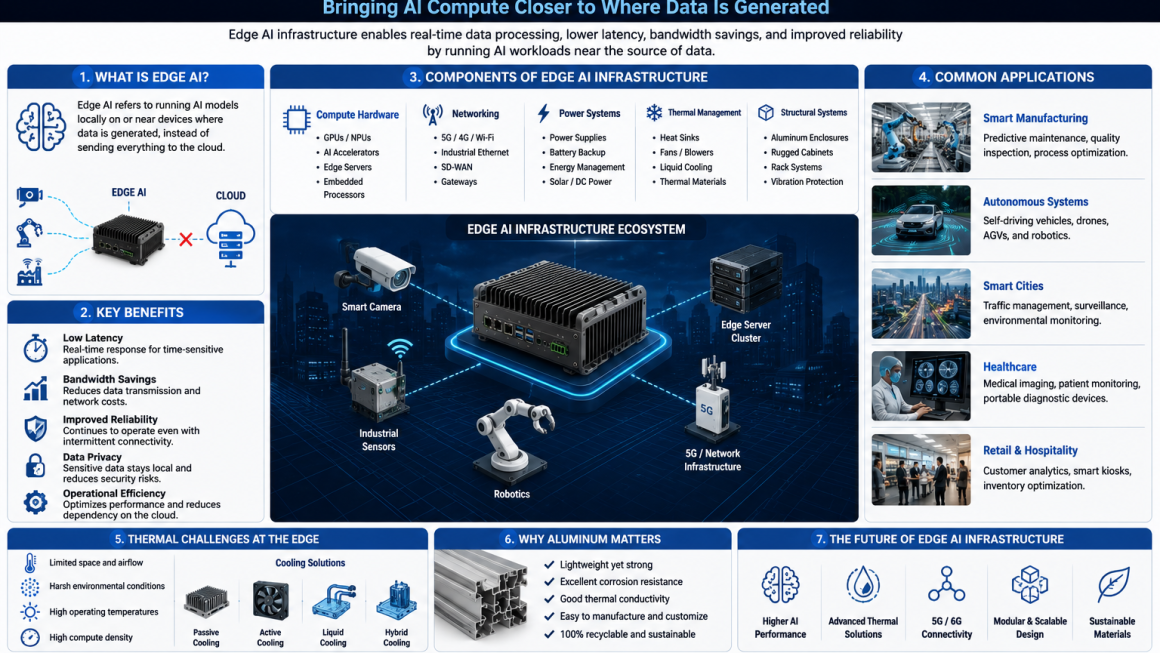
Edge AI Infrastructure includes all hardware, networking, cooling, power, and structural systems required to support AI workloads outside traditional hyperscale data centers.
Typical components include:
Compute Hardware
- GPUs
- AI accelerators
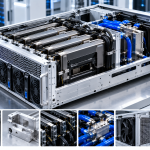
- Edge servers
- Embedded processors
Networking Systems
- 5G infrastructure
- Industrial Ethernet
- Wireless communication systems
Power Systems
- Power supplies
- Battery backup systems
- Energy management equipment
Thermal Management
- Heat sinks
- Fans
- Liquid cooling systems
- Thermal interface materials
Structural Systems
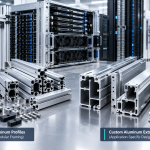
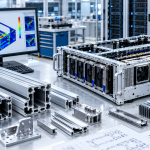
- Aluminum enclosures
- Rack systems
- Outdoor cabinets
- Ruggedized housings
👉 Edge AI infrastructure combines multiple engineering disciplines into a compact deployment platform.
3. Why Edge AI Is Growing Rapidly
Several factors are driving adoption.
Low Latency Requirements
Many applications cannot tolerate cloud communication delays.
Examples include:
- Autonomous vehicles
- Robotics
- Industrial automation
- Real-time video analytics
Edge AI enables near-instant decision making.
Reduced Bandwidth Costs
Sending massive amounts of sensor data to the cloud can be expensive.
Local processing reduces:
- Network traffic
- Bandwidth requirements
- Data transmission costs
Improved Reliability
Edge systems can continue operating even when internet connectivity is limited.
This is particularly important in:
- Factories
- Remote locations
- Critical infrastructure
👉 Edge AI increases system independence and resilience.
4. Key Applications of Edge AI Infrastructure
Edge AI is expanding into numerous industries.
Smart Manufacturing
Applications include:
- Predictive maintenance
- Machine vision inspection
- Process optimization
- Industrial robotics
Factories increasingly deploy AI directly on production lines.
Autonomous Systems
Examples include:
- Autonomous vehicles
- Agricultural machinery
- Drones
- Mobile robots
These systems require real-time AI processing without cloud dependence.
Smart Cities
Edge AI supports:
- Traffic management
- Public safety monitoring
- Environmental sensing
- Intelligent transportation systems
Healthcare
Applications include:
- Medical imaging
- Patient monitoring
- Diagnostic systems
- Portable healthcare devices
👉 Edge AI enables faster and more localized decision-making.
5. Thermal Challenges in Edge AI
One of the biggest engineering challenges is cooling.
Unlike hyperscale data centers, edge deployments often operate in:
- Small enclosures
- Outdoor environments
- High-temperature locations
- Dusty industrial settings
This creates significant thermal constraints.
Common cooling solutions include:
Passive Cooling
- Aluminum heat sinks
- Heat spreaders
- Conductive chassis designs
Active Cooling
- Fans
- Blowers
- Compact liquid cooling systems
👉 Thermal management is often the limiting factor in edge AI performance.
6. Why Lightweight Materials Matter
Edge infrastructure frequently requires deployment in locations where:
- Space is limited
- Transportation is difficult
- Structural loads must be minimized
As a result, lightweight materials are increasingly important.
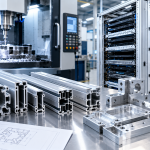
Aluminum
Widely used because it offers:
- Low weight
- Corrosion resistance
- Good thermal conductivity
- Easy manufacturability
Applications include:
- Enclosures
- Server chassis
- Outdoor cabinets
- Cooling structures
👉 Aluminum is becoming one of the most important materials in edge AI infrastructure.
7. Edge AI and Liquid Cooling
As edge workloads become more demanding, traditional cooling methods may become insufficient.
Emerging edge deployments increasingly explore:
- Direct-to-chip cooling
- Compact liquid cooling loops
- Advanced heat spreaders
- Hybrid cooling architectures
Benefits include:
- Higher compute density
- Better thermal control
- Improved reliability
Liquid cooling is expected to become more common in high-performance edge systems.
8. Security and Reliability Requirements
Many edge systems operate in critical environments.
Examples include:
- Transportation networks
- Industrial facilities
- Utilities
- Healthcare systems
Infrastructure must therefore provide:
- Physical security
- Environmental protection
- Continuous operation
- Long service life
This drives demand for:
- Ruggedized enclosures
- Industrial-grade materials
- Redundant power systems
- Advanced monitoring technologies
👉 Reliability is often as important as performance.
9. The Future of Edge AI Infrastructure
The next decade will see significant expansion of edge computing.
Major trends include:
Higher AI Compute Density
More powerful processors deployed at the edge.
Advanced Thermal Systems
Including liquid cooling and intelligent thermal management.
Lightweight Structural Materials
Such as aluminum alloys and advanced composites.
5G and 6G Integration
Supporting faster and more distributed AI networks.
Modular Infrastructure Design
Allowing rapid deployment and scalability.
👉 Edge AI infrastructure is evolving into a sophisticated engineering platform that combines computing, cooling, power, networking, and materials science.
Edge AI Infrastructure is the foundation that enables artificial intelligence to operate closer to where data is created.
It includes:
- Compute hardware
- Networking systems
- Power infrastructure
- Cooling technologies
- Structural engineering
As AI expands into factories, vehicles, cities, healthcare systems, and telecommunications networks, edge infrastructure will play an increasingly important role in delivering:
- Low latency
- High reliability
- Improved efficiency
- Scalable AI deployment
👉 The future of AI is not only in hyperscale data centers—it is increasingly at the edge.