
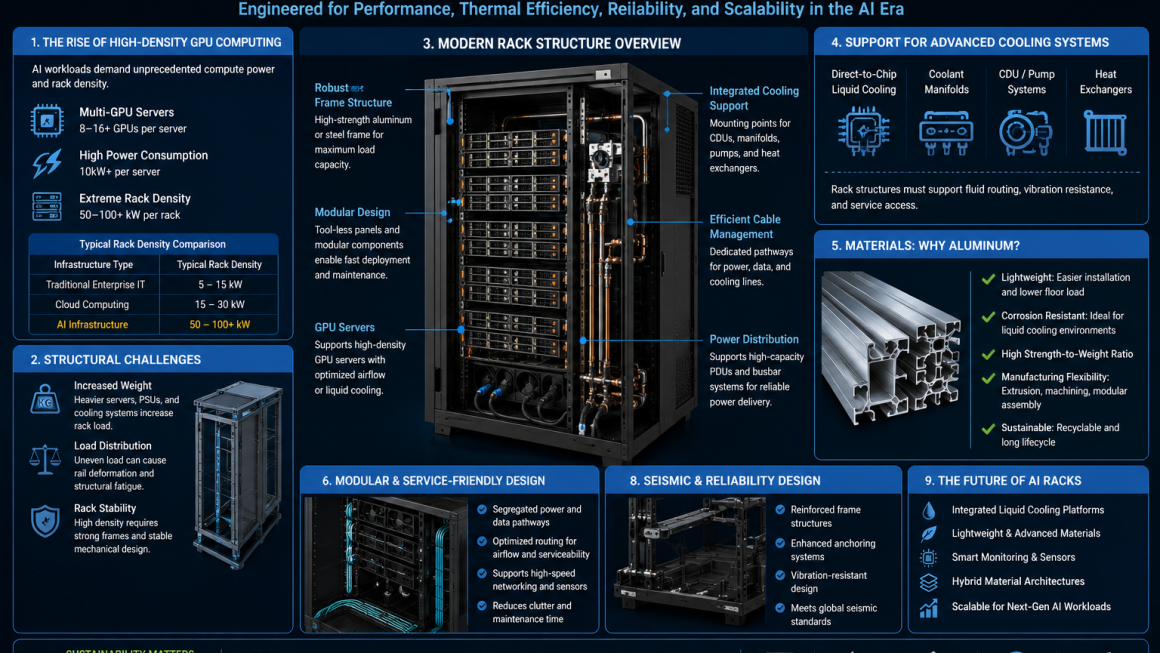
The Rack Is Becoming a Critical Part of AI Infrastructure
The rapid growth of artificial intelligence is transforming data center design.
While much attention is focused on:
- GPUs
- AI accelerators
- Networking technologies
- Cooling systems
another component is becoming increasingly important:
👉 The rack structure itself.
In traditional enterprise environments, racks primarily served as equipment enclosures.
In modern AI infrastructure, racks have evolved into highly engineered platforms that must support:
- Extreme power density
- Heavy server loads
- Advanced liquid cooling systems
- Complex cable management
- Continuous 24/7 operation
As GPU clusters become larger and denser, rack structures are becoming a key factor in performance, reliability, and scalability.
1. The Rise of High-Density GPU Computing
Modern AI workloads require unprecedented computing power.
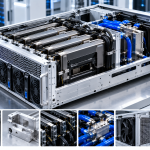
A single AI server may contain:
- 8 GPUs
- 16 GPUs
- High-bandwidth memory systems
- Advanced networking hardware
Power consumption can exceed:
- 10kW per server
Meanwhile, rack densities continue increasing:
| Infrastructure Type | Typical Rack Density |
|---|---|
| Traditional Enterprise IT | 5–15 kW |
| Cloud Computing | 15–30 kW |
| AI Infrastructure | 50–100+ kW |
This shift dramatically changes rack engineering requirements.
👉 The rack is no longer a passive structure—it has become part of the computing platform.
2. Structural Challenges of High-Density GPU Racks
As rack density increases, several structural challenges emerge.
Increased Weight
GPU servers are significantly heavier than traditional servers because they include:
- Multiple accelerators
- Larger power supplies
- Dense cooling hardware
- Reinforced chassis designs
A fully populated AI rack can weigh several times more than a conventional IT rack.
Challenges include:
- Floor loading
- Rack stability
- Transportation
- Installation safety
Load Distribution
GPU systems often create uneven weight distribution.
Concentrated loads can lead to:
- Rail deformation
- Structural fatigue
- Rack instability
Modern rack structures must be engineered to ensure balanced mechanical loading.
👉 Proper load management is essential for long-term reliability.
3. Rack Structures Must Support Advanced Cooling Systems
Thermal management has become one of the biggest drivers of rack design.
Modern AI racks increasingly incorporate:
- Direct-to-chip liquid cooling
- Coolant manifolds
- Heat exchangers
- Pump systems
- Coolant distribution units (CDUs)
These components add both:
- Weight
- Mechanical complexity
As a result, rack structures must provide:
- Cooling hardware mounting points
- Fluid routing pathways
- Service access zones
- Vibration-resistant support systems
👉 Thermal infrastructure and rack engineering are now closely connected.
4. The Growing Importance of Aluminum Structures
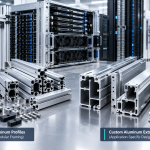
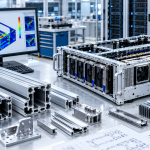
Many next-generation AI rack systems are moving toward aluminum-based designs.
Advantages of Aluminum
Lightweight Construction
Compared with steel:
- Lower overall rack weight
- Easier transportation
- Simplified installation
Corrosion Resistance
Particularly beneficial in liquid cooling environments where moisture exposure may occur.
Manufacturing Flexibility
Aluminum supports:
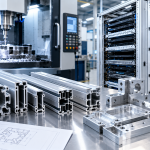
- Extrusions
- Precision machining
- Modular assemblies
This allows highly customized rack architectures.
👉 Aluminum is becoming one of the most important structural materials in AI infrastructure.
5. Modular Rack Architecture
AI data centers increasingly prioritize modular deployment.
Modern rack structures often include:
- Tool-less access panels
- Modular cooling interfaces
- Quick-connect power systems
- Replaceable compute modules
Benefits include:
- Faster deployment
- Reduced downtime
- Easier upgrades
- Improved serviceability
Hyperscale operators increasingly view modularity as a competitive advantage.
6. Cable Management Is Becoming More Complex
High-density GPU systems require extensive connectivity.
Modern AI racks may contain:
- High-speed optical links
- Power cables
- Cooling monitoring sensors
- Control systems
Poor cable routing can create:
- Airflow restrictions
- Maintenance difficulties
- Reliability risks
Advanced rack structures now integrate:
- Dedicated cable pathways
- Segregated power and data routing
- Service-friendly access points
👉 Rack organization directly affects operational efficiency.
7. Rack Structures and Seismic Reliability
In many regions, data centers must meet strict seismic requirements.
High-density GPU racks present unique challenges because:
- Equipment is heavier
- Centers of gravity are higher
- Cooling systems add dynamic loads
Modern rack structures increasingly include:
- Reinforced frames
- Enhanced anchoring systems
- Vibration-resistant designs
These features help ensure continuous operation during environmental disturbances.
8. Sustainability and Material Optimization
AI infrastructure growth is increasing focus on sustainability.
Rack materials influence:
- Embodied carbon
- Transportation emissions
- Recyclability
- Lifecycle performance
Aluminum offers advantages including:
- High recyclability
- Long service life
- Lightweight transportation benefits
Future rack structures may increasingly incorporate:
- Aluminum alloys
- Advanced composites
- Carbon-enhanced materials
👉 Material selection is becoming both an engineering and sustainability decision.
9. Future Rack Structures for AI Infrastructure
Over the next decade, rack systems will likely evolve toward:
Integrated Liquid Cooling Platforms
Designed from the ground up around fluid infrastructure.
Lightweight Structural Architectures
Reducing deployment complexity and material consumption.
Smart Rack Systems
Featuring embedded monitoring for:
- Temperature
- Vibration
- Structural load
- Coolant flow
Hybrid Material Designs
Combining:
- Aluminum structures
- Copper thermal components
- Composite reinforcements
- Advanced thermal coatings
👉 The future rack will become an intelligent infrastructure platform rather than a simple equipment enclosure.
Conclusion: Rack Engineering Is Becoming a Strategic AI Infrastructure Discipline
The rise of high-density GPU computing is fundamentally changing data center architecture.
Modern rack structures must support:
- Heavy AI hardware
- Advanced cooling systems
- High power density
- Modular serviceability
- Long-term reliability
As AI infrastructure continues expanding, successful deployments will increasingly depend on:
- Structural engineering
- Material innovation
- Thermal integration
- Scalable rack architecture
👉 In the AI era, rack structures are no longer passive frameworks—they are becoming one of the most important foundations of high-performance computing infrastructure.