As AI computing continues to move toward higher rack densities, larger GPU clusters, and increasingly sophisticated liquid cooling systems, the physical infrastructure supporting AI hardware is becoming more demanding.
Structural components that were once treated as simple support elements are now expected to provide mechanical strength, thermal management capabilities, modularity, and efficient integration with cables, cooling systems, and server hardware.
This is where aluminum extrusion design for AI data centers becomes increasingly important.
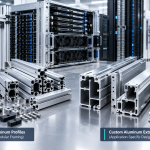
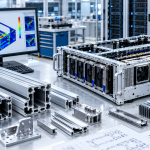
Aluminum extrusion can provide a flexible manufacturing platform for developing lightweight structural profiles, rack frames, cooling channels, mounting rails, heat dissipation components, and other infrastructure elements used in AI computing environments.
However, the value of aluminum extrusion is not simply that aluminum is lightweight or easy to process. The real advantage comes from designing the cross-sectional geometry, material grade, thermal function, mechanical interfaces, and manufacturing process as one integrated system.
For AI infrastructure, aluminum extrusion is therefore evolving from a conventional structural manufacturing process into an important engineering tool for high-density computing infrastructure.
Why Aluminum Extrusion Matters for AI Data Centers
Traditional data center structures were primarily designed around standard server racks, relatively predictable equipment weights, and air-cooling architectures.
AI infrastructure introduces a different set of requirements.
High-performance GPU servers can create substantially higher rack power densities. Liquid cooling systems introduce additional manifolds, hoses, connectors, cold plates, distribution components, and mechanical interfaces.
At the same time, AI equipment is evolving rapidly.
A rack structure may need to support different generations of computing hardware during its operating life. This creates a need for infrastructure that is strong enough for heavy equipment while remaining modular and adaptable.
Aluminum extrusion addresses several of these requirements simultaneously.
An engineered aluminum profile can provide:
- Structural support
- Mounting interfaces
- Cable routing
- Equipment attachment points
- Cooling-system integration
- Lightweight construction
- Modular assembly
- Surface protection
- Future expandability
This multifunctional capability is particularly valuable in high-density AI infrastructure, where available physical space is limited and every component must perform efficiently.
What Is Aluminum Extrusion?
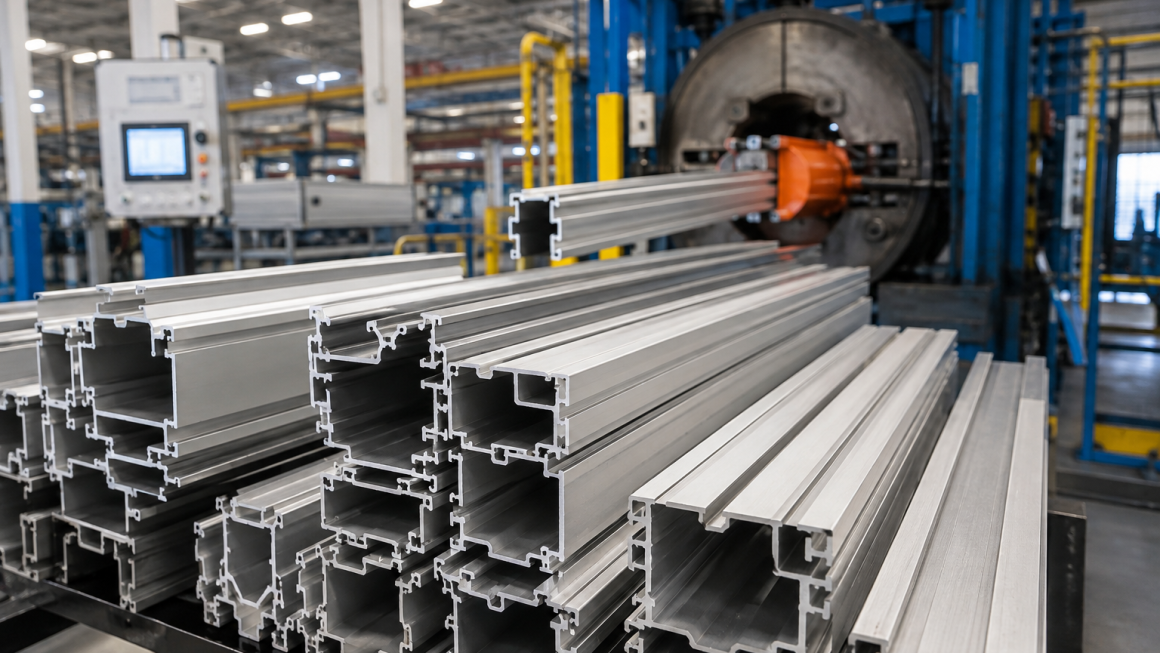
Aluminum extrusion is a manufacturing process in which a heated aluminum billet is forced through a specially designed die to create a continuous profile with a specific cross-sectional geometry.
The resulting profile can then be:
Cut → Machined → Drilled → Tapped → Surface Treated → Assembled
The major advantage is that the geometry of the extrusion can be customized according to the engineering requirements of the application.
Instead of manufacturing a structural component from several individual pieces, designers can potentially integrate multiple functions into one extrusion.
For AI infrastructure, this could mean creating a profile that combines structural ribs, mounting slots, cable channels, and thermal pathways.
This is one reason aluminum extrusion is particularly suitable for modular infrastructure systems.
The Cross-Section Is the Key to Performance
One of the most important principles in aluminum extrusion design is that performance depends heavily on profile geometry.
A simple solid bar may contain a large amount of aluminum but provide relatively inefficient structural performance.
By contrast, a carefully engineered hollow or ribbed profile can achieve high stiffness with significantly less material.
Typical structural features include:
- Internal ribs
- Hollow chambers
- T-slots
- Mounting grooves
- Reinforcement walls
- Curved sections
- Integrated channels
- Fastening interfaces
For AI data center structures, these features can be designed around the actual load paths.
The goal is not simply to maximize material usage.
The objective is to achieve the appropriate balance between:
Strength + Stiffness + Weight + Thermal Performance + Manufacturability
This becomes particularly important when designing large rack frames or structural assemblies that may contain hundreds of kilograms of computing, power, and cooling equipment.
Aluminum Extrusion for AI Server Racks
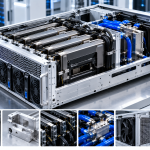
One of the most direct applications is the structural frame of an AI server rack.
A rack must support equipment vertically while maintaining dimensional stability.
The structure must also accommodate:
- GPU servers
- Power distribution equipment
- Cooling manifolds
- Coolant hoses
- Cable bundles
- Mounting rails
- Monitoring equipment
- Access panels
An aluminum extrusion system can provide a modular framework around which these components are assembled.
The profile geometry can be optimized according to the expected load and attachment points.
For example, thicker sections can be positioned where higher loads are expected, while lighter sections can be used in areas with lower mechanical requirements.
This type of localized optimization can reduce unnecessary material without compromising structural performance.
Aluminum Extrusion and Liquid Cooling
The growth of liquid cooling is creating another important opportunity for aluminum extrusion.
Liquid-cooled AI infrastructure requires physical integration between structural components and thermal-management systems.
Cooling hoses need routing.
Manifolds need mounting.
Quick-disconnect couplings require accessible interfaces.
Cold plates must connect to servers.
Distribution systems require mechanical support.
Rather than installing all of these components independently, engineers can investigate ways to integrate cooling-related functions into structural aluminum profiles.
For example, an aluminum extrusion could incorporate dedicated mounting channels for a coolant manifold.
A structural channel could also provide protected routing for cooling hoses and cables.
In more advanced designs, an aluminum profile may potentially incorporate thermal pathways or cooling channels, depending on pressure, sealing, manufacturing, and maintenance requirements.
This represents a shift from structural aluminum toward functional aluminum infrastructure.
Designing Profiles for Cable Management
AI data centers contain increasingly complex cable networks.
High-performance computing systems may require large numbers of power, networking, control, and monitoring connections.
Poor cable routing can create several problems.
Cables may interfere with cooling hoses.
Maintenance access may become difficult.
Bending radii may be compromised.
Airflow paths can be obstructed.
Installation time can increase.
An extrusion profile can help address these issues by incorporating dedicated cable-routing channels.
For example, internal cavities can be used to separate cables from other infrastructure components, while external slots can provide flexible attachment points.
This allows cable management to become part of the structural architecture rather than an afterthought.
Material Selection: 6061 vs 6063 Aluminum
Aluminum alloy selection should be based on the specific requirements of the application.
Two commonly considered alloys for engineered aluminum extrusion are 6061 and 6063.
6061 is generally selected when higher mechanical strength and structural performance are important.
6063 is widely used when extrusion quality, surface finish, and complex profile geometry are major considerations.
The appropriate choice depends on the actual application.
For example:
Structural rack components: higher strength may be prioritized.
Complex extrusion profiles: extrusion performance and surface quality may become more important.
Thermal components: thermal conductivity, geometry, machining requirements, and corrosion considerations should all be evaluated.
The correct approach is therefore not to identify one alloy as universally superior.
Instead, engineers should match the alloy to the mechanical, thermal, manufacturing, and environmental requirements of the final component.
Designing for Manufacturing
A technically excellent extrusion profile is not necessarily a commercially practical one.
The extrusion die must be capable of producing the required geometry consistently.
Extremely thin walls, sharp transitions, complicated internal cavities, and significant differences in wall thickness can increase manufacturing difficulty.
Therefore, design for manufacturing should begin during the engineering stage.
Important considerations include:
- Wall thickness
- Profile complexity
- Internal cavities
- Dimensional tolerances
- Corner geometry
- Die feasibility
- Cutting requirements
- CNC machining requirements
- Surface treatment
- Final assembly
A profile designed specifically for extrusion can often be manufactured more efficiently than a conventional component that is forced into an extrusion process.
This is why experienced extrusion engineering is important for AI infrastructure applications.
Combining Extrusion and CNC Machining
Aluminum extrusion does not eliminate the need for machining.
In many AI infrastructure applications, extrusion provides the basic geometry while CNC machining creates precision interfaces.
A typical manufacturing sequence may be:
Aluminum Billet → Extrusion → Cutting → CNC Machining → Surface Treatment → Inspection → Assembly
Extrusion can efficiently create the main structural geometry.
CNC machining can then produce:
- Mounting holes
- Threaded holes
- Precision interfaces
- Manifold ports
- Connector locations
- Fastening surfaces
- Complex local geometries
This combination can provide an effective balance between manufacturing efficiency and precision.
For AI data center components, this is particularly valuable because structural profiles may need to connect with highly precise server, cooling, and electrical components.
Surface Treatment for AI Infrastructure
Surface treatment should also be considered as part of the extrusion design.
Depending on the operating environment and application, aluminum components may require anodizing, coating, or other surface treatments.
Surface treatment can influence:
- Corrosion resistance
- Surface durability
- Appearance
- Electrical properties
- Contact interfaces
- Cleanability
In data center environments, long-term reliability is particularly important.
The surface treatment should therefore be selected based on the actual operating environment rather than appearance alone.
For components exposed to coolant systems or mixed-metal assemblies, corrosion compatibility also needs to be evaluated.
Thermal Considerations in Aluminum Extrusion Design
Aluminum is widely recognized for its useful thermal conductivity, but simply selecting aluminum does not guarantee effective thermal management.
Actual thermal performance depends on the complete heat-transfer path.
For a liquid-cooled AI system, the thermal path may involve:
GPU → Thermal Interface Material → Cold Plate → Coolant → Manifold → Distribution System → Heat Exchanger
An aluminum extrusion may participate in one or more stages of this system.
Its geometry, contact area, wall thickness, surface condition, and interface design can influence thermal performance.
Therefore, thermal analysis should be performed at the system level.
This is particularly important when an aluminum profile is expected to perform both structural and thermal functions.
Structural and Thermal Functions Can Be Integrated
One of the most promising directions for AI infrastructure is multifunctional structural design.
Instead of treating structural components and thermal components as completely independent systems, engineers can explore architectures in which the same aluminum component performs multiple functions.
For example, a profile may provide:
Structural Support + Cooling Interface + Cable Routing + Equipment Mounting
This can reduce component count and simplify assembly.
It may also reduce the physical footprint of infrastructure.
However, multifunctional design introduces additional engineering challenges.
Thermal requirements must be compatible with structural requirements.
Cooling channels must meet sealing and pressure requirements.
Manufacturing tolerances must support both mechanical and thermal interfaces.
Maintenance access must remain practical.
Therefore, integrated aluminum structures should be developed through multidisciplinary engineering rather than by simply adding cooling features to an existing structural profile.
Designing for Modularity and Future Upgrades
AI hardware changes rapidly.
A data center infrastructure system designed today may need to support different GPU platforms, server architectures, or cooling technologies in the future.
This makes modularity particularly valuable.
Extruded aluminum profiles are well suited to modular architectures because standardized interfaces can allow components to be added, removed, or repositioned.
A modular AI rack can potentially support:
- Different server heights
- Different equipment mounting positions
- Additional cooling components
- Expanded cable management
- Additional structural reinforcement
- Future retrofit requirements
This can extend the useful life of the physical infrastructure even as computing hardware evolves.
From Aluminum Profiles to AI Infrastructure Platforms
The future opportunity for aluminum extrusion in AI infrastructure goes beyond selling standard profiles.
The more valuable proposition is engineering a complete component around the customer’s application.
This can include:
Material Selection
↓
Profile Engineering
↓
Extrusion Die Development
↓
CNC Machining
↓
Surface Treatment
↓
Thermal Integration
↓
Structural Validation
↓
Assembly
↓
System-Level Testing
This approach transforms aluminum extrusion from a commodity manufacturing process into an engineering solution.
For AI data center developers, this can simplify supplier coordination.
For server manufacturers, it can reduce the complexity of integrating structural and cooling components.
For cooling-system manufacturers, it can create opportunities to integrate thermal systems directly into mechanical infrastructure.
Key Design Parameters for AI Data Center Aluminum Extrusions
When selecting or developing an aluminum extrusion for AI infrastructure, engineers should consider several parameters simultaneously.
1. Mechanical Load
What equipment weight must the profile support?
2. Structural Stiffness
How much deformation is acceptable under operating loads?
3. Thermal Requirements
Does the profile need to conduct, spread, or dissipate heat?
4. Geometry
Can the required geometry be manufactured efficiently through extrusion?
5. Interface Requirements
How will the profile connect to servers, racks, manifolds, cooling systems, and other components?
6. Surface Treatment
What environmental and corrosion protection is required?
7. Machining
Which precision features need to be added after extrusion?
8. Maintenance
Can components be accessed, removed, and replaced efficiently?
9. Scalability
Can the same structural concept be adapted for future AI hardware generations?
10. Total Cost
What is the complete cost of tooling, extrusion, machining, treatment, assembly, and logistics?
A successful AI infrastructure extrusion design must balance all ten factors rather than optimizing only one.
Aluminum extrusion is becoming an increasingly important manufacturing and engineering technology for AI data center infrastructure.
Its value lies not simply in aluminum’s lightweight characteristics or thermal conductivity, but in the ability to create custom geometries that combine structural, thermal, mechanical, and integration functions.
For AI server racks, cooling systems, cable management, mounting structures, and thermal components, properly engineered aluminum extrusions can provide a flexible foundation for modular and scalable infrastructure.
The most effective approach is to design the profile around the complete application:
Material → Geometry → Structure → Cooling → Interfaces → Manufacturing → Testing
As AI computing density continues to increase, the boundary between structural engineering and thermal engineering will become increasingly interconnected.
This creates a significant opportunity for engineered aluminum solutions that are designed specifically for AI infrastructure rather than adapted from conventional data center components.
At Aluminum4AI, the focus is not simply on supplying aluminum profiles. The larger opportunity is to develop aluminum-based structural and thermal solutions around the engineering requirements of next-generation AI infrastructure.
The future of AI data center aluminum is not just extrusion. It is engineered integration.