The rapid development of artificial intelligence (AI), high-performance computing (HPC), cloud computing, and advanced data center infrastructure is changing the way hardware components are designed and manufactured.
Traditional data center hardware often relies on standardized components produced in relatively predictable configurations. However, AI infrastructure can involve different rack architectures, cooling systems, power configurations, cable layouts, and mechanical interfaces.
As a result, data center hardware suppliers increasingly need manufacturing capabilities that can accommodate different product configurations without requiring every project to follow exactly the same production model.
This is where flexible manufacturing becomes relevant.
Flexible manufacturing does not simply mean producing customized products. It refers to the ability of a manufacturing system to adjust efficiently to changes in:
- Product dimensions
- Component geometry
- Production quantities
- Material requirements
- Machining operations
- Surface treatments
- Assembly configurations
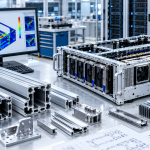
For AI and data center infrastructure, this capability can be particularly useful for customized aluminum structural components, cable management hardware, liquid cooling support structures, server frames, and other mechanical parts.
What Is Flexible Manufacturing?
Flexible manufacturing describes a production approach that can accommodate variations in products and production requirements.
A flexible manufacturing system may combine:
- Modular production equipment
- CNC machining
- Aluminum extrusion
- Cutting systems
- Surface treatment
- Inspection equipment
- Modular assembly processes
The exact configuration depends on the product and production volume.
The purpose is not to eliminate manufacturing constraints. Instead, flexible manufacturing aims to make it easier to adapt production processes when product specifications change.
Why Data Center Hardware Requires Manufacturing Flexibility
Modern data centers can contain thousands of physical components.
These components may vary according to:
- Rack dimensions
- Server configurations
- Cooling architecture
- Cable routing
- Power distribution
- Installation environment
A structural component designed for one rack configuration may not necessarily fit another.
For example, two AI server racks may use similar overall architectures but have different requirements for:
- Mounting holes
- Brackets
- Cable channels
- Cooling interfaces
- Structural supports
Manufacturing flexibility allows suppliers to respond to these variations without treating every project as a completely new manufacturing system.
Standardization and Customization Can Coexist
Flexible manufacturing does not mean that every component should be completely customized.
In many cases, the most practical approach is to combine:
Standardized Components
with
Customized Interfaces
For example, a supplier may maintain standard aluminum extrusion profiles while customizing:
- Length
- Machined holes
- Mounting features
- Brackets
- Surface treatment
This approach can provide a balance between manufacturing efficiency and project-specific requirements.
Aluminum as a Flexible Manufacturing Material
Aluminum is particularly suitable for many customized data center hardware applications.
Potential applications include:
- Rack frames
- Structural profiles
- Cable trays
- Cable channels
- Mounting rails
- Cooling support structures
- Server chassis components
Its compatibility with several manufacturing processes provides opportunities for flexible production.
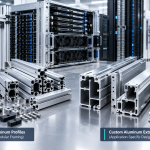
Aluminum Extrusion and Product Variation
Aluminum extrusion is suitable for components with continuous cross-sectional geometries.
A single extrusion profile can potentially be produced in different:
- Lengths
- Machined configurations
- Surface finishes
- Assembly combinations
For example, the same basic profile could potentially be used for:
- Rack supports
- Cross-members
- Cable management structures
with different secondary machining operations.
This can reduce the need to create a completely different manufacturing route for every dimensional variation.
CNC Machining for Customized Components
CNC machining provides another important element of manufacturing flexibility.
An extruded aluminum profile can be further processed through:
- Drilling
- Milling
- Tapping
- Slot machining
- End machining
Different machining programs can be used for different product configurations.
This makes CNC machining useful for projects where:
- Quantities are moderate
- Dimensions vary
- Interfaces are customized
- Precision features are required
The practical economics depend on component complexity, machining time, tooling, and production volume.
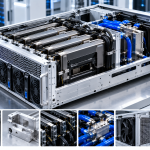
Flexible Manufacturing for Rack Structures
AI server racks are increasingly complex mechanical systems.
A rack may need to support:
- Server modules
- Power distribution
- Network equipment
- Cooling hardware
- Cable management systems
Different projects may require different structural layouts.
Flexible manufacturing can support variations in:
- Frame dimensions
- Cross-member positions
- Mounting interfaces
- Bracket configurations
- Cable routing structures
This is particularly useful during product development and early deployment stages when designs may continue to evolve.
Flexible Manufacturing for Cable Management
Cable infrastructure is another area where customized manufacturing can be useful.
Potential products include:
- Aluminum cable trays
- Cable channels
- Protective covers
- Conduit supports
- Cable routing brackets
Cable layouts can vary significantly depending on rack configuration.
Instead of producing an entirely different product for every project, manufacturers may use a modular approach based on:
- Standard profiles
- Adjustable lengths
- Customized brackets
- Project-specific machining
Flexible Manufacturing for Liquid Cooling Hardware
Liquid cooling introduces additional mechanical components into AI infrastructure.
These may include:
- Cold plate supports
- Manifold brackets
- Pipe supports
- Hose routing structures
- Quick-connect mounting components
The cooling hardware itself may be highly application-specific.
Flexible manufacturing can support the mechanical structures surrounding these systems.
For example, an aluminum mounting bracket may be customized according to:
- Manifold dimensions
- Mounting location
- Hose routing
- Rack geometry
This does not require the structural supplier to manufacture the complete cooling system.
Manufacturing Multiple Materials
Modern data center hardware may combine:
- Aluminum
- Steel
- Engineering polymers
- Composite materials
Flexible manufacturing can involve coordinating different production processes for these materials.
For example:
Aluminum Extrusion
→ Structural frame
CNC Machining
→ Precision interface
Polymer Component
→ Insulation or protection
Surface Treatment
→ Environmental or appearance requirements
The final assembly can combine these components according to project requirements.
From Prototype to Pilot Production
Flexible manufacturing is especially valuable during product development.
A typical development path may be:
Engineering Design
↓
Prototype
↓
Pilot Manufacturing
↓
Design Adjustment
↓
Small-Batch Production
↓
Production Scaling
AI infrastructure projects may require several design iterations before the final configuration is established.
A flexible manufacturing process can make these iterations more manageable.
Supporting Small-Batch Production
Not every AI infrastructure project immediately requires thousands of components.
Early-stage projects may require:
- Prototype quantities
- Engineering samples
- Small pilot batches
- Evaluation units
- Initial deployment quantities
A manufacturing system designed only for very large production volumes may not be economical or practical for these situations.
Flexible production can provide an intermediate option between prototype fabrication and large-scale manufacturing.
Flexible Manufacturing Does Not Mean Unlimited Customization
This distinction is important.
Manufacturing flexibility still has technical and economic boundaries.
Customization may require:
- New tooling
- New extrusion dies
- Additional CNC programming
- Different fixtures
- New inspection procedures
- Different packaging
Therefore, every customization should be evaluated based on:
- Quantity
- Complexity
- Material
- Tolerance
- Tooling requirements
- Production schedule
A professional supplier should define these factors before confirming a production plan.
Design for Manufacturing
Flexible manufacturing works best when the product is designed with manufacturing processes in mind.
This is commonly referred to as Design for Manufacturing (DFM).
For aluminum components, DFM may consider:
- Wall thickness
- Profile geometry
- Machining accessibility
- Hole positions
- Tolerances
- Surface treatment
- Assembly requirements
A design that is easier to manufacture can often provide more options for production planning.
Modular Product Architecture
Modular design can further improve manufacturing flexibility.
Instead of creating a completely unique structure for every application, designers can divide the system into:
- Standard modules
- Semi-customized modules
- Fully customized interfaces
For example, an aluminum rack system could use:
Standard Structural Profile
Customized Bracket
Project-Specific Mounting Plate
This architecture can reduce unnecessary customization while maintaining compatibility with different installations.
Flexible Manufacturing and Supply Chain Management
Manufacturing flexibility also depends on the supply chain.
A customized aluminum component may involve:
- Aluminum billet supply
- Extrusion
- Cutting
- CNC machining
- Surface treatment
- Inspection
- Assembly
- Packaging
Changes in one stage can affect the entire production schedule.
Therefore, flexible manufacturing requires coordination between different suppliers and production processes.
Tooling Considerations
Tooling is an important factor in customized aluminum production.
For extrusion products, a new profile may require a dedicated extrusion die.
For CNC machining, different products may require:
- Different fixtures
- Different tools
- Different machining programs
The appropriate manufacturing approach depends on the expected production volume.
For low-volume projects, minimizing unnecessary tooling investment may be important.
For higher-volume projects, dedicated tooling may become more economical.
CNC Programming and Manufacturing Flexibility
Modern CNC systems allow manufacturers to adjust machining programs for different component configurations.
For example, the same basic aluminum extrusion may be processed into different components through changes in:
- Hole patterns
- Slot locations
- Length
- End geometry
This can provide a practical way to support product variation without redesigning the entire upstream manufacturing process.
Surface Treatment Flexibility
Different data center projects may require different aluminum surface finishes.
Potential options include:
- Anodizing
- Powder coating
- Other protective coatings
Selection depends on:
- Environmental conditions
- Appearance
- Corrosion considerations
- Electrical requirements
- Customer specifications
A flexible supply chain should be able to coordinate the appropriate treatment with the mechanical production process.
Quality Control in Flexible Manufacturing
Product variation increases the importance of quality control.
Inspection may need to cover:
- Material specifications
- Dimensions
- Hole positions
- Surface condition
- Machined interfaces
- Assembly fit
For customized components, inspection procedures should be linked to the specific engineering drawing and project requirements.
A flexible manufacturing system should therefore remain flexible in production while maintaining controlled quality processes.
Manufacturing Flexibility and Lead Time
Flexible manufacturing may help suppliers respond to changing requirements, but it should not automatically be interpreted as guaranteed shorter lead times.
Actual lead time depends on:
- Material availability
- Tooling
- Production capacity
- Machining requirements
- Surface treatment
- Inspection
- Logistics
A realistic production schedule should be established based on the actual manufacturing route.
Prototype and Production Economics
Different production stages have different cost structures.
A prototype may have a relatively high unit cost because:
- Tooling is spread over few parts
- Programming time is significant
- Manual operations may be required
As production volume increases, some costs can be distributed across more units.
However, highly customized components may continue to require additional machining or specialized processes.
Flexible manufacturing should therefore focus on finding an appropriate production method for each project rather than assuming that customization is always inexpensive.
Flexible Manufacturing for Global Data Center Projects
Data center projects can have different technical requirements depending on:
- Region
- Customer specifications
- Rack standards
- Installation environment
- Applicable regulations
Suppliers serving international customers may therefore need to accommodate different engineering specifications.
This can include variations in:
- Dimensions
- Materials
- Surface treatment
- Packaging
- Documentation
A flexible manufacturing process can make it easier to manage these differences.
Quality and Documentation
As customized components move toward professional infrastructure applications, documentation becomes increasingly important.
Depending on the project, documentation may include:
- Technical drawings
- Material specifications
- Inspection reports
- Dimensional records
- Surface treatment information
- Packaging specifications
The exact documentation requirements should be agreed upon before production.
Common Applications
Flexible manufacturing can support a wide range of AI infrastructure components.
Structural Components
- Aluminum rack frames
- Cross-members
- Support profiles
- Mounting brackets
Thermal Infrastructure
- Cooling supports
- Cold plate mounting structures
- Manifold brackets
Cable Infrastructure
- Cable trays
- Cable channels
- Conduit supports
- Protective structures
Server Hardware
- Chassis components
- Structural panels
- Precision-machined aluminum parts
Challenges and Limitations
Flexible manufacturing has clear advantages, but it also introduces challenges.
Production Planning
Frequent product changes can complicate production scheduling.
Quality Control
More product variations require more careful documentation and inspection.
Tooling Management
Different extrusion profiles and fixtures increase tooling requirements.
Supply Chain Coordination
Multiple materials and processes require greater coordination.
Cost Control
Small production quantities can result in higher unit costs.
These limitations should be considered when selecting a manufacturing strategy.
The Role of Flexible Manufacturing in Future AI Infrastructure
AI infrastructure is still evolving.
New server architectures, cooling technologies, rack configurations, and power systems may continue to emerge.
This creates uncertainty around future hardware requirements.
A manufacturing strategy that can adapt to changing product specifications may therefore be useful during periods of rapid infrastructure development.
The most practical approach may combine:
- Standardized manufacturing platforms
- Modular components
- Custom interfaces
- Flexible CNC processing
- Controlled pilot production
Flexible manufacturing is becoming increasingly relevant to the development of AI and data center hardware components.
As AI infrastructure becomes more specialized, manufacturers may need to support a broader range of:
- Dimensions
- Materials
- Interfaces
- Production quantities
- Mechanical configurations
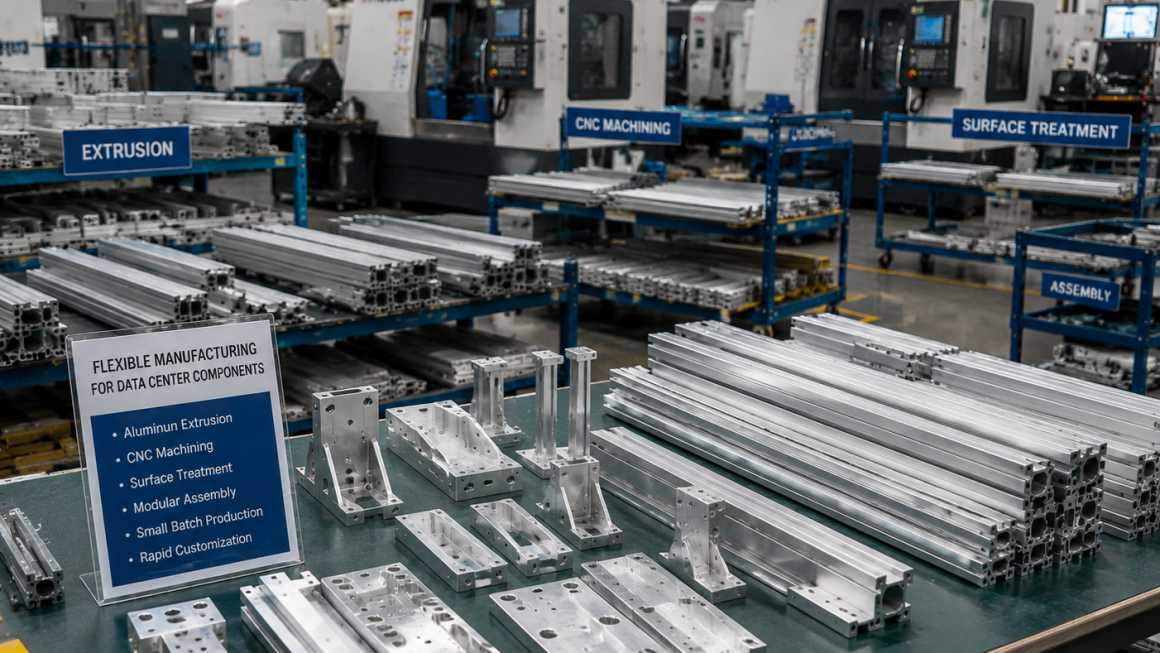
Aluminum extrusion, CNC machining, surface treatment, modular assembly, and controlled pilot production can provide a practical manufacturing foundation for this type of work.
However, flexibility should not be confused with unlimited customization or guaranteed cost and lead-time advantages.
A reliable flexible manufacturing strategy balances:
- Engineering requirements
- Manufacturing feasibility
- Production volume
- Tooling investment
- Quality control
- Supply chain coordination
For AI infrastructure suppliers, this approach can support the transition from prototype components to customized small-batch production and, where appropriate, larger-scale manufacturing.
As AI data center architectures continue to evolve, the ability to adapt manufacturing processes to new mechanical requirements may become an increasingly important part of the physical infrastructure supply chain.