


Sustainability Meets Performance
As AI infrastructure scales rapidly, data centers are facing increasing pressure—not only to deliver performance, but also to reduce environmental impact.
With:
- Rising energy consumption
- High material usage in servers and cooling systems
- Growing regulatory and ESG requirements
👉 Sustainability is no longer optional—it is becoming a core design criterion.
At the center of this transformation are materials.
1. What Are Sustainable Materials?
Sustainable materials are designed to minimize environmental impact across their lifecycle:
- Raw material sourcing
- Manufacturing processes
- Operational efficiency
- End-of-life recyclability
👉 In AI infrastructure, sustainable materials must also meet high-performance requirements, making this a complex engineering challenge.
2. Why Materials Matter in Data Center Sustainability
While energy efficiency often gets the most attention, materials play a critical role in:
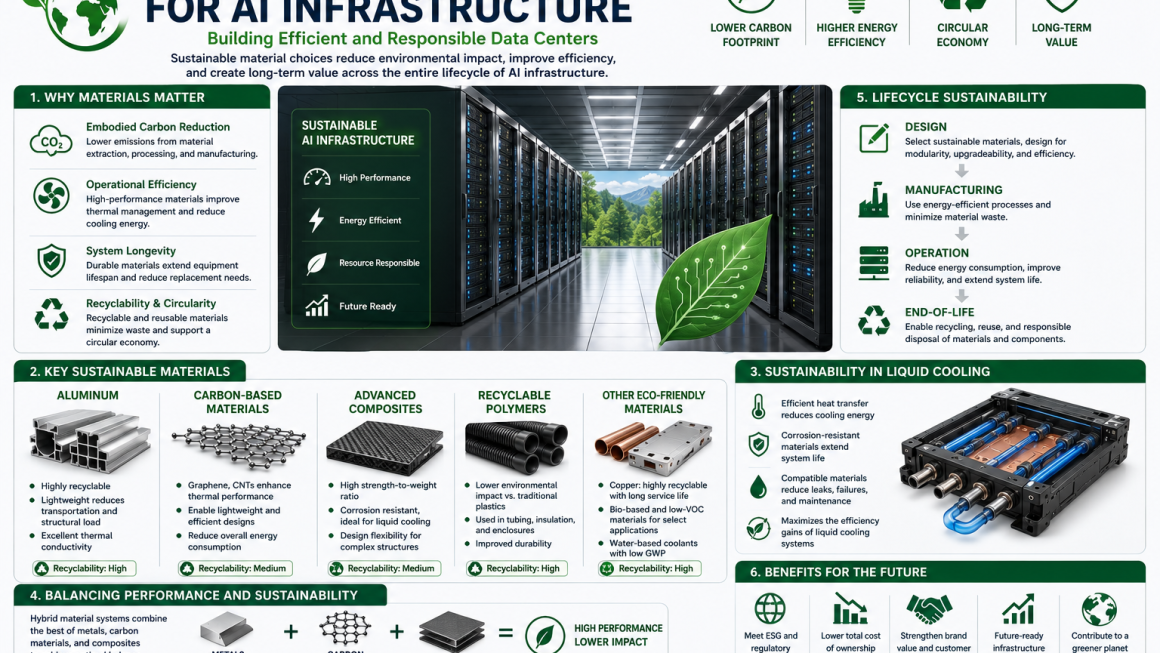
Embodied Carbon Reduction
- Lower emissions from material production and processing
Operational Efficiency
- Better thermal materials reduce cooling energy consumption
System Longevity
- Durable materials extend equipment lifespan
Recyclability and Circular Economy
- Materials that can be reused or recycled reduce waste
👉 Sustainable material choices impact both CAPEX and OPEX over time.
3. Key Sustainable Materials in AI Infrastructure
Aluminum
- Highly recyclable
- Lightweight reduces transportation and structural load
- Widely used in chassis and cooling components
👉 One of the most practical sustainable materials today
Carbon-Based Materials (Graphene, CNTs)
- Enhance thermal performance → reduce energy consumption
- Enable lightweight and efficient designs
- Long-term potential for high-efficiency systems
Advanced Composites
- Lightweight and durable
- Reduce overall system weight
- Improve corrosion resistance in liquid cooling environments
Recyclable Polymers
- Used in tubing, insulation, and enclosures
- Lower environmental footprint compared to traditional plastics
4. Sustainability in Liquid Cooling Systems
Liquid cooling itself is a sustainability enabler—but materials matter:
- Efficient cold plates reduce energy usage
- Corrosion-resistant materials extend system life
- Compatible materials reduce maintenance and replacement
👉 Sustainable materials help maximize the efficiency gains of liquid cooling systems.
5. Designing for Lifecycle Sustainability
Sustainability must be considered across the full lifecycle:
Design Phase
- Material selection for efficiency and durability
- Modular design for easy upgrades
Manufacturing Phase
- Energy-efficient production processes
- Reduced material waste
Operation Phase
- Lower cooling energy consumption
- Reduced failure rates
End-of-Life
- Recyclability of metals and components
- Reuse of modules where possible
👉 Lifecycle thinking transforms sustainability from a concept into practical engineering decisions.
6. Balancing Performance and Sustainability
One key challenge is balancing:
- High thermal performance
- Mechanical strength
- Cost efficiency
- Environmental impact
👉 The most effective solutions are hybrid systems, combining:
- Metals (Al, Cu)
- Carbon materials
- Composites
This approach delivers both performance and sustainability.
7. Why This Matters for Future AI Infrastructure
As AI continues to scale:
- Energy demand will increase significantly
- Data centers will face stricter environmental regulations
- Customers will prioritize sustainable solutions
👉 Companies that adopt sustainable materials will gain:
- Competitive advantage
- Regulatory compliance
- Long-term cost savings
Sustainability Starts with Materials
Sustainable AI infrastructure is not just about energy—it is about how systems are built.
By integrating:
- Recyclable and lightweight materials
- High-performance thermal solutions
- Durable and long-life components
👉 The industry can build AI systems that are not only powerful—but also responsible and future-ready.