
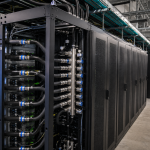

As artificial intelligence (AI) servers and high-performance computing (HPC) systems continue to increase in power density, liquid cooling infrastructure is becoming increasingly important for thermal management.
A modern liquid cooling system consists of many interconnected components, including cold plates, manifolds, cooling distribution units (CDUs), tubing, and mechanical support structures.
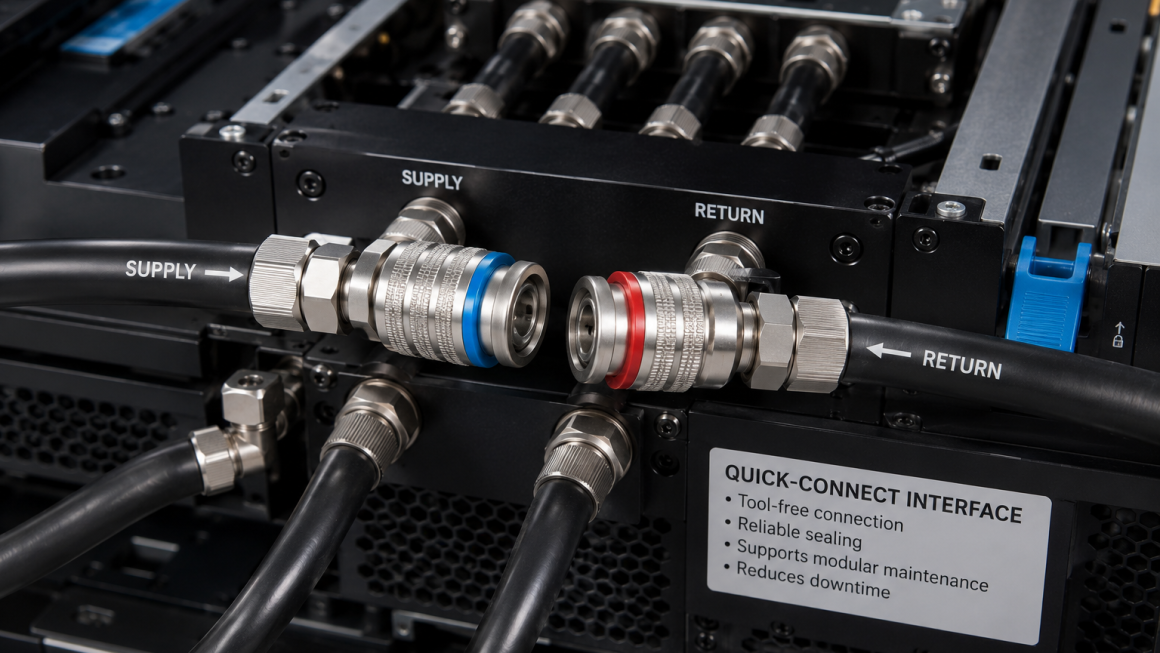
Among these components, quick-connect interfaces play an important role by enabling reliable and efficient connections between cooling modules. They allow coolant circuits to be connected and disconnected during installation, maintenance, or system upgrades while minimizing disruption to the overall cooling architecture.
For AI infrastructure, quick-connect design requires careful consideration of mechanical reliability, sealing performance, material compatibility, flow characteristics, and long-term operational requirements.
This article discusses the role of quick-connect interfaces in AI liquid cooling systems and the engineering considerations behind their design and integration.
What Are Quick-Connect Interfaces?
Quick-connect interfaces, also known as quick disconnect couplings (QDCs), are mechanical connection devices designed to join and separate fluid pathways without requiring complex disassembly procedures.
In liquid cooling systems, they are used to connect:
- Server cooling loops
- Cold plates
- Manifolds
- Rack-level cooling systems
- Cooling distribution equipment
A typical quick-connect interface may include:
- Male and female connection sections
- Locking mechanisms
- Sealing elements
- Flow channels
- Alignment structures
The exact design depends on the cooling architecture and application requirements.
Why Quick-Connect Interfaces Matter in AI Infrastructure
AI data centers require high availability and efficient maintenance procedures.
Traditional permanent connections may increase service complexity because technicians may need to:
- Drain coolant systems
- Remove multiple components
- Reassemble complex piping networks
Quick-connect interfaces provide a more flexible approach by allowing modular connection and service operations.
Potential benefits include:
- Faster installation
- Easier component replacement
- Reduced maintenance complexity
- Improved modularity
However, performance depends on proper engineering design and qualification.
Applications in AI Liquid Cooling Systems
Server-Level Cooling Connections
Within AI servers, quick-connect interfaces may connect:
- Cold plates
- Internal cooling loops
- Flexible tubing assemblies
They help simplify integration between thermal components and server structures.
Rack-Level Liquid Cooling
At the rack level, quick-connect interfaces may be used between:
- Server modules
- Manifolds
- Rack distribution systems
This supports modular deployment where individual servers can be installed or removed without redesigning the entire cooling network.
Cooling Distribution Systems
CDUs and facility cooling loops may also use specialized connection interfaces for:
- Supply lines
- Return lines
- Maintenance access
Key Design Considerations
Sealing Reliability
One of the most important requirements for liquid cooling interfaces is reliable sealing.
Engineering factors include:
- Seal material selection
- Surface finish
- Compression control
- Connection alignment
Common sealing elements may include:
- Elastomer seals
- O-rings
- Specialized sealing structures
Seal performance depends on operating conditions such as:
- Temperature
- Pressure
- Coolant chemistry
- Service frequency
Material Selection
Quick-connect interfaces often combine multiple materials.
Common materials may include:
Aluminum
Aluminum may be considered for certain structural sections because of:
- Lightweight characteristics
- Machinability
- Corrosion resistance properties
Applications may include:
- Connector bodies
- Mounting structures
- Integration brackets
Stainless Steel
Stainless steel may be selected for applications requiring:
- High mechanical strength
- Wear resistance
- Long-term durability
Engineering Polymers
Polymer materials may be used for:
- Insulating components
- Sealing supports
- Lightweight structures
Material selection depends on:
- Coolant compatibility
- Temperature requirements
- Mechanical loading
Flow Performance Considerations
A quick-connect interface must maintain suitable coolant flow characteristics.
Design considerations include:
- Internal channel geometry
- Pressure drop
- Flow restriction
- Connection size
An optimized design attempts to balance:
- Compact structure
- Mechanical reliability
- Hydraulic performance
Mechanical Design Requirements
Connection Strength
During operation, quick-connect interfaces may experience:
- Fluid pressure
- Mechanical vibration
- Installation forces
- Thermal expansion
The mechanical structure must maintain reliable connection under expected operating conditions.
Alignment Control
Proper alignment is important during repeated connection and disconnection.
Design features may include:
- Guide structures
- Locking mechanisms
- Position control features
These features help reduce assembly errors.
Serviceability
AI infrastructure requires practical maintenance solutions.
A well-designed quick-connect system considers:
- Easy access
- Clear connection status
- Replacement procedures
- Technician safety
Leak Prevention and Quick-Connect Design
Quick-connect interfaces are closely related to liquid cooling reliability.
Potential risk factors include:
- Improper connection
- Seal damage
- Contamination
- Mechanical stress
Engineering approaches may include:
- Controlled sealing structures
- Connection verification mechanisms
- Manufacturing inspection
- System-level testing
No single component can guarantee system reliability; performance depends on the complete cooling architecture.
Manufacturing Considerations
Precision Machining
Many quick-connect components require precision manufacturing.
Important factors include:
- Dimensional accuracy
- Surface finish
- Internal channel quality
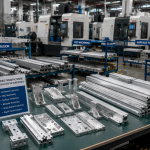
CNC machining may be used for customized metal components.
Surface Treatment
Depending on material and application, surface treatments may be considered for:
- Corrosion control
- Wear resistance
- Surface durability
Examples include:
- Anodizing for aluminum components
- Protective coatings
- Surface finishing processes
Quality Control
Typical quality considerations may include:
- Dimensional inspection
- Pressure testing
- Leak testing
- Functional verification
Challenges in AI Liquid Cooling Quick-Connect Systems
Increasing Cooling Requirements
Higher-power AI processors require more demanding thermal solutions.
This may increase requirements for:
- Flow capacity
- Reliability
- Compact integration
Mixed Material Systems
Liquid cooling systems often combine:
- Aluminum
- Copper
- Stainless steel
- Polymers
Engineers must consider:
- Corrosion compatibility
- Thermal expansion differences
- Mechanical interfaces
Standardization vs Customization
AI infrastructure suppliers must balance:
Standard interfaces:
- Easier deployment
- Better compatibility
Customized interfaces:
- Optimized system design
- Specific application requirements
Future Development Trends
Modular Liquid Cooling Architectures
Future AI data centers may increasingly adopt modular cooling designs.
Quick-connect technologies can support:
- Faster deployment
- Easier upgrades
- More flexible infrastructure planning
Improved Monitoring Integration
Future connection systems may incorporate additional monitoring capabilities such as:
- Temperature sensing
- Flow monitoring
- Connection status detection
Advanced Materials and Manufacturing
Future developments may involve:
- Improved aluminum alloys
- Advanced sealing materials
- Precision manufacturing technologies
to support increasingly demanding cooling applications.
Conclusion
Quick-connect interfaces are an important mechanical element in AI liquid cooling systems, supporting modular installation, maintenance flexibility, and efficient system integration.
Their successful application requires careful consideration of sealing design, material compatibility, flow performance, mechanical strength, and manufacturing quality.
As AI infrastructure continues to evolve toward higher-density computing, reliable connection technologies will remain a key part of scalable liquid cooling solutions.
For suppliers involved in AI infrastructure components, opportunities exist not only in connector manufacturing but also in supporting areas such as aluminum mechanical parts, mounting structures, surface treatments, and customized cooling system integration.