The rapid development of artificial intelligence (AI) infrastructure has significantly increased the complexity of modern data center physical systems.
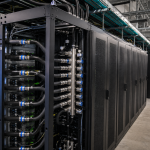
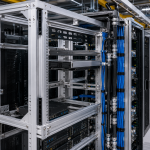
High-density AI servers, GPU clusters, advanced networking equipment, and liquid cooling systems require a large number of interconnected cables and mechanical interfaces.
In traditional data centers, cable management was often considered mainly an organization and maintenance function. However, in AI data centers, cable management has become an important structural and engineering consideration.
A properly designed cable management system must support:
- Reliable cable routing
- Mechanical protection
- Efficient maintenance
- Airflow and cooling coordination
- Rack integration
- Long-term operational stability
This article discusses the structural requirements of cable management systems in AI data centers and highlights the role of materials, mechanical design, and manufacturing considerations.
Why Cable Management Is More Important in AI Data Centers
AI computing environments differ significantly from traditional server installations.
Modern AI racks may contain:
- High-performance GPUs
- Multiple power connections
- High-speed network cables
- Liquid cooling connections
- Monitoring and control wiring
As system density increases, the physical arrangement of cables becomes more challenging.
Poor cable management may create issues related to:
- Difficult maintenance
- Restricted component access
- Mechanical stress on connectors
- Reduced service efficiency
- Increased installation complexity
Therefore, cable management should be considered during the initial infrastructure design stage.
The Role of Structural Cable Management Systems
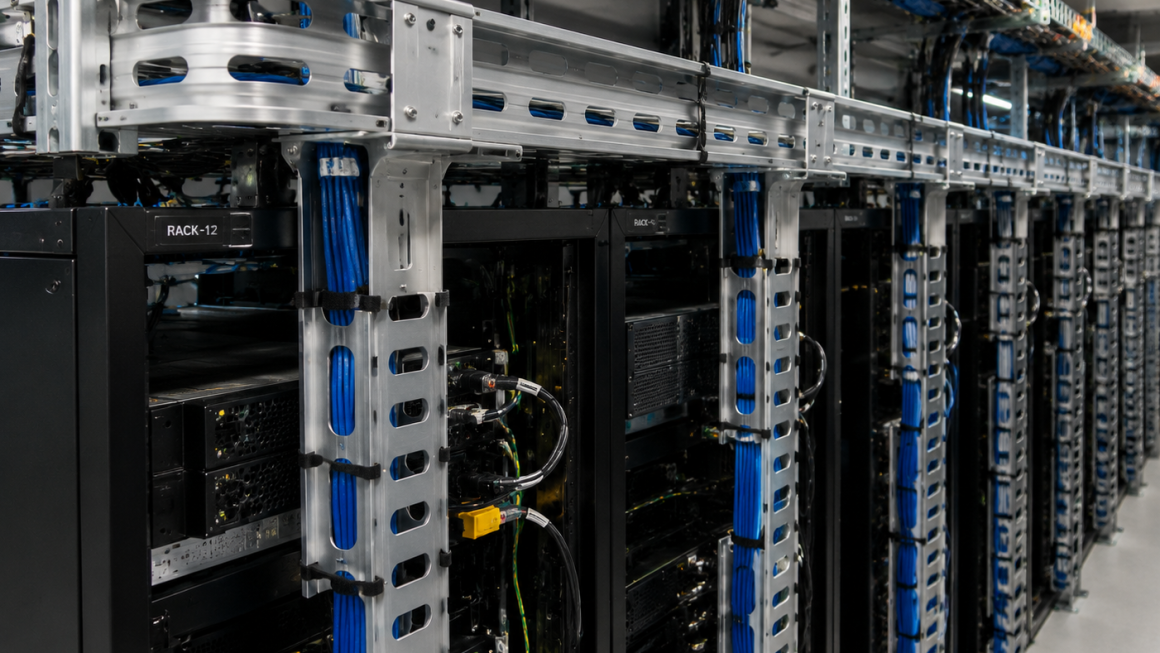
A cable management system provides mechanical support and organization for different types of cables.
Typical components include:
- Cable trays
- Cable ladders
- Vertical cable managers
- Horizontal cable guides
- Mounting brackets
- Support arms
- Protective covers
These components form part of the physical infrastructure surrounding AI computing equipment.
Structural Requirements for AI Cable Management
Mechanical Load Capacity
AI data centers often contain a large number of cables within limited spaces.
Cable management structures must consider:
- Cable weight
- Installation forces
- Long-term loading
- Environmental conditions
Design considerations include:
- Material selection
- Support spacing
- Mounting method
- Structural reinforcement
A well-designed support system helps prevent excessive stress on cables and connectors.
Cable Routing and Organization
AI infrastructure requires clear separation between different cable categories.
Common cable groups include:
Power Cables
High-power AI servers require significant electrical supply infrastructure.
Cable management should consider:
- Bend radius
- Heat generation
- Routing clearance
- Service accessibility
Data and Network Cables
High-speed communication systems require careful routing.
Considerations include:
- Signal integrity
- Cable protection
- Separation from power systems
- Connector accessibility
Liquid Cooling Related Lines
In liquid-cooled AI systems, cable management may also need to coordinate with:
- Cooling tubes
- Manifolds
- Quick-connect interfaces
The goal is to avoid interference between electrical and cooling infrastructure.
Material Selection for Cable Management Structures
Material selection depends on:
- Mechanical requirements
- Installation environment
- Weight considerations
- Manufacturing needs
Aluminum Cable Management Components
Aluminum is widely considered for many structural applications.
Potential applications include:
- Cable trays
- Rack support structures
- Mounting brackets
- Custom profiles
Advantages include:
Lightweight Characteristics
Aluminum provides high strength-to-weight efficiency.
Potential benefits include:
- Easier installation
- Reduced structural load
- Flexible system design
Manufacturing Flexibility
Aluminum can be processed through:
- Extrusion
- CNC machining
- Sheet fabrication
- Surface treatment
This enables customized cable management solutions.
Corrosion Considerations
For long-term infrastructure applications, surface treatment may be considered to improve environmental durability.
Examples include:
- Anodizing
- Protective coatings
Steel Cable Management Structures
Steel remains widely used in infrastructure applications.
Advantages may include:
- High mechanical strength
- Established manufacturing processes
However, engineers may also consider:
- Weight
- Installation complexity
- Corrosion protection requirements
Composite Materials
Composite materials may be considered for specialized applications requiring:
- Electrical insulation
- Lightweight structures
- Customized mechanical properties
However, manufacturing maturity and cost considerations remain important factors.
Integration With AI Server Racks
Cable management systems must integrate with rack structures.
Important considerations include:
Rack Compatibility
Design should consider:
- Rack dimensions
- Server installation methods
- Maintenance access
Modular Design
Modular cable systems may provide advantages such as:
- Easier installation
- Future expansion capability
- Simplified replacement
Accessibility
Maintenance teams require access to:
- Servers
- Power connections
- Network interfaces
- Cooling components
Cable structures should support service operations rather than create obstacles.
Thermal Considerations
Although cable management is primarily a mechanical function, it also interacts with thermal design.
Important factors include:
- Avoiding unnecessary airflow blockage
- Preventing cable accumulation near heat sources
- Maintaining cooling system accessibility
In liquid-cooled AI systems, cable routing must also consider the position of:
- Cooling pipes
- Manifolds
- Cold plates
Protection Requirements
AI infrastructure cables may require protection from:
- Mechanical abrasion
- Excessive bending
- Installation damage
- Environmental exposure
Protection solutions may include:
- Cable covers
- Flexible conduits
- Protective sleeves
- Edge protection components
Manufacturing Considerations
Aluminum Extrusion
Aluminum extrusion is suitable for producing:
- Long cable support profiles
- Modular structural components
- Rack accessories
Advantages include:
- Repeatable geometry
- Efficient production
- Custom profile development
CNC Machining
CNC machining may be used for:
- Mounting brackets
- Precision interfaces
- Customized connectors
Surface Treatment
Surface finishing may improve:
- Appearance consistency
- Corrosion resistance
- Surface durability
Common processes include:
- Anodizing
- Powder coating
- Protective finishing
Design Challenges
Increasing Rack Density
Future AI racks may contain more:
- Power cables
- Network connections
- Cooling interfaces
This requires more efficient structural organization.
Maintenance Complexity
A highly dense cable environment increases the importance of:
- Modular design
- Clear routing
- Easy access
Customization Requirements
Different AI infrastructure projects may require customized solutions due to:
- Rack design differences
- Cooling architecture differences
- Facility requirements
Flexible manufacturing becomes an important advantage.
Future Development Trends
Integrated Rack Structures
Future systems may combine:
- Rack frames
- Cable management
- Cooling support
- Mechanical interfaces
into more integrated structures.
Lightweight Infrastructure Components
Aluminum and advanced materials may become increasingly important for reducing installation complexity.
Smart Infrastructure Monitoring
Future cable systems may integrate monitoring technologies for:
- Temperature
- Load conditions
- Maintenance tracking
Conclusion
Cable management systems in AI data centers have evolved from simple organization solutions into important structural infrastructure components.
As AI servers become more powerful and rack designs become increasingly complex, cable management must support mechanical reliability, maintenance efficiency, cooling integration, and future scalability.
Material selection and manufacturing capability play important roles in developing effective solutions. Aluminum structural components, precision brackets, protective systems, and customized manufacturing approaches provide opportunities for suppliers supporting next-generation AI infrastructure.
A well-designed cable management system is not only about organizing cables — it is about creating a reliable physical foundation for scalable AI computing environments.