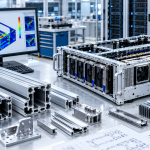
The rapid development of artificial intelligence (AI), high-performance computing (HPC), cloud computing, and accelerated computing is changing the physical requirements of modern data center infrastructure.
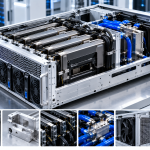
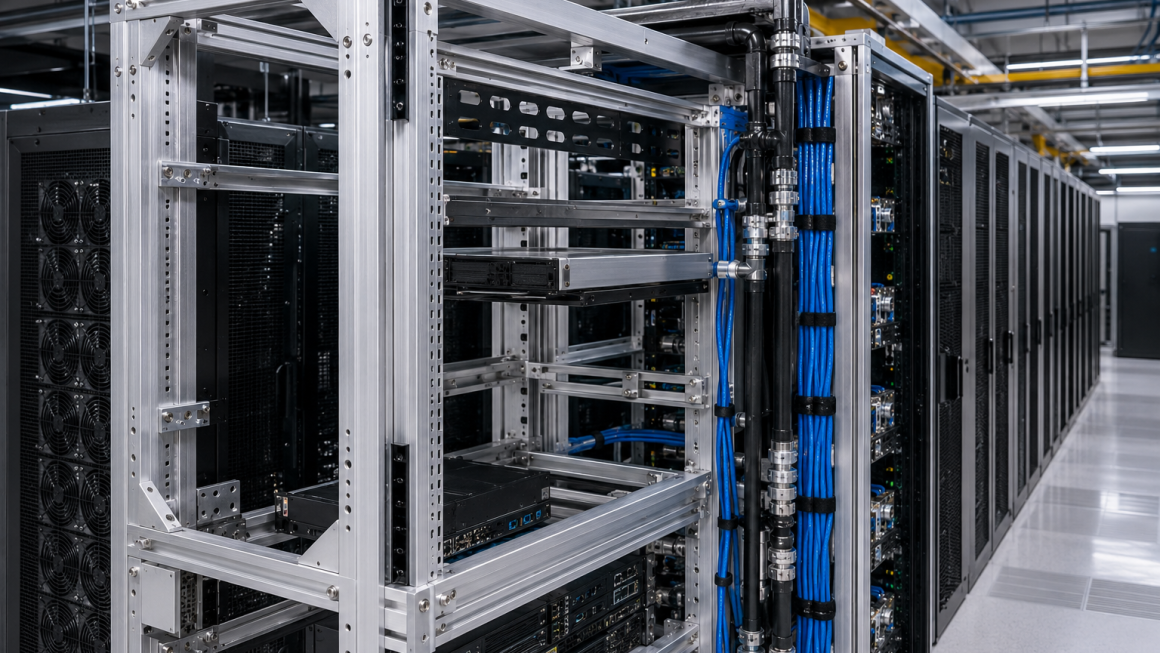
AI servers are becoming increasingly dense, while supporting systems are becoming more complex. Rack structures must accommodate computing hardware, power distribution, cooling systems, cable networks, and maintenance requirements within increasingly organized physical spaces.
These changes are creating new engineering requirements for structural materials.
Aluminum is already used in many industrial and data center applications, including:
- Server chassis
- Rack components
- Structural profiles
- Heat sinks
- Cable management systems
- Mounting brackets
- Cooling support structures
Looking forward, the role of aluminum in AI infrastructure is likely to depend less on whether aluminum is simply selected as a material and more on how aluminum is engineered into complete mechanical systems.
Future development may involve greater integration between:
- Material selection
- Structural engineering
- Thermal management
- Manufacturing
- Modular design
- Digital engineering
This article examines several areas that may shape the future role of aluminum in AI infrastructure structural engineering.
Why Aluminum Is Relevant to AI Infrastructure
Aluminum offers a combination of properties that can be useful for physical infrastructure.
These include:
- Relatively low density
- Good thermal conductivity
- Established extrusion processes
- Machinability
- Surface treatment options
- Availability in multiple alloy systems
These characteristics make aluminum suitable for a wide range of structural and mechanical applications.
However, aluminum is not automatically the best material for every AI infrastructure component.
Material selection must consider:
- Mechanical loads
- Thermal requirements
- Environmental conditions
- Electrical requirements
- Manufacturing processes
- Cost
- Applicable specifications
The future role of aluminum should therefore be understood as part of a broader material-selection strategy.
From Aluminum Components to Aluminum Systems
One important development is the shift from individual components toward integrated structural systems.
Instead of considering an aluminum bracket, frame, or tray independently, engineers may increasingly consider how several components work together.
A future AI infrastructure platform could integrate:
Structural System
- Rack frames
- Cross-members
- Mounting rails
Thermal System
- Cooling supports
- Cold plate interfaces
- Manifold brackets
Cable System
- Cable trays
- Routing channels
- Protective structures
The aluminum components do not necessarily need to perform every function.
Instead, aluminum can provide a structural foundation around which other materials and systems are integrated.
Lightweight Structural Engineering
Weight remains an important consideration in large infrastructure projects.
Aluminum has a significantly lower density than steel, which can provide opportunities for lightweight structural design.
Potential benefits may include:
- Easier component handling
- Reduced installation effort
- Flexible structural configurations
- Lower mass for certain assemblies
However, reducing weight should not be treated as an objective by itself.
Structural engineers must also evaluate:
- Load capacity
- Stiffness
- Deflection
- Connection strength
- Vibration
- Long-term operating conditions
The future of aluminum structural engineering will therefore likely focus on optimized structures, rather than simply using more aluminum.
Advanced Aluminum Extrusion Design
Extrusion is one of the most important manufacturing technologies for aluminum infrastructure components.
Future aluminum profiles may increasingly incorporate multiple functions into a single geometry.
Potential features include:
- Structural reinforcement
- Mounting channels
- Cable routing paths
- Fastener interfaces
- Modular connection points
This can reduce the number of separate components in some assemblies.
However, more complex extrusion geometries can also introduce:
- More complicated tooling
- Higher die-development requirements
- Greater dimensional-control challenges
Therefore, profile optimization will continue to require close coordination between engineering and manufacturing.
Custom Aluminum Profiles for AI Infrastructure
AI infrastructure is not necessarily standardized across every project.
Different applications may require different:
- Rack dimensions
- Mounting configurations
- Cooling architectures
- Cable layouts
- Structural interfaces
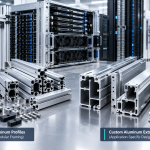
Custom aluminum extrusion can provide a way to adapt structural components to these requirements.
A typical development process may include:
Engineering Design
↓
Profile Optimization
↓
Extrusion Die Development
↓
Trial Production
↓
Machining
↓
Surface Treatment
↓
Inspection
↓
Pilot Assembly
This approach can support projects where standard commercial profiles are not sufficient.
Thermal-Mechanical Integration
One of the most important future engineering considerations is the relationship between thermal and mechanical behavior.
AI hardware generates significant heat, while cooling systems introduce temperature differences across the structure.
Aluminum components may experience:
- Thermal expansion
- Temperature gradients
- Differential movement relative to other materials
These effects can influence:
- Mounting interfaces
- Fastener preload
- Structural dimensions
- Cooling component alignment
Future structural engineering may therefore increasingly use thermal and mechanical analysis together.
Aluminum and Liquid Cooling
Liquid cooling is introducing additional mechanical requirements into AI infrastructure.
Liquid-cooled systems may include:
- Cold plates
- Manifolds
- Coolant tubing
- Quick-connect interfaces
- Cooling distribution structures
Aluminum can be used for selected structural components around these systems.
Potential applications include:
- Cold plate mounting structures
- Manifold brackets
- Pipe supports
- Rack cross-members
- Cooling equipment frames
The important engineering question is not simply whether aluminum can be used with liquid cooling, but whether the material is appropriate for the specific application and coolant environment.
Material Compatibility in Cooling Systems
Future AI infrastructure is likely to remain multi-material.
Cooling and structural assemblies may include:
- Aluminum
- Copper
- Stainless steel
- Polymers
- Elastomers
- Composite materials
This creates additional engineering considerations.
For liquid-contact components, designers may need to evaluate:
- Coolant chemistry
- Corrosion
- Galvanic interactions
- Temperature
- Pressure
- Material compatibility
An aluminum structural support outside the coolant circuit may have very different requirements from an aluminum component that directly contacts the coolant.
This distinction is important in responsible engineering design.
Multi-Material Structural Systems
The future of AI infrastructure is unlikely to depend on a single material.
Instead, different materials may be selected according to their specific functions.
For example:
Aluminum
Potential functions:
- Structural frame
- Rack profile
- Heat dissipation component
- Mounting structure
Polymer
Potential functions:
- Electrical insulation
- Cable protection
- Connector housing
- Protective interface
Composite
Potential functions:
- Lightweight panels
- Specialized structural components
- Reinforcement
The challenge will increasingly be how to connect these materials effectively.
Interface Engineering
In many multi-material systems, the interface can be as important as the material itself.
Engineers may need to consider:
- Fasteners
- Adhesive bonding
- Mechanical clips
- Thermal interfaces
- Electrical isolation
Different materials may also expand at different rates as temperature changes.
Therefore, future aluminum structural systems may require more detailed interface engineering, particularly where aluminum connects with copper, steel, polymers, or composites.
Modular Aluminum Rack Systems
Modularity is another potential direction for future AI infrastructure.
A modular rack structure may allow:
- Easier installation
- Component replacement
- Configuration changes
- Infrastructure expansion
Aluminum extrusion can be particularly useful for modular structures because profiles can incorporate standardized connection features.
Potential systems include:
- Rack frames
- Cross-members
- Mounting rails
- Cable supports
- Cooling supports
The actual level of modularity should be determined by project requirements.
Cable Management as a Structural System
Cable infrastructure is sometimes treated as an accessory to the main rack structure.
However, high-density AI environments can involve substantial quantities of:
- Power cables
- Network cables
- Fiber
- Cooling hoses
Future mechanical design may increasingly integrate cable management into the structural architecture.
Aluminum profiles could potentially provide:
- Cable trays
- Routing channels
- Support structures
- Protective covers
The objective is not simply to hold cables, but to provide organized routing while preserving access for installation and maintenance.
Aluminum for Data Center Protection Structures
Beyond primary frames, aluminum can be used for secondary infrastructure.
Examples include:
- Protective covers
- Equipment guards
- Cable protection
- Mechanical shields
- Access panels
These components may need to balance:
- Weight
- Strength
- Corrosion resistance
- Manufacturing complexity
- Installation requirements
Customized aluminum sheet and extrusion processes can support different design requirements.
Digital Engineering and Simulation
Future aluminum structural development is likely to involve greater use of digital engineering.
Possible tools include:
- 3D CAD
- Finite element analysis
- Thermal simulation
- Digital assembly
- Manufacturing simulation
These tools can help engineers evaluate:
- Structural deformation
- Thermal expansion
- Stress concentration
- Component interfaces
- Manufacturing feasibility
Simulation does not eliminate the need for physical validation, but it can help identify potential issues earlier in development.
Design for Manufacturing
As aluminum structures become more customized, design and manufacturing need to become increasingly coordinated.
A technically attractive design may still be difficult to manufacture.
Future engineering workflows may therefore consider manufacturing requirements earlier, including:
- Extrusion limitations
- Machining accessibility
- Tooling
- Tolerances
- Surface treatment
- Assembly
This is particularly important for projects that move from prototype quantities to larger production volumes.
From Prototype to Production
The development cycle for AI infrastructure components may increasingly follow a structured path:
Concept
↓
3D Design
↓
Prototype
↓
Pilot Manufacturing
↓
Assembly Validation
↓
Design Optimization
↓
Production Ramp-Up
↓
Larger-Scale Manufacturing
This approach can provide opportunities to identify manufacturing and assembly issues before larger production commitments are made.
Pilot manufacturing is particularly useful when components are customized or when several manufacturing processes are combined.
Flexible Manufacturing
AI infrastructure continues to evolve rapidly.
A manufacturer may therefore need to support:
- Different component dimensions
- Different production volumes
- Multiple extrusion profiles
- Customized CNC machining
- Different surface treatments
Flexible manufacturing can help accommodate these variations.
However, flexibility has practical limitations.
Changes in product geometry may require:
- New tooling
- New machining programs
- New fixtures
- Additional inspection
Therefore, manufacturing flexibility should be evaluated together with production quantity and project economics.
Sustainability Considerations
Aluminum can also be considered from a lifecycle perspective.
Potential considerations include:
- Material efficiency
- Manufacturing scrap
- Recyclability
- Product lifespan
- Disassembly
Design strategies that use material efficiently may help reduce unnecessary material consumption.
However, the environmental impact of an aluminum component depends on the complete lifecycle, including:
- Raw material production
- Manufacturing
- Transportation
- Use
- End-of-life processing
Therefore, sustainability claims should be based on project-specific lifecycle data rather than assumptions about aluminum alone.
Supply Chain Considerations
The future of aluminum AI infrastructure will also depend on manufacturing supply chains.
A customized component may require coordination among:
- Aluminum suppliers
- Extrusion factories
- CNC machining suppliers
- Surface treatment providers
- Assembly facilities
- Inspection services
- Logistics providers
A supplier capable of coordinating these processes may provide value beyond simply producing an aluminum profile.
Supply chain transparency and process control can become increasingly important as infrastructure projects scale.
Quality and Reliability
As aluminum components become part of critical infrastructure, quality control remains essential.
Depending on the application, manufacturers may evaluate:
- Material composition
- Dimensional accuracy
- Surface quality
- Mechanical properties
- Machining accuracy
- Assembly interfaces
Inspection requirements should be defined according to the actual function of the component.
Not every aluminum part requires the same level of inspection.
Where Aluminum May Have the Greatest Opportunity
Several application areas may continue to provide opportunities for aluminum structural engineering.
AI Server Frames
Potential requirements include:
- Lightweight construction
- Modular mounting
- Structural stiffness
- Custom dimensions
Cable Management
Potential applications include:
- Cable trays
- Channels
- Conduits
- Supports
Liquid Cooling Support
Potential applications include:
- Manifold brackets
- Cooling equipment supports
- Hose routing structures
Server Chassis
Potential applications include:
- Structural panels
- Mounting plates
- Heat dissipation components
Custom Mechanical Interfaces
Potential applications include:
- CNC-machined brackets
- Connectors
- Mounting components
Challenges for Future Aluminum Structural Engineering
The future development of aluminum in AI infrastructure will not be without challenges.
Increasing Structural Loads
High-density systems may require stronger and stiffer structures.
Thermal Complexity
Liquid cooling and high-power electronics create more complicated temperature distributions.
Multi-Material Integration
Aluminum must often interface with other materials.
Manufacturing Complexity
Customized structures may require more advanced manufacturing coordination.
Cost Pressure
Engineering performance must be balanced with production economics.
These challenges mean that material selection alone will not determine the success of an aluminum solution.
The Importance of Engineering Collaboration
Future AI infrastructure projects will increasingly require collaboration between:
- Mechanical engineers
- Thermal engineers
- Electrical engineers
- Manufacturing engineers
- Material specialists
For aluminum component suppliers, early involvement in the design process can help identify:
- Manufacturing limitations
- Interface requirements
- Profile optimization opportunities
- Machining considerations
This is different from simply receiving a finished drawing and manufacturing the part.
What the Future May Look Like
The future of aluminum in AI infrastructure is unlikely to be defined by one single product.
Instead, it may involve a broader ecosystem of:
- Custom aluminum extrusion
- CNC-machined components
- Modular rack structures
- Cable management systems
- Cooling support structures
- Multi-material assemblies
- Flexible manufacturing
The common theme is engineering integration.
Aluminum may increasingly serve as one part of a coordinated physical infrastructure platform.
Conclusion
The future role of aluminum in AI infrastructure structural engineering will depend on how effectively its material characteristics can be combined with modern design and manufacturing technologies.
Aluminum offers useful characteristics for many structural and mechanical applications, including relatively low density, established extrusion processes, machinability, and thermal conductivity.
However, it should not be treated as a universal solution.
Future AI infrastructure will likely combine aluminum with:
- Polymers
- Composites
- Steel
- Copper
- Other engineering materials
according to the functional requirements of each component.
At the same time, structural engineering will increasingly intersect with:
- Liquid cooling
- Cable management
- Thermal analysis
- Modular design
- Digital engineering
- Pilot manufacturing
- Flexible production
For manufacturers and suppliers, the opportunity is therefore broader than simply supplying aluminum profiles.
The more relevant capability is the ability to support a complete development path:
Engineering → Prototype → Pilot Manufacturing → Validation → Production
This approach can help customers develop customized structural components while maintaining a realistic understanding of manufacturing constraints, material behavior, and production requirements.
As AI infrastructure continues to evolve, aluminum is likely to remain one of several important materials in the structural engineering toolkit. Its future value will depend not only on the properties of the metal itself, but also on the quality of the engineering, manufacturing, and system integration surrounding it.