
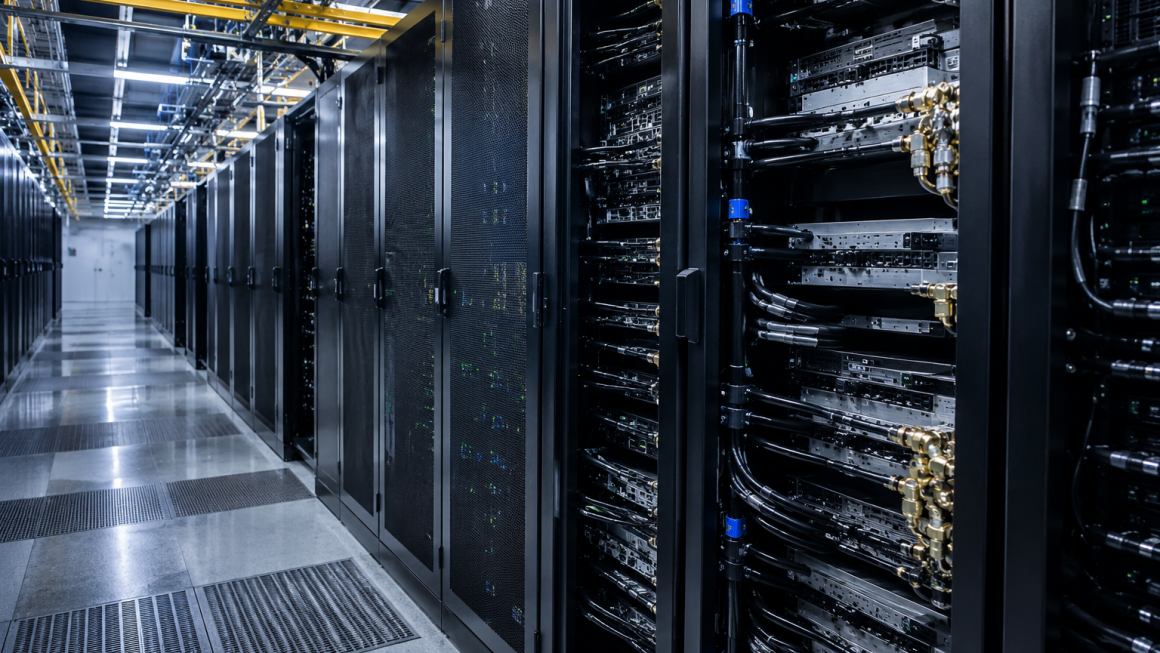
Artificial intelligence (AI) has become one of the primary drivers of global investment in computing infrastructure. Advances in large-scale AI models, high-performance computing (HPC), cloud services, autonomous systems, and industrial automation continue to increase demand for more capable and efficient hardware platforms.
While processors, memory, and networking technologies often receive the greatest attention, every AI computing system depends on a broader physical infrastructure. This infrastructure includes mechanical structures, thermal management systems, power distribution, cable management, cooling equipment, material systems, and manufacturing processes that enable reliable operation throughout the product lifecycle.
As computing performance continues to increase, the physical infrastructure supporting AI systems is also evolving. Improvements are no longer driven by a single component but by the integration of materials, mechanical engineering, thermal design, manufacturing technologies, and supply chain planning.
This article examines several engineering trends that may influence the future development of AI physical infrastructure.
Understanding AI Physical Infrastructure
AI physical infrastructure refers to the collection of hardware systems that support computing equipment throughout deployment and operation.
Typical elements include:
- AI servers
- GPU clusters
- High-performance computing (HPC) platforms
- Data center racks
- Power distribution systems
- Cooling systems
- Structural frames
- Mechanical enclosures
- Cable routing systems
- Thermal interface materials
- Monitoring and control equipment
Each subsystem contributes to the overall performance, reliability, and maintainability of AI installations.
Rather than functioning independently, these components increasingly operate as integrated engineering systems.
Higher Computing Density
One of the most significant trends is the continuous increase in computing density.
Modern AI servers integrate:
- More processors
- Higher memory capacity
- Faster interconnects
- Increased electrical power
As more computing capability is placed within a limited physical space, engineering requirements become increasingly complex.
Design considerations include:
- Mechanical stability
- Airflow management
- Heat dissipation
- Power delivery
- Service accessibility
Higher computing density requires coordinated optimization across multiple engineering disciplines.
The Evolution of Thermal Management
Thermal management is becoming one of the defining aspects of AI infrastructure.
Growing processor power results in greater heat generation, making effective cooling essential for maintaining system performance.
Current cooling technologies include:
- Air cooling
- Direct liquid cooling
- Cold plate systems
- Rear-door heat exchangers
- Immersion cooling
Each solution involves different mechanical structures, materials, and manufacturing considerations.
Future developments are expected to emphasize system-level optimization rather than relying on a single cooling technology.
Advanced Materials in AI Infrastructure
Material selection influences nearly every aspect of physical infrastructure.
Common material categories include:
Aluminum Alloys
Widely used for:
- Server chassis
- Heat sinks
- Structural frames
Their combination of relatively low weight, thermal conductivity, and manufacturability makes them suitable for many computing applications.
Engineering Polymers
Engineering plastics provide:
- Electrical insulation
- Lightweight construction
- Design flexibility
They are commonly used in cable management systems, connectors, and internal support components.
Composite Materials
Composite structures are increasingly evaluated where reduced weight or application-specific mechanical performance is required.
Examples include:
- Carbon fiber reinforced polymers
- Glass fiber composites
- Hybrid composite systems
Carbon-Based Materials
Advanced carbon materials continue to be investigated for thermal management applications.
These include:
- Graphene
- Carbon nanotubes (CNTs)
- Graphite-based materials
Their practical implementation depends on manufacturing methods, qualification procedures, and application requirements.
Structural Integration
Future AI infrastructure is expected to place greater emphasis on integrated mechanical design.
Instead of designing structural components independently, engineers increasingly consider:
- Thermal pathways
- Cooling interfaces
- Cable routing
- Serviceability
- Assembly efficiency
This systems-oriented approach may improve manufacturing efficiency while supporting long-term maintenance.
Flexible Manufacturing
The rapid pace of AI hardware development requires manufacturing systems capable of adapting to evolving product designs.
Flexible manufacturing may include:
- Pilot production
- Modular production lines
- Multi-material processing
- Digital manufacturing systems
- Automated quality monitoring
These capabilities support engineering development without assuming a single production model for every application.
Supply Chain Resilience
The global nature of AI infrastructure manufacturing highlights the importance of resilient supply chains.
Engineering teams often evaluate:
- Material availability
- Manufacturing capacity
- Supplier qualification
- Transportation considerations
- Regional production capabilities
Diversified sourcing strategies and collaborative supplier relationships may improve long-term operational flexibility.
Digital Engineering and Simulation
Digital engineering tools are becoming increasingly important throughout product development.
Applications include:
- Computer-aided design (CAD)
- Finite element analysis (FEA)
- Thermal simulation
- Computational fluid dynamics (CFD)
- Digital twin technologies
These tools enable engineers to evaluate designs before physical production, helping identify potential improvements during development.
Sustainability Considerations
As AI infrastructure expands, resource efficiency is receiving greater attention.
Areas under continuous evaluation include:
- Material utilization
- Manufacturing efficiency
- Equipment longevity
- Repairability
- Recycling of industrial materials
- Energy-efficient cooling technologies
Engineering decisions increasingly balance performance with lifecycle considerations.
System-Level Collaboration
Future AI infrastructure development will likely depend on closer collaboration across multiple engineering disciplines.
Typical participants include:
- Material suppliers
- Mechanical engineers
- Thermal specialists
- Electronics manufacturers
- System integrators
- Data center designers
Early collaboration during product development can support more effective integration of materials, structures, and manufacturing processes.
Looking Ahead
Although future technology development cannot be predicted with certainty, several long-term engineering directions are becoming increasingly evident.
These include:
- Greater system integration
- Higher computing density
- Advanced thermal management
- Increased use of digital engineering tools
- Broader evaluation of lightweight and multifunctional materials
- More flexible manufacturing strategies
- Continued emphasis on supply chain resilience
The pace and extent of adoption will depend on technical requirements, manufacturing capability, commercial feasibility, and evolving industry standards.
The future of AI physical infrastructure extends well beyond computing processors alone. Reliable AI systems depend on the effective integration of structural engineering, thermal management, advanced materials, manufacturing technologies, and supply chain coordination.
As AI computing continues to evolve, engineering attention is increasingly focused on complete system performance rather than isolated components. Materials, mechanical structures, cooling systems, and production processes all contribute to the reliability and efficiency of modern AI infrastructure.
While future developments will vary across different applications, a systems engineering approach is likely to remain central to the design of next-generation AI infrastructure. By integrating material science, manufacturing expertise, and engineering collaboration, organizations can support the continued advancement of reliable, scalable, and efficient computing platforms.