
Computing Is Moving Closer to the Data
For decades, computing infrastructure has followed a centralized model.
Data generated by devices was transmitted to large cloud data centers for processing, storage, and analysis.
This approach worked well when applications could tolerate:
- Network latency
- Bandwidth limitations
- Centralized decision-making
However, the rapid growth of artificial intelligence is changing these requirements.
Modern applications increasingly demand:
- Real-time responses
- Local intelligence
- Continuous connectivity
- High data processing efficiency
As a result, computing is moving closer to where data is created.
This transformation is driving the rise of:
Edge AI
and reshaping the future of distributed computing.
1. What Is Edge AI?
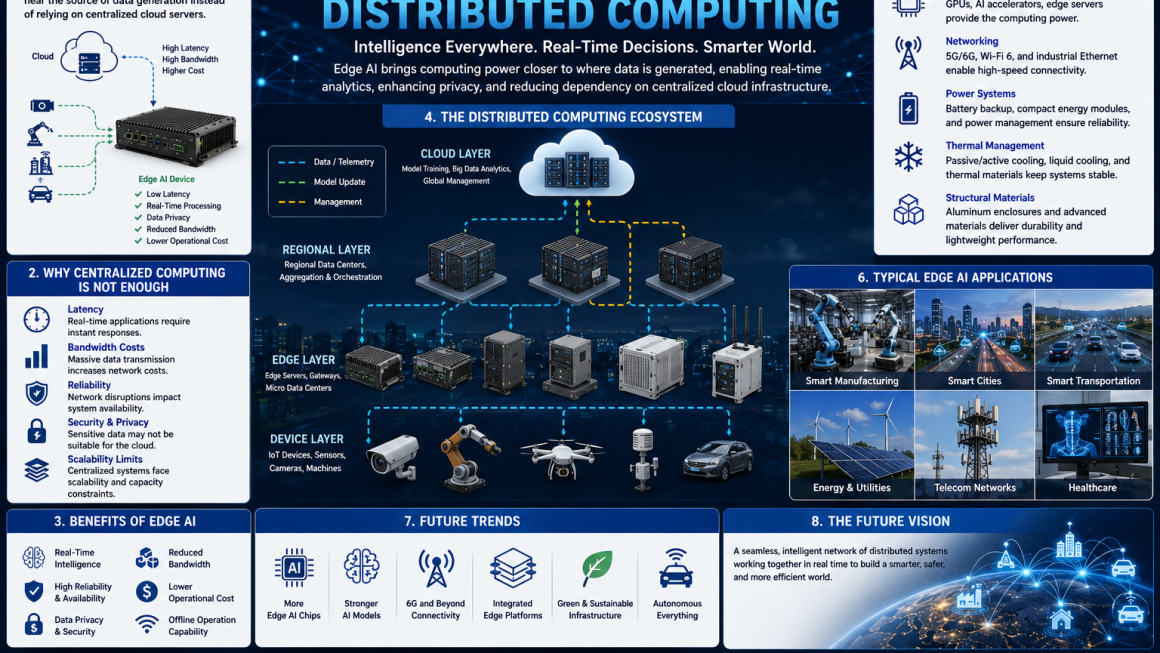
Edge AI refers to artificial intelligence processing performed near the source of data generation rather than in a centralized cloud environment.
Instead of sending all information to remote servers, AI models run locally on:
- Edge servers
- Industrial computers
- Smart cameras
- Telecom infrastructure
- Autonomous vehicles
- IoT gateways
This enables faster analysis and decision-making.
👉 Intelligence moves closer to the physical world.
2. Understanding Distributed Computing
Distributed computing involves multiple computing resources working together across different locations.
Rather than relying on a single centralized system, workloads are distributed among:
- Cloud data centers
- Regional facilities
- Edge computing nodes
- Embedded AI devices
Benefits include:
- Scalability
- Reliability
- Reduced latency
- Improved efficiency
Distributed architectures are becoming increasingly important as global data volumes continue growing.
3. Why Centralized Computing Alone Is No Longer Enough
The world is generating data at an unprecedented rate.
Sources include:
- Industrial sensors
- Surveillance systems
- Connected vehicles
- Smart city infrastructure
- Mobile devices
Transmitting all this data to centralized facilities creates several challenges.
Latency
Applications such as autonomous systems require immediate decisions.
Milliseconds matter.
Bandwidth Costs
High-resolution video and sensor data generate enormous network traffic.
Reliability
Cloud connectivity cannot always be guaranteed.
Privacy and Security
Some data must remain local for regulatory or operational reasons.
👉 Edge AI helps address these limitations.
4. Edge AI Enables Real-Time Intelligence
One of the biggest advantages of Edge AI is low-latency processing.
Examples include:
Autonomous Vehicles
Vehicles cannot wait for cloud responses when making driving decisions.
Industrial Automation
Production equipment requires immediate feedback.
Smart Surveillance
Video analytics must detect events instantly.
Healthcare Systems
Medical monitoring devices often require real-time alerts.
By processing information locally, Edge AI reduces delays and improves responsiveness.
5. Edge AI Is Creating New Infrastructure Requirements
Moving intelligence to the edge requires more than powerful processors.
It requires a complete infrastructure ecosystem.
Key components include:
Compute Hardware
- GPUs
- AI accelerators
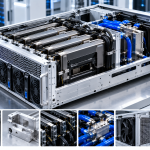
- Edge servers
Networking
- 5G networks
- Industrial Ethernet
- Wireless communications
Power Systems
- Battery backup
- Compact energy modules
- Power management platforms
Thermal Management
- Heat sinks
- Liquid cooling
- Passive thermal structures
Structural Systems
- Outdoor enclosures
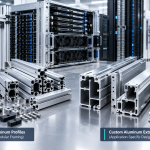
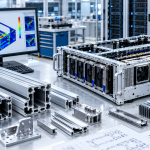
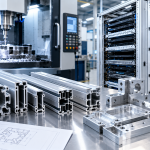
- Aluminum chassis
- Ruggedized cabinets
👉 Edge AI is driving innovation across multiple engineering disciplines.
6. Thermal Management Will Become Increasingly Important
As edge devices become more powerful, thermal challenges increase.
Modern edge systems may operate in:
- Factories
- Telecom towers
- Outdoor cabinets
- Transportation networks
Unlike data centers, these locations often lack controlled environments.
Thermal solutions may include:
Passive Cooling
Using:
- Aluminum heat sinks
- Conductive enclosures
- Heat spreaders
Active Cooling
Using:
- Fans
- Directed airflow systems
Liquid Cooling
Emerging in higher-performance edge deployments.
👉 Cooling technology is becoming a major factor in edge infrastructure design.
7. Why Materials Matter in Future Edge AI Systems
The growth of distributed computing is creating demand for advanced materials.
Key requirements include:
- Lightweight construction
- Thermal conductivity
- Corrosion resistance
- Mechanical durability
Aluminum
Widely used because it offers:
- Low weight
- Good thermal performance
- Structural strength
- Manufacturing flexibility
Applications include:
- Edge enclosures
- Server structures
- Cooling systems
Advanced Carbon Materials
Emerging applications include:
- Graphene heat spreaders
- Thermal interface materials
- Lightweight composites
These materials may play a growing role in future edge infrastructure.
👉 Materials science is becoming increasingly important in AI deployment.
8. 5G and Future Networks Will Accelerate Edge AI
The expansion of advanced communication networks is helping enable distributed computing.
5G supports:
- Low latency
- High bandwidth
- Massive device connectivity
Future 6G networks may further enhance:
- AI collaboration
- Real-time processing
- Distributed intelligence
Together, Edge AI and advanced communications create a powerful infrastructure platform.
9. Sustainability Is Driving Distributed Computing
Energy efficiency is becoming a major priority.
Sending large volumes of data across networks consumes significant resources.
Edge processing can reduce:
- Data transmission requirements
- Network congestion
- Cloud computing loads
Future edge infrastructure may increasingly integrate:
- Renewable energy
- Battery storage
- Intelligent energy management systems
👉 Distributed computing supports both performance and sustainability goals.
10. The Future: From Centralized AI to Intelligent Networks
The future of computing will likely combine:
Cloud AI
For:
- Large-scale model training
- Massive data storage
Regional Computing
For:
- Workload balancing
- Data aggregation
Edge AI
For:
- Real-time decision-making
- Local intelligence
Embedded AI
For:
- Autonomous devices
- Smart sensors
- Intelligent machines
This creates a multi-layered distributed computing ecosystem.
Rather than replacing cloud infrastructure, Edge AI complements it.
👉 Future computing will be distributed, collaborative, and intelligent.
Edge AI is transforming how computing infrastructure is designed and deployed.
By bringing intelligence closer to data sources, organizations can achieve:
- Lower latency
- Improved reliability
- Reduced bandwidth consumption
- Enhanced scalability
This shift is driving innovation across:
- AI hardware
- Cooling technologies
- Energy systems
- Structural materials
- Communications networks
As distributed computing continues to evolve, Edge AI will become one of the foundational technologies supporting the next generation of intelligent infrastructure.
👉 The future of computing is no longer defined by a single data center—it is being built through interconnected networks of intelligent systems operating at the edge.