Beyond Performance
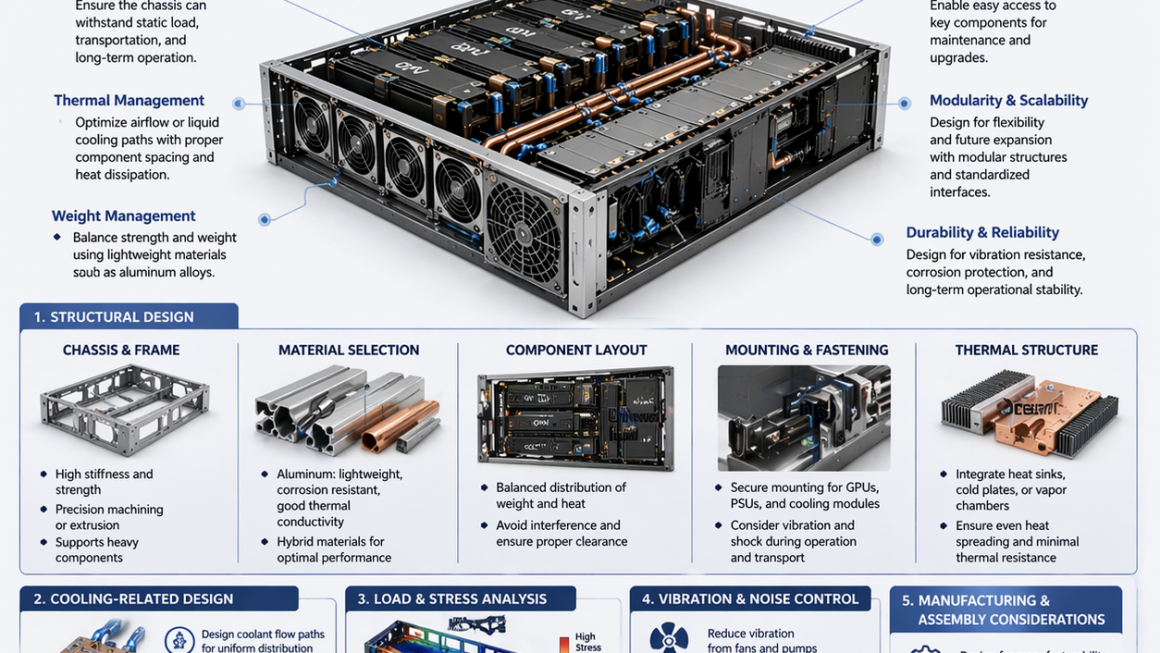
High-performance AI hardware pushes boundaries not only in computation and thermal management but also in mechanical design.
Mechanical design impacts:
- Structural integrity
- Thermal efficiency
- System reliability
- Deployment and maintenance
Ignoring mechanical constraints can lead to hardware failure, increased maintenance costs, and reduced AI system uptime.
1. Structural Integrity in High-Density Servers
AI servers now integrate:
- Multiple GPUs and accelerators
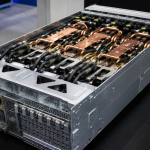
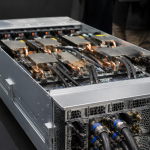
- Liquid cooling components (cold plates, manifolds, tubing)
- Dense power and networking modules
Key structural challenges:
- Rack stability under high weight
- Chassis deformation under concentrated load
- Vibration resistance to protect delicate components
Design strategy: Materials, bracing, and distribution must be optimized to balance load and prevent structural failure.
2. Weight Management and Distribution
Weight distribution is a critical factor:
- Uneven load can stress rails and mounting systems
- Concentrated mass on lower racks increases risk of mechanical deformation
- Installation and maintenance complexity increases with server mass
Mitigation strategies:
- Use lightweight materials like aluminum
- Hybrid designs (copper + aluminum) for weight and thermal balance
- Modular components for easier handling
3. Thermal-Mechanical Coupling
Thermal management impacts mechanical design:
- Hot components expand under load → induce stress
- Liquid cooling manifolds and tubing add mass and structural constraints
- Immersion or high-density cooling systems require enclosure reinforcement
Approach: Co-design thermal and mechanical aspects for stability and efficiency.
4. Vibration and Shock Resistance
AI hardware is sensitive to mechanical vibration:
- Pumps, fans, and fluid flow generate dynamic forces
- Racks may experience vibration from adjacent servers or external factors
Solutions:
- Shock absorbers and damping mounts
- Reinforced chassis
- Modular subassemblies to isolate vibration
5. Serviceability and Modular Design
Mechanical design must facilitate:
- Safe installation and removal of components
- Easy access to fluid, power, and data connections
- Standardized modular interfaces for scalability
Benefits:
- Reduced maintenance downtime
- Improved operational safety
- Flexibility for upgrades and replacements
6. Material Selection
Material choice is crucial for balancing strength, weight, and thermal performance:
| Material | Advantages | Considerations |
|---|---|---|
| Aluminum | Lightweight, corrosion-resistant, good thermal properties | Lower thermal conductivity than copper |
| Copper | Excellent thermal performance | Heavy, expensive |
| Hybrid (Cu + Al) | Balance of performance and weight | Requires engineering for integration |
| Advanced composites / graphene | High strength, reduced weight, enhanced thermal spreading | Emerging technology, higher cost |
7. Rack-Level Considerations
Mechanical design at the rack level must address:
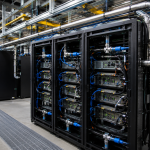
- Even weight distribution across multiple servers
- Structural reinforcement for high-density deployments
- Integration of thermal, power, and networking infrastructure
Result: A rack that is both thermally efficient and mechanically robust.
8. Monitoring and Reliability
Mechanically optimized AI systems often incorporate:
- Strain gauges or sensors for stress monitoring
- Vibration detection systems
- Predictive maintenance for mechanical wear
This ensures long-term reliability in demanding AI workloads.
Engineering Beyond the Chip
Mechanical design is a core enabler of AI hardware performance.
By integrating considerations of:
- Weight distribution
- Thermal-structural coupling
- Vibration and shock resistance
- Material selection
- Rack-level design
Engineers can build AI systems that are not only high-performance but also reliable, serviceable, and scalable.