
AI Servers Are Evolving Beyond Conventional Design
Traditional server structures were designed for:
- Moderate power density
- Air-cooled environments
- Relatively lightweight computing hardware
But modern AI infrastructure is fundamentally different.
Today’s AI servers must support:
- Multiple high-power GPUs
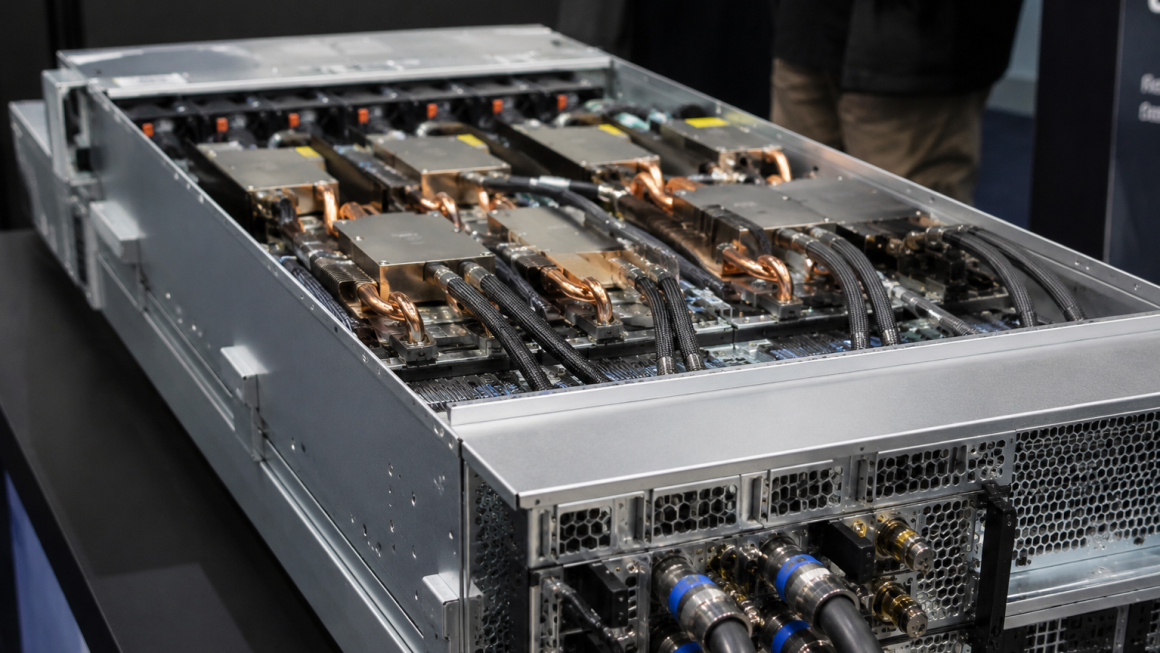
- Advanced liquid cooling systems
- Dense power delivery architectures
- Heavy thermal management hardware
- Continuous 24/7 operation under extreme workloads
👉 As a result, traditional metal frame designs are reaching their limits.
The industry is now moving toward a new generation of AI server structures that integrate:
- Lightweight engineering
- Advanced materials
- Thermal-mechanical optimization
- Modular scalable architectures
1. Why Traditional Server Frames Are No Longer Enough
Conventional server chassis were primarily optimized for:
- Standardized IT deployments
- Simpler airflow management
- Lower structural loads
AI systems create new challenges:
Higher Weight
Modern GPU servers can become significantly heavier due to:
- Large accelerators
- Liquid cooling manifolds
- Cold plates
- Reinforced power systems
Thermal Stress
Extreme heat generation causes:
- Thermal expansion
- Material fatigue
- Structural deformation risks
Complex Cooling Integration
AI servers increasingly require:
- Tubing
- Fluid routing
- Pump integration
- Leak management systems
👉 The chassis is no longer just a metal enclosure—it is becoming part of the thermal infrastructure itself.
2. The Rise of Structural Aluminum
Aluminum is becoming increasingly important in AI server engineering.
Advantages include:
- Lightweight strength
- Corrosion resistance
- Good thermal conductivity
- Easier modular fabrication
Applications:
- Chassis structures
- Rack frames
- Cooling enclosures
- Structural supports
👉 Aluminum helps reduce total system weight while maintaining structural performance.
3. Hybrid Material Architectures
Future AI servers will likely combine multiple materials rather than relying on steel alone.
Examples include:
- Aluminum structural frames
- Copper thermal interfaces
- Carbon composite reinforcement
- Graphene-enhanced coatings
This creates:
- Better weight optimization
- Improved thermal performance
- Higher mechanical efficiency
👉 AI server structures are evolving into multi-material engineering systems.
4. Thermal-Structural Co-Design
In modern AI hardware, thermal and structural engineering can no longer be separated.
High heat density affects:
- Material expansion
- Mounting pressure
- Structural stability
- Cooling interface reliability
Examples:
- GPU cold plate mounting requires precise pressure control
- Thermal cycling affects sealing and connectors
- Heavy cooling hardware changes load distribution
👉 Future AI servers must be designed with integrated thermal-mechanical optimization.
5. Modular Server Structures
Scalability and serviceability are becoming critical.
Modern AI server structures increasingly prioritize:
- Modular GPU trays
- Replaceable cooling modules
- Quick-access maintenance design
- Tool-less or simplified servicing
Benefits include:
- Faster maintenance
- Reduced downtime
- Easier infrastructure scaling
👉 Modular structures help support hyperscale AI deployment.
6. Structural Challenges in Liquid Cooling Systems
Liquid cooling introduces entirely new engineering considerations.
AI server structures must now support:
- Fluid manifolds
- High-pressure tubing
- Pump systems
- Leak containment strategies
This creates demand for:
- Corrosion-resistant materials
- Precision sealing surfaces
- Vibration-resistant mounting systems
👉 The server frame is evolving into a fluid-compatible engineered platform.
7. Weight Distribution and Rack-Level Engineering
GPU-heavy systems create rack-level structural challenges.
Problems include:
- Uneven weight concentration
- Rail stress
- Rack deformation risks
- Transportation and installation difficulties
New approaches involve:
- Lightweight structural materials
- Reinforced modular supports
- Optimized load balancing
👉 Rack engineering and server structural design are becoming tightly interconnected.
8. Sustainability and Lightweight Engineering
Sustainability is increasingly influencing server structure design.
Lightweight materials help:
- Reduce transportation emissions
- Lower facility structural load
- Improve energy efficiency during deployment and cooling
Recyclable materials such as aluminum also support:
- Circular manufacturing strategies
- ESG initiatives
- Long-term sustainability goals
👉 Future server structures must balance performance, reliability, and environmental responsibility.
9. The Future: AI Server Structures as Intelligent Infrastructure
Over the next decade, AI server structures will evolve from passive enclosures into active engineering systems.
Future structures may integrate:
- Embedded thermal monitoring
- Smart vibration sensing
- Advanced material coatings
- Integrated cooling channels
- Hybrid composite architectures
👉 The boundary between:
- Structure
- Cooling
- Thermal management
- Materials engineering
will increasingly disappear.
AI Infrastructure Is Redefining Server Structures
AI computing is transforming the role of server architecture.
Traditional metal frames are no longer sufficient for:
- High-density GPUs
- Advanced liquid cooling
- Extreme thermal loads
- Scalable AI infrastructure
The next generation of AI server structures will rely on:
- Lightweight engineering
- Advanced materials
- Thermal-structural integration
- Modular scalable design
👉 Future competitive advantage in AI infrastructure will depend not only on compute power—but also on how effectively systems are physically engineered and supported.