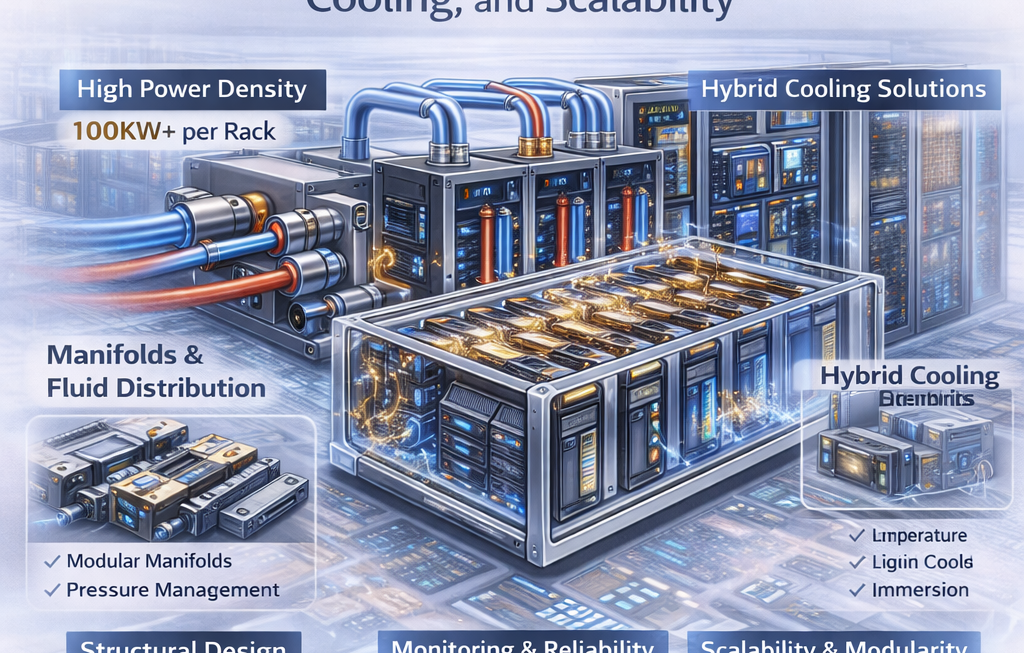
From Components to Systems
As AI workloads scale rapidly, optimizing individual components—GPUs, cold plates, or coolants—is no longer sufficient.
👉 The real challenge lies at the rack level, where power, cooling, structure, and reliability must work together as a unified system.
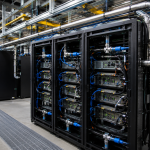
Modern AI racks are evolving into high-density, thermally constrained, and highly integrated platforms, often exceeding:
- 50kW → 100kW+ per rack
- Multi-GPU configurations
- Complex liquid cooling architectures
1. What Is Rack-Level Engineering?
Rack-level engineering refers to the system-level integration of all components within a server rack, including:
- Compute hardware (GPUs, CPUs, memory)
- Power delivery systems
- Cooling infrastructure (air, liquid, or hybrid)
- Mechanical structure and enclosure
- Monitoring and control systems
👉 It is where thermal design, fluid systems, and structural engineering converge.
2. Key Challenges in AI Rack Design
High Power Density
- AI racks now exceed traditional data center limits
- Heat generation is concentrated and continuous
Thermal Management Complexity
- Air cooling becomes insufficient at high density
- Liquid cooling introduces fluid routing and reliability concerns
Space Constraints
- Limited physical space for:
- Cooling hardware
- Fluid distribution
- Cabling and power systems
System Integration
- Ensuring compatibility between:
- Cold plates
- Manifolds
- Pumps and CDUs
- Structural components
👉 Rack-level design is a multi-variable optimization problem.
3. Cooling Architecture at the Rack Level
Air Cooling (Legacy / Hybrid)
- Still used for auxiliary components
- Limited for high-density AI
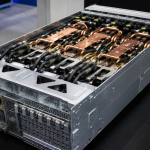
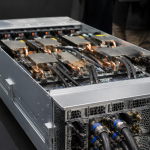
Direct-to-Chip Liquid Cooling
- Primary solution for GPUs/CPUs
- Requires:
- Cold plates
- Manifolds
- Coolant distribution systems
Immersion Cooling (Emerging)
- Entire servers submerged in dielectric fluids
- Eliminates airflow constraints
- Requires rethinking of rack architecture
👉 Many modern systems adopt hybrid cooling strategies.
4. Fluid Distribution and Manifold Integration
At the rack level, coolant must be distributed efficiently across multiple nodes.
Key considerations:
- Uniform flow distribution
- Pressure balance across parallel loops
- Minimizing pressure drop
- Leak prevention and reliability
Manifolds act as the central coordination layer for cooling:
- Connecting multiple cold plates
- Enabling modular scalability
- Supporting maintenance and quick replacement
5. Structural and Material Considerations
Aluminum Structures
- Lightweight
- Good thermal conductivity
- Ideal for scalable rack design
Hybrid Materials
- Combine strength, thermal performance, and cost efficiency
Mechanical Design
- Supports:
- Vibration resistance
- Thermal expansion control
- Long-term structural stability
👉 Structural design is increasingly tied to thermal performance.
6. Power and Thermal Coupling
At high densities, power and cooling cannot be designed separately.
- Power delivery generates additional heat
- Cable routing affects airflow and fluid layout
- PSU placement impacts thermal zones
👉 Rack-level engineering must co-optimize:
- Electrical efficiency
- Thermal management
- Physical layout
7. Monitoring, Control, and Reliability
AI racks require advanced monitoring systems:
- Temperature sensors across nodes
- Flow and pressure monitoring
- Leak detection systems
- Real-time performance analytics
These systems enable:
- Predictive maintenance
- Failure prevention
- Optimized performance under dynamic workloads
8. Scalability and Modular Design
Future AI infrastructure demands rapid deployment and scalability.
Key strategies:
- Modular rack units
- Standardized interfaces (fluid, power, data)
- Plug-and-play cooling modules
- Easy serviceability
👉 Scalability is not just about size—it’s about repeatable, reliable deployment.
Rack-Level Design Defines System Performance
In modern AI infrastructure, the rack is no longer just a container—it is a fully integrated engineering system.
The most effective solutions combine:
- Advanced cooling (liquid / immersion)
- Optimized material selection
- Intelligent fluid distribution
- Robust structural design
- Real-time monitoring and control
👉 Companies that master rack-level engineering will lead the next generation of AI infrastructure deployment.