
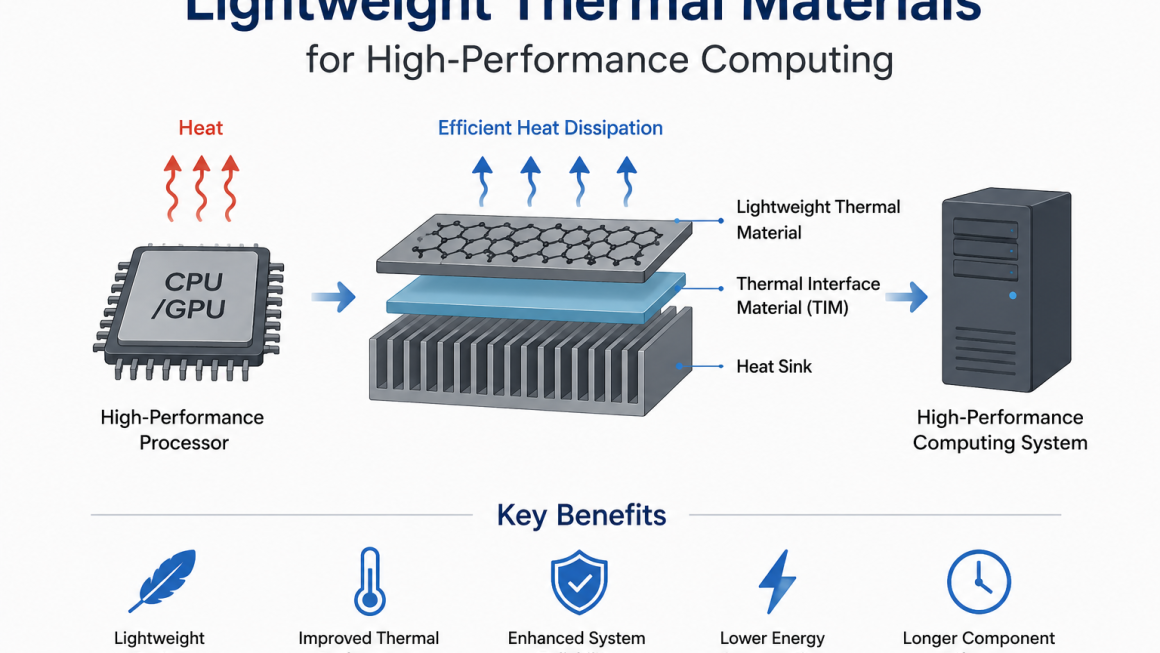
The rapid growth of artificial intelligence (AI), machine learning, cloud computing, and high-performance computing (HPC) is driving unprecedented demand for faster and more powerful computing systems. Modern processors, GPUs, AI accelerators, and data center servers are capable of processing enormous amounts of data, but this increased performance comes with a significant challenge: heat generation.
As computing power continues to rise, thermal management has become one of the most critical factors affecting system reliability, efficiency, and operational lifespan. Traditional cooling methods remain important, but they are increasingly constrained by weight, space limitations, and energy consumption.
To address these challenges, engineers and system designers are turning to lightweight thermal materials that can efficiently dissipate heat while minimizing overall system weight. These advanced materials are becoming essential components in next-generation AI servers, edge computing devices, telecommunications equipment, aerospace electronics, and high-density data centers.
This article explores the role of lightweight thermal materials in high-performance computing and examines how emerging materials are helping create faster, cooler, and more efficient computing systems.
Why Thermal Management Matters in HPC
High-performance computing systems operate under extremely demanding conditions.
Applications include:
- Artificial Intelligence (AI)
- Machine Learning
- Scientific Simulations
- Cloud Computing
- Financial Modeling
- Autonomous Systems
- Digital Twin Technologies
These workloads place enormous stress on processors and electronic components.
Modern AI accelerators can consume hundreds of watts per chip, while advanced server racks may require tens or even hundreds of kilowatts of power. Nearly all of this energy eventually becomes heat.
Without effective thermal management, excessive heat can cause:
- Reduced processing performance
- Thermal throttling
- Hardware failures
- Increased energy consumption
- Shortened equipment lifespan
- Higher maintenance costs
As a result, heat dissipation is no longer simply a cooling issue—it has become a critical system design consideration.
The Growing Need for Lightweight Thermal Materials
Traditionally, thermal management solutions relied heavily on metals such as aluminum and copper.
These materials offer excellent thermal conductivity but present several limitations:
Increased System Weight
Large heat sinks and cooling assemblies can significantly increase equipment weight.
This is especially problematic for:
- Edge computing systems
- Autonomous vehicles
- Robotics
- Aerospace electronics
- Mobile AI platforms
Space Constraints
Modern computing hardware is becoming increasingly compact.
Designers must fit more processing power into smaller volumes while maintaining acceptable operating temperatures.
Energy Efficiency Requirements
Data centers are under growing pressure to reduce energy consumption and improve sustainability.
Reducing material weight and improving thermal efficiency can contribute to lower operational costs.
These challenges are driving interest in advanced lightweight thermal materials that combine high thermal performance with reduced mass.
Key Characteristics of Lightweight Thermal Materials
Effective thermal materials for HPC applications typically require several important properties.
High Thermal Conductivity
Efficient heat transfer remains the primary requirement.
Materials must rapidly move heat away from processors and power electronics.
Low Density
Reducing system weight improves mobility, installation flexibility, and energy efficiency.
Mechanical Stability
Thermal materials must withstand:
- Temperature cycling
- Vibration
- Mechanical stress
- Long-term operation
Electrical Performance
Depending on the application, materials may require:
- Electrical insulation
- Electromagnetic shielding
- Static dissipation capabilities
Manufacturability
Materials should support:
- Mass production
- Complex geometries
- Integration into existing hardware designs
Common Lightweight Thermal Materials
Aluminum-Based Solutions
Aluminum remains one of the most widely used thermal materials in computing systems.
Advantages include:
- Good thermal conductivity
- Low density
- Excellent manufacturability
- Cost-effectiveness
Applications include:
- Heat sinks
- Chassis structures
- Server enclosures
- Cooling plates
Although aluminum is lighter than copper, designers continue to seek even lighter alternatives.
Graphite Thermal Materials
Graphite has become increasingly important in advanced electronics cooling.
Benefits include:
- Exceptional in-plane thermal conductivity
- Extremely low weight
- Thin profile designs
- Flexible configurations
Graphite materials are commonly used in:
- AI accelerators
- Consumer electronics
- Telecommunications equipment
- Edge computing systems
Their ability to spread heat efficiently across large surfaces makes them particularly attractive for compact HPC devices.
Graphene-Based Thermal Materials
Graphene is one of the most promising thermal management materials currently under development.
Graphene offers:
- Extremely high thermal conductivity
- Outstanding mechanical strength
- Lightweight characteristics
- Flexible integration options
Potential applications include:
- Thermal interface materials (TIMs)
- Heat spreaders
- Composite cooling structures
- Advanced electronic packaging
As manufacturing technologies mature, graphene-enhanced thermal materials are expected to play a growing role in high-performance computing systems.
Carbon Fiber Composite Structures
Carbon fiber composites are increasingly used in applications requiring both structural support and thermal management.
Advantages include:
- High strength-to-weight ratio
- Lightweight construction
- Excellent dimensional stability
- Design flexibility
Applications include:
- AI server frames
- Aerospace computing platforms
- Edge AI systems
- Advanced electronics housings
When combined with thermally conductive fillers, carbon fiber composites can contribute to both structural and thermal performance.
Carbon Nanotube (CNT) Enhanced Materials
Carbon nanotubes offer unique opportunities for thermal management.
Key benefits include:
- High thermal conductivity
- Low density
- Improved composite performance
- Enhanced mechanical properties
CNT-enhanced materials are being explored for:
- Thermal interface materials
- Conductive composites
- Advanced cooling components
As production costs continue to decline, CNT technologies may become increasingly common in future HPC systems.
Thermal Interface Materials: Small Components, Big Impact
One of the most important thermal management challenges involves transferring heat between components.
Even highly polished surfaces contain microscopic air gaps that reduce heat transfer efficiency.
Thermal Interface Materials (TIMs) help eliminate these gaps.
Modern lightweight TIM solutions include:
- Graphene-enhanced pads
- Carbon-based composites
- Phase-change materials
- Advanced polymer formulations
High-performance TIMs can significantly reduce thermal resistance and improve cooling efficiency throughout the system.
Lightweight Thermal Materials in AI Data Centers
AI data centers represent one of the fastest-growing markets for thermal management solutions.
Modern AI clusters generate unprecedented heat loads due to:
- Large GPU deployments
- High-density server configurations
- Continuous operation
- Increasing rack power densities
Lightweight thermal materials can contribute to:
Improved Cooling Efficiency
Advanced heat spreaders and thermal interfaces help maintain lower operating temperatures.
Reduced Structural Weight
Lighter cooling components reduce mechanical loads on server infrastructure.
Enhanced Energy Efficiency
Better thermal performance often translates into lower cooling energy requirements.
Increased Equipment Reliability
Maintaining stable operating temperatures helps extend component lifespan.
As AI adoption accelerates, thermal materials will play an increasingly important role in data center optimization.
Emerging Technologies and Future Trends
Several trends are expected to shape the future of lightweight thermal materials.
Graphene-Enhanced Composites
Researchers continue to develop graphene-based materials capable of delivering superior thermal performance while maintaining low weight.
Multifunctional Materials
Future thermal materials may combine:
- Heat dissipation
- Structural reinforcement
- Electromagnetic shielding
- Electrical conductivity
within a single solution.
Additive Manufacturing Integration
3D printing technologies are enabling new thermal structures with optimized cooling channels and lightweight geometries.
Sustainable Thermal Materials
Environmental considerations are encouraging the development of recyclable and energy-efficient material systems.
AI-Assisted Thermal Design
Artificial intelligence is increasingly being used to optimize thermal pathways and material selection, improving cooling performance while reducing system weight.
As high-performance computing continues to advance, thermal management is becoming a defining factor in system performance, reliability, and efficiency. Traditional cooling materials remain valuable, but increasing power densities and growing sustainability requirements are driving demand for lighter and more effective alternatives.
Materials such as graphite, graphene, carbon fiber composites, and carbon nanotube-enhanced systems are helping engineers address the challenges associated with modern AI infrastructure, advanced data centers, and next-generation computing platforms.
By combining low weight with excellent thermal performance, lightweight thermal materials are enabling the development of faster, cooler, and more energy-efficient computing systems. As AI workloads continue to grow and hardware architectures evolve, these advanced materials will play an increasingly important role in shaping the future of high-performance computing.