
AI Infrastructure Is Expanding at Unprecedented Speed
The global expansion of AI is driving a massive wave of new data center construction.
Driven by:
- Large-scale AI model training
- High-density GPU clusters
- Edge AI deployment
- Cloud AI services
modern AI data centers are becoming:
- Larger
- More power-dense
- More thermally demanding
- Structurally more complex
As a result, the industry is facing a growing challenge that goes beyond semiconductors and cooling:
👉 The rising demand for advanced structural materials.
Materials are now becoming a foundational layer of AI infrastructure scalability.
1. AI Growth Is Increasing Physical Infrastructure Demand
AI computing growth requires enormous physical expansion.
Modern AI facilities demand:
- High-density server racks
- Reinforced cooling systems
- Larger power infrastructure
- Advanced thermal management architectures
Compared with traditional cloud infrastructure:
- AI servers are heavier
- Cooling systems are more complex
- Rack power density is significantly higher
👉 This dramatically increases demand for structural engineering materials.
2. The Shift Toward High-Density AI Data Centers
Traditional data centers were optimized primarily for:
- Air cooling
- Moderate rack density
- Standardized server loads
AI changes these assumptions.
Modern AI deployments increasingly feature:
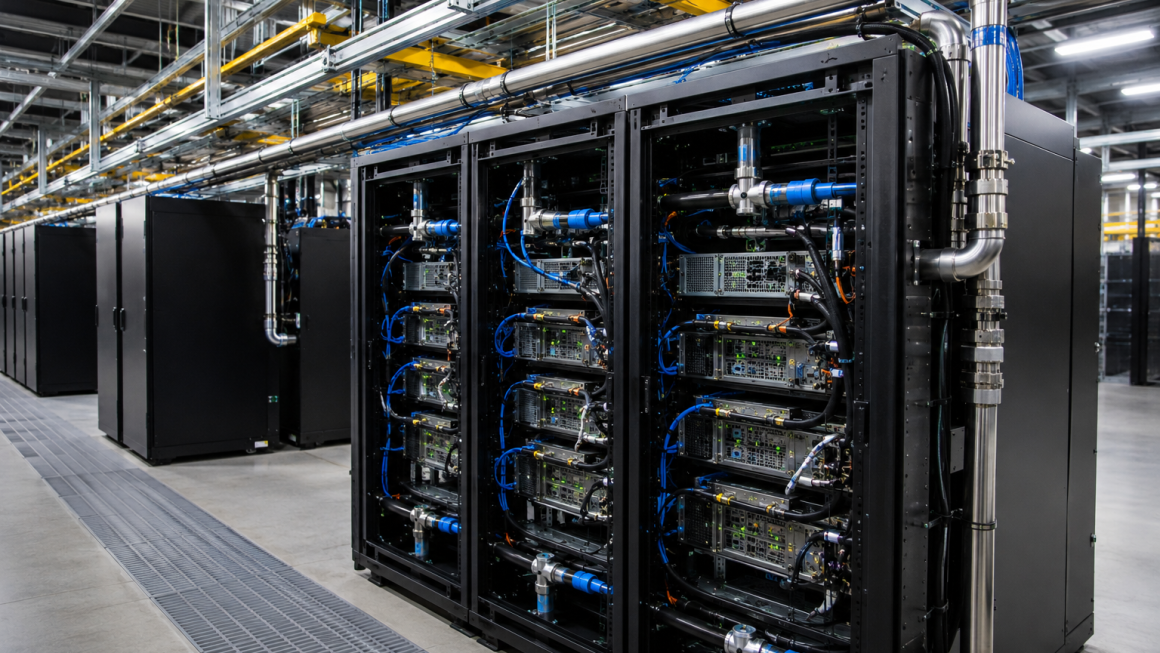
- 50kW–100kW+ rack densities
- Multi-GPU liquid-cooled servers
- Rack-scale thermal infrastructure
This creates major structural challenges:
- Weight concentration
- Vibration management
- Thermal expansion
- Mechanical reliability
👉 Structural materials are becoming critical infrastructure components.
3. Why Structural Materials Matter More Than Ever
AI infrastructure now depends heavily on:
- Mechanical integrity
- Thermal compatibility
- Lightweight scalability
- Corrosion resistance
Structural materials directly affect:
- Rack reliability
- Cooling integration
- Serviceability
- Facility scalability
In high-density AI environments, poor structural optimization can lead to:
- Deployment limitations
- Increased maintenance difficulty
- Cooling inefficiency
- Long-term reliability risks
👉 Material selection is becoming a strategic engineering decision.
4. Aluminum Is Becoming a Core AI Infrastructure Material
Aluminum is seeing rapidly increasing demand in AI infrastructure because of its unique balance of properties.
Key advantages include:
Lightweight Strength
- Reduces overall system weight
- Improves deployment flexibility
Corrosion Resistance
- Suitable for liquid cooling environments
Thermal Compatibility
- Supports thermal integration and heat spreading
Manufacturing Scalability
- Easier fabrication for modular systems
Applications include:
- Server chassis
- Rack structures
- Cooling enclosures
- Thermal support assemblies
👉 Structural aluminum is becoming increasingly important in AI hardware ecosystems.
5. The Rise of Hybrid Material Architectures
Future AI infrastructure will rely on combinations of materials rather than single-material systems.
Examples include:
- Aluminum structural frames
- Copper thermal interfaces
- Carbon composite reinforcement
- Graphene-enhanced coatings
This allows optimization of:
- Weight
- Thermal performance
- Structural strength
- Corrosion resistance
👉 AI data center engineering is becoming increasingly material-driven.
6. Liquid Cooling Is Accelerating Material Demand
The rapid adoption of liquid cooling is creating entirely new structural requirements.
AI thermal infrastructure now requires:
- Manifolds
- Pump systems
- Fluid-compatible enclosures
- High-reliability sealing surfaces
This increases demand for:
- Corrosion-resistant metals
- Precision-machined aluminum parts
- Composite structures
- Advanced coatings
👉 Cooling infrastructure is now directly influencing material demand growth.
7. AI Infrastructure Requires Lightweight Scalability
Hyperscale AI deployment depends on rapid infrastructure expansion.
Lightweight structural systems help enable:
- Faster deployment
- Easier transportation
- Simplified installation
- Better modular scalability
This is particularly important for:
- Edge AI systems
- Containerized AI infrastructure
- Modular data centers
👉 Lightweight engineering is becoming essential for scalable AI growth.
8. Sustainability Is Influencing Material Selection
As AI energy consumption rises, sustainability concerns are growing rapidly.
Structural materials now play a role in:
- Embodied carbon reduction
- Recyclability
- Lifecycle durability
- Cooling efficiency
Materials such as aluminum support:
- Circular manufacturing
- Lower transportation impact
- Long service life
Advanced composites and carbon materials may further improve:
- Weight reduction
- Thermal efficiency
- System sustainability
👉 ESG goals are increasingly shaping future material demand.
9. Structural Engineering Is Becoming Strategic Infrastructure
Historically, data center discussions focused primarily on:
- Compute power
- Networking
- Software architecture
Today, structural engineering is becoming equally important.
Future AI infrastructure competitiveness will increasingly depend on:
- Thermal-mechanical integration
- Lightweight material systems
- Modular structural architectures
- Reliable cooling-compatible designs
👉 Structural materials are evolving from commodity components into strategic infrastructure technologies.
AI Growth Is Creating a New Era of Material Demand
The rapid expansion of AI infrastructure is reshaping the role of structural materials.
Modern AI data centers require:
- Lightweight engineering
- Thermal-compatible materials
- Corrosion-resistant structures
- Scalable modular architectures
As AI systems continue growing in density and complexity, demand will rise for:
- Structural aluminum
- Advanced composites
- Carbon-enhanced materials
- Hybrid thermal-mechanical systems
👉 The future of AI infrastructure is not only a computing challenge—it is increasingly a materials and structural engineering challenge.