
AI Growth Is Reshaping Infrastructure
The rapid expansion of AI is driving an unprecedented increase in GPU deployment.
Modern AI clusters now contain:
- Thousands of GPUs
- Ultra-dense server architectures
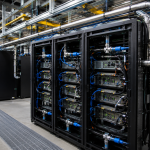
- Multi-rack liquid cooling systems
- High-power AI accelerators exceeding 700W–1000W+ per chip
As GPU density rises, thermal management is no longer just a supporting function.
👉 Cooling is becoming a core infrastructure layer.
This shift is giving rise to what can be described as:
Thermal Infrastructure
A new generation of integrated systems designed specifically to manage:
- Extreme heat density
- Fluid distribution
- Rack-level cooling
- Energy efficiency
- Long-term operational reliability
1. Why GPU Density Is Increasing So Rapidly
AI models are becoming:
- Larger
- More complex
- More compute-intensive
To support these workloads, data centers are deploying:
- More GPUs per server
- More servers per rack
- More racks per cluster
This creates:
- Higher compute density
- Higher power density
- Much greater thermal concentration
👉 GPU density is increasing faster than traditional cooling methods can handle.
2. The Thermal Bottleneck
Historically, cooling was treated as a secondary system.
Today, it is becoming a limiting factor for AI scalability.
Key thermal challenges include:
- Hotspot formation
- Thermal throttling
- Increased fan power consumption
- Rack-level heat accumulation
- Cooling inefficiency at high density
In many AI deployments:
- Compute performance is now directly tied to thermal capacity
👉 Without adequate thermal infrastructure, additional GPUs cannot operate efficiently.
3. Air Cooling Is Reaching Its Limits
Traditional air cooling faces fundamental physical constraints.
Problems include:
- Limited heat transfer capability of air
- Large airflow requirements
- High noise and energy consumption
- Uneven cooling distribution
As rack power approaches:
- 50kW
- 80kW
- 100kW+
air cooling becomes increasingly difficult and inefficient.
👉 This is accelerating the shift toward liquid-based thermal infrastructure.
4. The Rise of Liquid Cooling Infrastructure
Liquid cooling is rapidly becoming essential for modern AI systems.
Key technologies include:
Direct-to-Chip Cooling
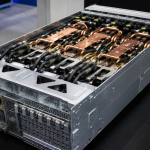
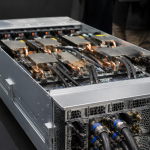
- Cold plates directly remove heat from GPUs and CPUs
- High thermal efficiency
- Reduced thermal resistance
Rack-Level Liquid Cooling
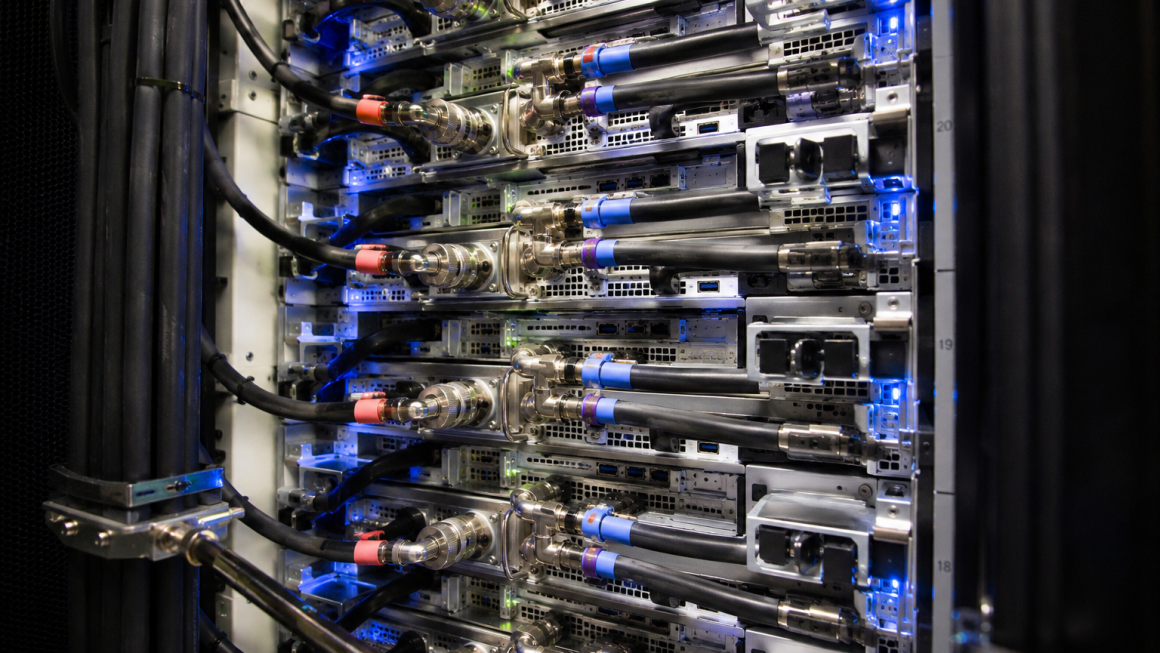
- Integrated manifolds and coolant distribution systems
- Enables higher rack density
Immersion Cooling
- Entire systems submerged in dielectric fluids
- Supports extreme heat flux environments
👉 Cooling is evolving from isolated components into fully integrated infrastructure.
5. Thermal Infrastructure Is Becoming System Architecture
Modern thermal infrastructure now includes:
Fluid Distribution Networks
- Manifolds
- Pumps
- Coolant routing systems
Thermal Monitoring Systems
- Temperature sensing
- Flow monitoring
- Leak detection
Mechanical Integration
- Structural support for cooling hardware
- Weight and vibration management
Energy Optimization
- Heat reuse strategies
- Cooling power reduction
- Intelligent thermal control
👉 Thermal systems are becoming deeply integrated into overall data center architecture.
6. Materials Are Central to Thermal Infrastructure
As cooling systems become more advanced, material requirements become more demanding.
Key material needs include:
- High thermal conductivity
- Corrosion resistance
- Lightweight structural strength
- Long-term fluid compatibility
Aluminum
Used for:
- Structural frames
- Cooling enclosures
- Lightweight manifolds
Advantages:
- Lightweight
- Scalable
- Recyclable
Copper
Used for:
- High-performance cold plates
- Heat transfer interfaces
Advantages:
- Excellent thermal conductivity
Challenges:
- Heavy and expensive
Graphene and Carbon Materials
Emerging for:
- Thermal interface materials
- Heat spreaders
- Advanced coatings
Advantages:
- Exceptional thermal performance
- Lightweight integration
👉 Thermal infrastructure is increasingly becoming a materials engineering challenge.
7. GPU Density Is Driving Rack-Level Transformation
High-density AI systems are changing rack engineering itself.
Modern racks must now support:
- High fluid flow systems
- Heavier server loads
- Advanced cable and power routing
- Modular cooling architectures
This creates demand for:
- Lightweight structural systems
- Modular serviceable cooling infrastructure
- Better thermal-mechanical integration
👉 Rack engineering and thermal engineering are now inseparable.
8. Energy Efficiency and Sustainability
Thermal infrastructure directly impacts energy usage.
Poor cooling efficiency leads to:
- Higher operational costs
- Increased PUE (Power Usage Effectiveness)
- Reduced sustainability performance
Advanced thermal infrastructure enables:
- Lower cooling energy consumption
- Higher compute efficiency
- Better heat recovery potential
👉 Cooling is becoming both a performance issue and an ESG issue.
9. The Future: Thermal Infrastructure as a Strategic Asset
Over the next decade:
- AI clusters will continue scaling rapidly
- GPU power density will rise further
- Cooling complexity will increase
Future competitive advantage will increasingly depend on:
- Thermal system design
- Materials innovation
- Efficient fluid infrastructure
- Modular scalable architectures
👉 Thermal infrastructure is evolving into one of the most strategic layers in AI deployment.
The AI Era Is Creating a Thermal Infrastructure Revolution
The rapid increase in GPU density is fundamentally reshaping AI infrastructure.
Cooling is no longer a background utility.
It is becoming:
- A system architecture layer
- A materials engineering challenge
- A scalability bottleneck
- A sustainability driver
👉 The future of AI infrastructure will belong to companies that can successfully integrate:
- High-density compute
- Advanced thermal systems
- Smart materials
- Scalable infrastructure engineering