Artificial intelligence (AI) is reshaping the design and deployment of computing infrastructure. As demand for AI computing continues to grow, manufacturers of servers, networking equipment, thermal management systems, and supporting materials are facing increasing pressure to respond to changing technical requirements and evolving market conditions.
Unlike traditional consumer electronics, AI infrastructure products often involve complex system integration, specialized materials, and application-specific engineering. Product configurations may vary between customers, while new processor platforms, cooling technologies, and power architectures continue to emerge.
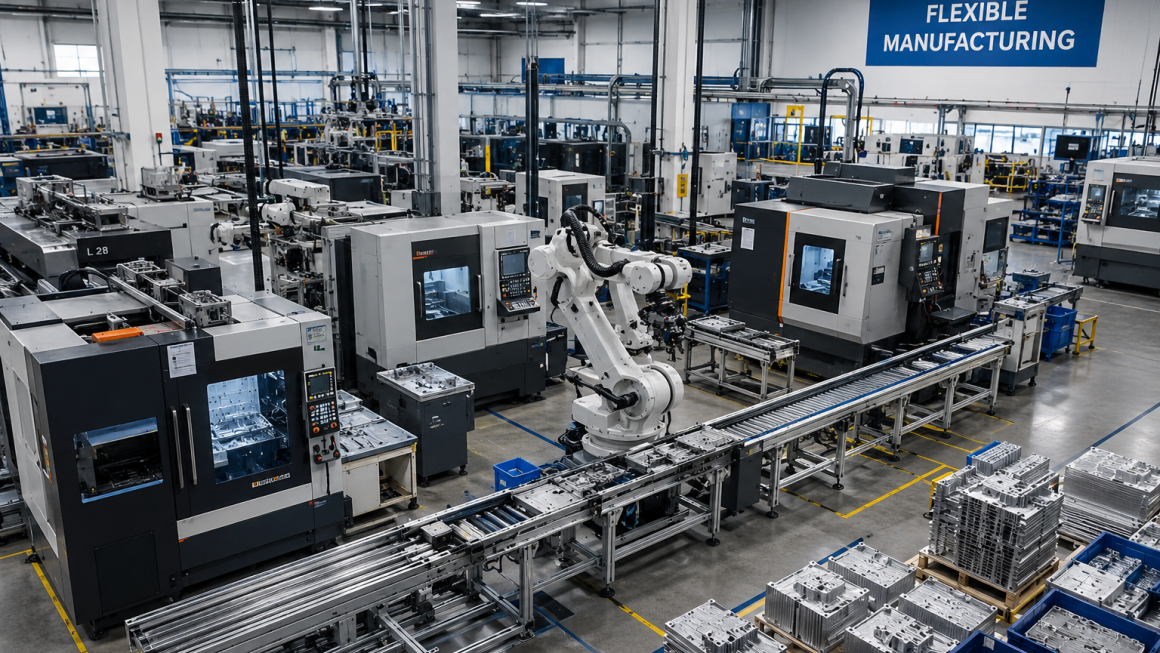
In this environment, manufacturing flexibility has become an important consideration. Flexible manufacturing does not necessarily mean higher production speed or larger production capacity. Instead, it refers to the ability to adapt manufacturing processes, production planning, and material selection to changing technical and commercial requirements while maintaining consistent quality.
This article discusses why flexible manufacturing is becoming increasingly relevant in AI infrastructure and examines how it may support product development, supply chain resilience, and engineering collaboration.
The Evolving Nature of AI Infrastructure
Modern AI infrastructure includes a wide range of products and systems, such as:
- AI servers
- GPU clusters
- High-performance computing (HPC) platforms
- Liquid cooling systems
- Edge AI devices
- Network equipment
- Power distribution systems
- Thermal management components
These products continue to evolve as processor performance increases and new system architectures are introduced.
Manufacturers are therefore required to accommodate changing designs while maintaining production consistency.
What Is Flexible Manufacturing?
Flexible manufacturing refers to production systems that can accommodate changes in product design, production volume, or manufacturing processes with relatively limited disruption.
Depending on the application, flexibility may include:
- Producing multiple product variants
- Adjusting production schedules
- Supporting prototype and pilot production
- Processing different material systems
- Integrating new manufacturing technologies
- Responding to changes in customer requirements
Rather than focusing on a single production objective, flexible manufacturing seeks to improve adaptability across different stages of product development.
Supporting Product Development
AI hardware development often involves several design iterations before commercial production.
Engineering teams may evaluate:
- Mechanical structures
- Cooling systems
- Material combinations
- Assembly methods
- Manufacturing processes
Manufacturing flexibility can support this development process by allowing design modifications without requiring an entirely new production strategy.
Pilot production, engineering samples, and limited-volume manufacturing are common examples of flexible manufacturing activities.
Accommodating Diverse Material Systems
AI infrastructure relies on a wide range of industrial materials.
Examples include:
- Aluminum alloys
- Steel
- Engineering plastics
- Carbon fiber composites
- Thermally conductive polymers
- Graphite materials
- Graphene-enhanced composites
- Carbon nanotube (CNT) formulations
Different materials often require different processing methods, equipment, and quality control procedures.
Manufacturing systems capable of handling multiple material categories may provide greater flexibility when product requirements evolve.
Responding to Changing Cooling Technologies
Thermal management continues to develop alongside AI computing performance.
Cooling solutions may include:
- Air cooling
- Cold plate cooling
- Liquid cooling
- Immersion cooling
- Hybrid cooling systems
Each approach may require different structural components, sealing methods, interfaces, and manufacturing processes.
Flexible manufacturing allows production systems to adapt more efficiently as cooling technologies continue to evolve.
Managing Product Variants
AI infrastructure products are rarely identical across all projects.
Customers may require differences in:
- Dimensions
- Mounting configurations
- Connector layouts
- Material specifications
- Surface treatments
- Mechanical interfaces
Manufacturing systems that support controlled product variation can help reduce engineering delays while maintaining production quality.
Supporting Supply Chain Resilience
Supply chain planning has become increasingly important for industrial manufacturers.
Material availability, transportation conditions, and regional sourcing strategies may change over time.
Flexible manufacturing may support resilience through:
Alternative Material Processing
Where technically appropriate, manufacturers may evaluate qualified alternative materials that satisfy engineering requirements.
Multiple Supplier Strategies
Using qualified suppliers from different regions may improve procurement flexibility.
Modular Production Planning
Production schedules may be adjusted according to customer demand, material availability, or project priorities.
These approaches do not eliminate supply chain challenges but may improve operational responsiveness.
Digital Manufacturing and Process Control
Modern manufacturing increasingly integrates digital technologies.
Examples include:
- Manufacturing execution systems (MES)
- Automated inspection
- Digital quality records
- Production monitoring
- Process data collection
Digital tools can assist manufacturers in tracking production consistency while supporting continuous process improvement.
For AI infrastructure products, traceability and documentation may become increasingly important throughout the product lifecycle.
Flexible Manufacturing for Advanced Materials
Advanced materials often require careful process development before large-scale production.
Examples include:
- Thermal interface materials (TIMs)
- Conductive composites
- Carbon-based materials
- Structural composite systems
- Functional coatings
Manufacturing flexibility allows engineers to evaluate different formulations, processing parameters, and production methods before establishing commercial manufacturing procedures.
This approach may help identify practical manufacturing considerations while supporting engineering validation.
Engineering Collaboration
Successful AI infrastructure projects often involve collaboration among multiple participants.
These may include:
- Material suppliers
- Component manufacturers
- Equipment integrators
- Design engineers
- System manufacturers
Flexible manufacturing can facilitate this collaboration by supporting engineering changes, prototype evaluation, and application-specific modifications during product development.
Future Trends
Several developments are expected to influence manufacturing flexibility in the coming years.
Increased Automation
Automation technologies continue to improve production consistency and reduce manual processing for repetitive manufacturing tasks.
AI-Assisted Manufacturing
Artificial intelligence is being explored for applications such as process optimization, predictive maintenance, and quality analysis.
Modular Production Systems
Manufacturing equipment designed with modular configurations may simplify future process adjustments.
Sustainable Manufacturing
Manufacturers are also evaluating methods to reduce material waste, improve resource utilization, and optimize production efficiency while maintaining product quality.
As AI infrastructure becomes more sophisticated, manufacturing systems must accommodate increasing product complexity, evolving material technologies, and changing customer requirements.
Flexible manufacturing provides an approach that emphasizes adaptability rather than simply production volume. By supporting multiple material systems, engineering iterations, pilot production, and controlled product variation, flexible manufacturing can contribute to more efficient product development and improved manufacturing responsiveness.
While every manufacturing environment has unique requirements, flexibility is becoming an increasingly important consideration for organizations involved in AI infrastructure, advanced materials, thermal management, and high-performance computing. Combined with sound engineering practices, quality management, and supply chain planning, flexible manufacturing supports the ongoing development of reliable and scalable AI technologies.
- Why flexible manufacturing matters in AI infrastructure
- Flexible manufacturing for AI hardware
- Manufacturing strategies for AI data centers
- Benefits of flexible production in AI infrastructure
- Advanced materials manufacturing for AI systems
- Pilot manufacturing and flexible production
- Manufacturing considerations for AI hardware
- Flexible production of thermal management components