


Understanding How Materials Stack Together to Enable Scalable AI Systems
AI Systems Are Built in Layers—So Are Materials
When discussing AI infrastructure, most conversations focus on chips, GPUs, or data center scale. But from an engineering perspective, AI systems are not just built in functional layers—they are built in material layers.
From the silicon die inside a GPU to the rack-level structure in a data center, every level introduces new materials, interfaces, and constraints.
👉 The real challenge is not any single material, but how these layers interact.
For platforms like aluminum4ai.com, this layered perspective is essential. The goal is not to promote specific materials, but to understand how materials behave across system levels.
A Layered View of AI Infrastructure


6
We can break AI infrastructure into five material layers:
- Chip Level (Die & Package)
- Module Level (GPU / Accelerator)
- Board Level (PCB & Interconnects)
- System Level (Server Node)
- Rack & Data Center Level
Each layer introduces different material priorities—and different engineering challenges.
1. Chip Level: Where Heat Begins
At the core of every AI system is the semiconductor die.
Key materials:
- Silicon (Si)
- Copper interconnects
- Die attach materials
- Underfill and packaging compounds
Challenges:
- Extremely high heat flux
- Localized hotspots
- Thermal expansion mismatch
At this level, materials must support:
👉 Precision, stability, and efficient heat extraction
Even small inefficiencies here propagate upward through the system.
2. Module Level: GPU Packaging and Thermal Spread


6
The GPU module integrates:
- Die + substrate
- Interposer (in advanced packaging)
- Heat spreader (IHS)
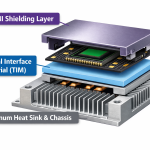
- Thermal Interface Material (TIM)
Material roles:
- Copper or nickel-plated heat spreaders
- TIM for interface optimization
- Advanced substrates for signal and thermal management
At this level:
👉 Heat must be spread and transferred, not just removed
This is where local thermal bottlenecks often emerge.
3. Board Level: Electrical and Thermal Pathways
The PCB (Printed Circuit Board) connects and powers the GPU.
Key materials:
- FR-4 or advanced laminates
- Copper layers (multi-layer routing)
- Solder materials
- Connectors
Challenges:
- Signal integrity at high speeds
- Power delivery stability
- Thermal dissipation across the board
As GPU density increases:
👉 Boards must handle higher current and tighter spacing, increasing both thermal and electrical stress.
4. System Level: The Role of Aluminum Structures


6
At the server level, materials shift toward:
- Aluminum (structures, heat sinks, cold plates)
- Copper (localized heat transfer, busbars)
- TIMs (interface layers)
Why aluminum dominates here:
- Good thermal conductivity
- Lightweight for dense deployment
- Scalable manufacturing
But performance depends on:
👉 how aluminum interfaces with other layers
Key considerations include:
- Surface finish
- Flatness
- Contact pressure
- Integration with TIMs
5. Rack Level: Scaling Materials Across Systems
At the rack and data center level, materials must support:
- Structural stability
- Thermal management at scale
- Power distribution
Typical materials:
- Aluminum frames
- Steel structures
- Copper or aluminum busbars
- Cooling system components
Challenges shift from component-level to:
👉 system-level efficiency and consistency
For example:
- Heat must be removed not just from one GPU, but from hundreds simultaneously
- Small inefficiencies multiply at scale
The Interfaces Between Layers: Where Problems Actually Occur
One of the most important insights:
Failures rarely occur within a material—they occur at the interfaces between materials.
Examples include:
- Chip ↔ TIM ↔ heat spreader
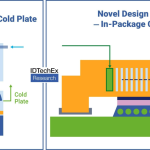
- GPU ↔ cold plate
- Cold plate ↔ cooling system
- Board ↔ connector
Common issues:
- Thermal resistance buildup
- Mechanical stress
- Misalignment
- Degradation over time
👉 This is why interface engineering is often more critical than material selection itself.
Why a Layered Perspective Matters
Without a layered view, optimization becomes fragmented:
- Chip teams optimize packaging
- Mechanical teams optimize structures
- Cooling teams optimize fluid systems
But:
👉 AI hardware performance is the result of all layers working together
A small inefficiency at each layer can combine into a major system limitation.
Aluminum4AI Perspective: Bridging Layers, Not Just Supplying Materials
For aluminum4ai.com, the value lies in connecting these layers:
1. Working Across Boundaries
Instead of focusing on a single material:
- Understand how aluminum interacts with TIMs
- How structures affect thermal performance
- How interfaces behave under real conditions
2. Supporting R&D Integration
- Prototype-level validation
- Interface testing
- Multi-material compatibility
3. Enabling Practical Engineering Decisions
Rather than asking:
❌ “What is the best material?”
The better question is:
👉 “What combination of materials works best in this system?”
Future Trends: From Layers to Integration
1. Tighter Coupling Between Layers
- Chip design will increasingly consider system cooling
- Structural design will influence thermal interface behavior
2. More Complex Material Stacks
Future AI systems will rely on:
- Hybrid materials
- Co-designed interfaces
- Multi-functional layers
3. Greater Importance of the “Middle Layer”
The gap between:
- Material science
- System engineering
will become more critical—and more valuable.
From Materials to Systems Thinking
AI infrastructure is not just built from components—it is built from layers of materials interacting across scales.
From chip to rack:
- Materials define the possibilities
- Interfaces define the efficiency
- Engineering defines the outcome
For aluminum4ai.com, this creates a clear role:
👉 Not to replace materials
👉 But to help them work together