

How Electromagnetic Interference (EMI) Protection Impacts Performance and Reliability
The Invisible Threat in AI Systems
As AI workloads become more intensive and GPU densities increase, electromagnetic interference (EMI) has emerged as a significant challenge. High-speed signals, dense power delivery, and closely packed components make modern AI hardware systems susceptible to EMI, which can lead to:
- Data errors or corruption
- Signal integrity issues
- Component degradation
- Reduced overall reliability
EMI shielding materials play a critical role in mitigating these risks. While often invisible in system diagrams, they are essential for maintaining performance in large-scale AI clusters.
What Are EMI Shielding Materials?
EMI shielding materials are designed to:
- Block, absorb, or redirect electromagnetic radiation
- Prevent interference between components or systems
- Maintain signal integrity and power stability
Common forms include:
- Conductive coatings or paints
- Metal foils and sheets (aluminum, copper, nickel alloys)
- Conductive polymers and composites
- Multi-layer EMI shielding gaskets and films
Why EMI Matters in AI Hardware
Modern AI hardware combines:
- High-frequency GPU and CPU operation
- Dense interconnects and power delivery
- Sensitive memory and networking components
Without proper shielding, EMI can:
- Introduce timing errors in memory or GPU communication
- Cause transient glitches in signal lines
- Reduce lifespan of sensitive electronic components
As AI servers scale up, small EMI effects can become system-wide reliability issues.
Material Considerations for EMI Shielding
Choosing the right material is not just about conductivity. Key factors include:
1. Conductivity and Shielding Effectiveness
- Higher conductivity metals (copper, aluminum) provide strong reflection
- Conductive polymers or composites may offer absorption and flexibility
2. Mechanical Properties
- Materials must conform to device form factors
- Gaskets or coatings must maintain contact over thermal cycling
3. Thermal Integration
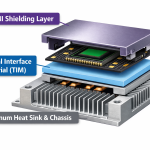
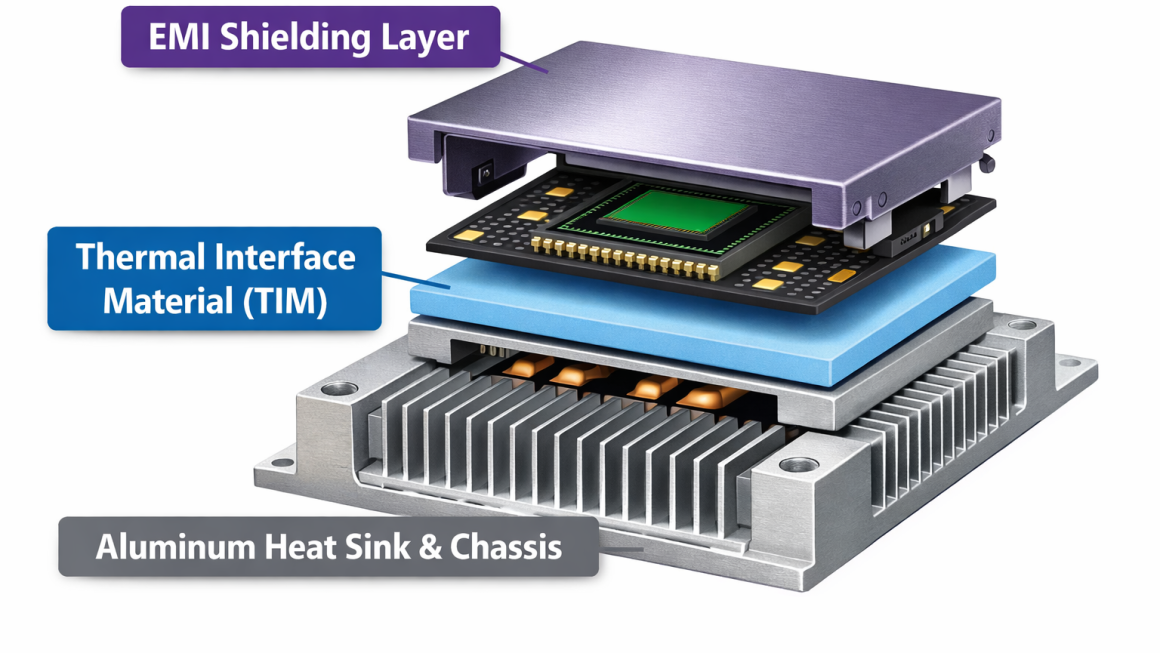
- Shielding layers often sit close to heat-generating components
- Materials must avoid introducing thermal bottlenecks
4. Compatibility with Manufacturing
- Coatings must be processable at scale or in small prototypes
- Metal foils must withstand handling and assembly without damage
Integration in AI Hardware Systems
EMI shielding is applied at multiple levels:
Chip and Module Level
- Shield sensitive GPU or HBM packages with conductive films or metal lids
- Use grounding paths to prevent local signal coupling
Board Level
- Copper pours or ground planes on PCBs
- Conductive coatings around connectors or high-speed lines
System and Rack Level
- Aluminum or copper panels
- Conductive gaskets between server enclosures
- Integration with airflow and cooling paths
Integration requires coordination across thermal, mechanical, and electrical domains. Poor integration can reduce both shielding effectiveness and system reliability.
Trade-Offs in EMI Shielding Design
Effective EMI protection must balance multiple factors:
- Weight vs Performance
- Heavier metal shields provide stronger protection but increase system mass
- Flexibility vs Conductivity
- Polymers and composites offer design flexibility but lower shielding than metals
- Thermal vs Electrical
- Shielding materials must not impede heat dissipation
- Cost vs Reliability
- High-performance alloys or multi-layer composites may increase cost but ensure long-term stability
Aluminum and Copper: The Core Materials
Aluminum and copper are often used because they offer:
- High conductivity
- Good thermal properties
- Lightweight (aluminum) or superior conductivity (copper)
Integration tips:
- Aluminum panels can serve dual purposes: structural support + EMI shielding
- Copper foils or mesh can focus on local hotspots or critical signal paths
Conductive Polymers and Composites
Advanced AI systems sometimes use:
- Metal-filled polymer coatings
- Graphene or carbon composites
Advantages:
- Conformable to complex shapes
- Can reduce assembly complexity
- Lightweight
Limitations:
- Lower absolute shielding effectiveness than metals
- May require multiple layers or hybrid designs
Aluminum4AI Perspective: EMI as a System-Level Problem
At aluminum4ai.com, EMI is approached from an engineering integration perspective:
- Focus on how shielding interacts with thermal and mechanical design
- Prototype-level validation and testing
- Coordination between chassis, board, and module design
Rather than promoting specific materials, the emphasis is on:
Ensuring materials work together effectively across multiple system layers
Future Trends in EMI Shielding for AI Systems
- Hybrid Materials
- Combining metals and composites for optimized performance and weight
- Integrated Shielding Designs
- Chassis, heat sinks, and shield layers designed as a unified system
- Simulation-Driven Engineering
- Using EMI modeling to guide material selection and placement
- Minimizing trial-and-error in prototyping
- Thermal-Compatible Shielding
- Materials that simultaneously manage EMI and contribute to thermal performance
EMI Shielding Is Critical, But Integration Is Key
In AI hardware, EMI shielding materials are essential for:
- Signal integrity
- System reliability
- Performance stability
However, shielding is not a standalone solution. Its effectiveness depends on:
- Proper integration with aluminum or copper structures
- Thermal and mechanical considerations
- System-level engineering decisions
For aluminum4ai.com, the role is clear:
- Support R&D and prototyping
- Focus on system-level optimization
- Enable materials and design to work together, not just supply shields
In the future, successful AI hardware systems will balance:
- Conductivity
- Mechanical performance
- Thermal management
- Weight
…all while ensuring electromagnetic compatibility.