

Artificial Intelligence infrastructure is often surrounded by hype. Headlines focus on faster models, larger datasets, and more powerful GPUs. Yet behind every breakthrough in AI lies something much less visible—but far more fundamental: reliable hardware infrastructure.
And at the foundation of that infrastructure are materials.
From server chassis to thermal interfaces, from conductive pathways to structural frames, the reliability of AI systems depends heavily on how materials are selected, integrated, and engineered. While new materials often generate excitement, experienced engineers follow a different principle:
Materials first, hype last.
1. Reliability Begins at the Physical Layer
AI systems operate continuously under intense conditions. Modern AI clusters generate enormous heat loads while maintaining strict uptime requirements.
Hardware components must therefore handle:
- Sustained high temperatures
- Thermal cycling from variable workloads
- Mechanical stress from dense hardware packing
- Long-term vibration within racks and facilities
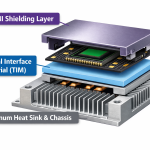
Materials play a critical role in managing these stresses. Aluminum structures, thermal interface materials, conductive coatings, and carbon-based enhancements are not simply supporting components—they are part of the reliability architecture.
If the material foundation is weak, system reliability inevitably suffers.
2. Thermal Stability Is the First Engineering Priority
Among all infrastructure challenges, thermal management remains the most critical. AI accelerators consume large amounts of power, and nearly all of that energy becomes heat.
Poor thermal design leads to:
- Performance throttling
- Component degradation
- Premature hardware failure
Materials influence thermal behavior in several ways:
- Heat spreading capability
- Thermal conductivity
- Interface resistance
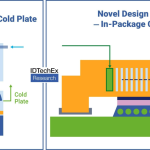
- Structural heat pathways
For this reason, aluminum remains a backbone material in many AI systems. Its balance of thermal conductivity, machinability, and cost efficiency makes it difficult to replace. Advanced carbon materials—such as graphite films or graphene-based solutions—may complement aluminum, but rarely replace it entirely.
Reliable infrastructure emerges from smart combinations of materials, not from a single breakthrough material.
3. Structural Integrity Supports System Longevity
AI racks are densely packed with heavy hardware modules. Over time, mechanical stability becomes a real concern.
Structural materials must provide:
- High stiffness-to-weight ratio
- Resistance to fatigue and vibration
- Long-term dimensional stability
Aluminum frame structures are widely used because they offer a practical balance between strength and weight. Proper structural design ensures that components remain aligned, cooling systems function correctly, and serviceability remains manageable over years of operation.
Reliability is not just electrical or thermal—it is also mechanical.
4. Manufacturing Consistency Matters More Than Novelty
Many emerging materials demonstrate impressive laboratory performance. However, large-scale infrastructure requires something different: repeatability.
Engineering teams prioritize materials that can deliver:
- Consistent quality across batches
- Stable supply chains
- Predictable processing behavior
- Scalable manufacturing compatibility
A material that performs exceptionally well in a laboratory environment may still fail to meet the demands of global AI hardware deployment.
The goal is not simply innovation. The goal is reliable innovation at scale.
5. Balancing Innovation with Engineering Discipline
Advanced materials—graphene, carbon nanotubes, and hybrid composites—can offer real advantages in specific applications. They may improve thermal spreading, reduce weight, or enable multifunctional structures.
But successful adoption requires disciplined evaluation:
- Does the material improve system performance?
- Does it integrate smoothly with existing processes?
- Can it be produced reliably at industrial scale?
If the answer to these questions is uncertain, experienced engineers proceed cautiously.
This is why infrastructure development tends to favor evolution rather than revolution.
6. The Long-Term View of AI Hardware Materials
As AI continues to expand globally, infrastructure demands will only increase. Data centers must handle greater computational density while maintaining energy efficiency and reliability.
Materials will play a growing role in enabling this transition. Hybrid structures, improved thermal pathways, and carefully engineered interfaces will help support the next generation of AI hardware systems.
Yet the guiding philosophy remains simple:
Reliable infrastructure is built on proven materials, thoughtful integration, and engineering discipline—not on hype.
In the world of AI infrastructure, the most impressive innovations are often invisible. They are found in the materials that quietly enable stable performance, efficient cooling, and long operational lifetimes.
Algorithms may drive artificial intelligence, but materials make it possible to run at scale.
When engineers design the hardware foundations of AI, they follow a principle that has guided industrial progress for decades:
Materials first. Hype last.