

Thermal management has become one of the most critical challenges in modern AI infrastructure. As AI accelerators grow more powerful, their thermal output increases significantly. A single high-performance GPU or AI chip can generate hundreds of watts of heat, and in large training clusters this heat must be managed continuously and reliably.
At the core of this challenge lies a key engineering decision: which materials should be used to move heat efficiently through the system?
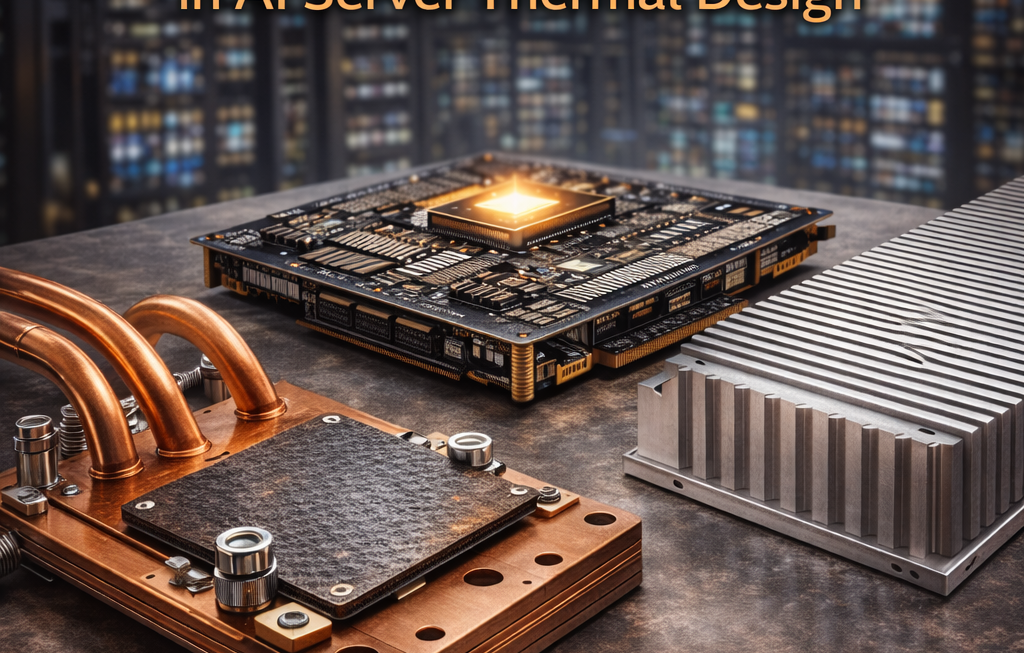
Two metals dominate thermal design in AI servers—aluminum and copper. Both have strong thermal properties, but they serve different roles within the hardware architecture.
Understanding how engineers choose between them helps explain how modern AI systems achieve stable and efficient cooling.
Thermal Conductivity: Copper Leads, but Context Matters
From a purely thermal perspective, copper performs better than aluminum. Copper has a thermal conductivity of roughly 390–400 W/m·K, while aluminum typically ranges around 200–230 W/m·K depending on the alloy.
This means copper can transfer heat faster within a solid structure.
Because of this property, copper is commonly used in components that require maximum heat transfer efficiency, such as:
- CPU and GPU cold plates
- Heat pipes and vapor chambers
- High-performance heat spreaders
- Direct-to-chip cooling interfaces
However, thermal conductivity alone does not determine the best material choice. Real-world hardware design must balance multiple factors simultaneously.
Weight and Structural Efficiency
One of the biggest differences between aluminum and copper is density.
Copper is significantly heavier than aluminum. In large AI server assemblies, this difference quickly becomes important. GPU servers already contain heavy components such as accelerators, power supplies, and cooling hardware.
Using copper for large structural components would dramatically increase the overall weight of the system.
Aluminum offers several advantages in this regard:
- Much lower density
- High strength-to-weight ratio
- Easier handling during assembly
- Reduced load on rack structures
For these reasons, aluminum is widely used in:
- Server chassis
- Structural frames
- Heat sink fins
- Rack components
These applications benefit more from aluminum’s lightweight structural performance than from copper’s higher thermal conductivity.
Manufacturing and Cost Considerations
Manufacturing scalability is another key factor in large-scale AI infrastructure.
Aluminum is highly compatible with common industrial processes such as:
- Extrusion
- CNC machining
- Sheet metal forming
- Die casting
These processes allow aluminum components to be produced efficiently and in large volumes. Aluminum also tends to have a lower raw material cost compared with copper, which can be important when thousands of servers are deployed in large data centers.
Copper, while highly conductive, is generally:
- More expensive
- Heavier
- Harder to machine in complex shapes
Therefore, copper is usually reserved for critical thermal interfaces, where its superior conductivity justifies the higher cost.
Hybrid Thermal Designs
In modern AI servers, engineers rarely rely on a single material. Instead, thermal systems are often designed using hybrid material approaches that combine the strengths of both metals.
For example:
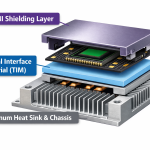
- A copper cold plate may contact the GPU directly to absorb heat quickly.
- Aluminum heat sinks may spread that heat across larger surfaces.
- Aluminum chassis structures help maintain airflow and structural integrity.
This layered approach allows systems to optimize both thermal performance and mechanical efficiency.
The result is a balanced design where copper handles localized heat transfer, while aluminum supports system-level cooling and structure.
The Role of Liquid Cooling
As AI accelerators continue to increase in power density, liquid cooling technologies are becoming more common in advanced data centers.
Even in liquid cooling systems, the aluminum-copper combination remains important.
Typical designs include:
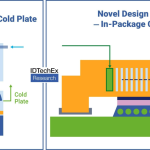
- Copper cold plates for direct chip contact
- Aluminum manifolds or structural frames
- Mixed-metal thermal pathways optimized for both weight and conductivity
Material compatibility and corrosion control become critical considerations in these systems, especially when coolant fluids are introduced.
Choosing the Right Material
The choice between aluminum and copper is not simply about which metal conducts heat better. Instead, engineers evaluate materials based on the specific role each component plays within the thermal system.
Key factors include:
- Thermal conductivity
- Weight and mechanical strength
- Manufacturing feasibility
- Cost efficiency
- Long-term reliability
In most modern AI hardware, the most effective designs combine both materials strategically.
Aluminum and copper each play essential roles in the thermal architecture of AI servers. Copper delivers superior heat transfer in critical interfaces, while aluminum provides lightweight structural support and scalable manufacturing advantages.
By combining these materials thoughtfully, engineers create cooling systems capable of supporting the demanding workloads of modern AI infrastructure.
As AI hardware continues to evolve, this balanced approach to material selection will remain central to reliable and efficient thermal design.