


In AI equipment and server infrastructure design, aluminum profiles are often considered a default structural material.
Their popularity comes not from novelty, but from a balance between strength, weight, manufacturability, and cost control.
However, treating aluminum profiles as a “simple choice” can lead to avoidable structural, thermal, and assembly issues later in the project lifecycle.
Core Engineering Logic
Aluminum profiles serve multiple roles in AI hardware systems:
- Structural support for racks and enclosures
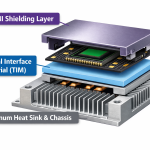
- Mounting interface for thermal components
- Alignment reference for precision assembly
From an engineering perspective, aluminum offers a unique combination:
- High strength-to-weight ratio, allowing scalable structures
- Good thermal conductivity, supporting passive heat dissipation
- Extrusion flexibility, enabling modular and repeatable designs
Unlike steel, aluminum reduces overall system mass and simplifies installation.
Compared with plastics, aluminum maintains dimensional stability under thermal cycling, which is critical in high-density AI environments.
Practical Engineering Considerations
When selecting aluminum profiles for AI equipment, designers should focus on:
- Profile geometry, not just alloy grade
- Load paths, especially in multi-bay rack systems
- Assembly tolerance, to avoid cumulative misalignment
- Surface treatment, balancing corrosion resistance and cost
- Future expandability, allowing component upgrades
Ignoring these factors often leads to overdesign or unnecessary cost escalation.
Advanced Material Perspective
In some advanced AI systems, engineers begin exploring carbon-based materials such as graphene or CNT-enhanced components for thermal or electrical functions.
At this stage, these materials are best viewed as design concepts rather than direct replacements for aluminum structures.
They may support localized performance improvements, but introduce new constraints in cost, scale, and manufacturability.
For most AI infrastructure projects today, aluminum remains the structural backbone.
Understanding aluminum profiles from an engineering standpoint allows designers to make informed decisions early, reducing risk and long-term cost.
Material selection is not about chasing the newest option, but about matching performance requirements with reliable, scalable solutions.
In the next article, we’ll look deeper into how different aluminum alloys impact AI infrastructure design.
Aluminum Profiles Basics for AI Equipment Designers – AI Infrastructure Aluminum Solutions