
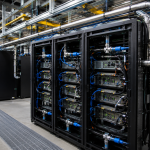
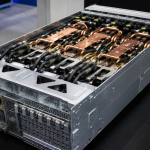
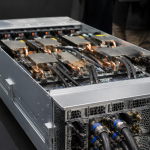
AI Infrastructure Is Entering a New Era
AI infrastructure has evolved far beyond traditional server architecture.
What once focused primarily on:
- CPU-based computing
- Standardized air-cooled servers
- Conventional data center layouts
has now transformed into highly specialized systems designed for:
- Massive AI model training
- Real-time inference
- High-density GPU deployment
- Advanced thermal management
Today’s AI infrastructure hardware systems are becoming:
- More power-dense
- More thermally complex
- More material-intensive
- More integrated across multiple engineering disciplines
👉 The evolution of AI hardware is no longer driven by compute alone—it is being shaped by cooling, structure, materials, scalability, and energy efficiency.
1. The Early Era: Traditional Data Center Hardware
Traditional enterprise infrastructure was designed around:
- CPUs
- Air cooling
- Moderate rack density
- Standard IT workloads
Typical characteristics included:
- Low to medium thermal loads
- Lightweight server configurations
- Simplified airflow management
At this stage:
- Cooling systems were secondary utilities
- Structural engineering requirements were relatively simple
👉 Infrastructure was largely standardized and modular.
2. The GPU Revolution Changed Everything
The rise of AI training dramatically increased demand for:
- Parallel computing
- GPU acceleration
- High-bandwidth interconnects
This transformed server architecture.
Modern AI servers now integrate:
- Multiple high-power GPUs
- Dense memory systems
- Advanced networking fabrics
- Large-scale power delivery systems
As a result:
- Power density increased rapidly
- Thermal output surged
- Mechanical complexity expanded
👉 AI hardware systems became significantly more specialized.
3. Thermal Infrastructure Became a Core System Layer
As GPU power consumption increased:
- Air cooling began reaching physical limitations
Modern AI accelerators may exceed:
- 700W
- 1000W+ per processor
This drove the rise of:
- Direct-to-chip liquid cooling
- Cold plate architectures
- Rack-level coolant distribution
- Immersion cooling systems
Cooling evolved from:
- Peripheral infrastructure
to:
- Core system architecture
👉 Thermal engineering is now central to AI hardware design.
4. AI Infrastructure Became a Materials Challenge
As hardware density increased, material limitations became increasingly visible.
AI systems now require materials that support:
- High thermal conductivity
- Lightweight structural performance
- Corrosion resistance
- Long-term reliability
This accelerated demand for:
- Structural aluminum
- Advanced composites
- Copper thermal systems
- Carbon-based materials such as graphene and CNTs
👉 Modern AI infrastructure is increasingly material-driven.
5. Rack-Level Engineering Became Strategic
Traditional server racks were designed for:
- Moderate airflow
- Balanced weight distribution
- Simpler thermal requirements
AI systems introduced:
- Heavy GPU servers
- Large liquid cooling loops
- Dense cable routing
- High-current power systems
This created new engineering challenges:
- Rack deformation risk
- Weight concentration
- Thermal expansion
- Fluid routing integration
👉 Rack engineering became part of overall AI system optimization.
6. Modular and Serviceable Architectures Emerged
As AI deployments scaled globally, serviceability became critical.
Modern AI hardware systems increasingly prioritize:
- Modular compute trays
- Quick-disconnect liquid cooling systems
- Replaceable thermal modules
- Tool-less maintenance designs
Benefits include:
- Faster deployment
- Reduced downtime
- Easier scalability
- Simplified maintenance operations
👉 AI infrastructure is evolving toward highly modular architectures.
7. Edge AI Expanded Infrastructure Requirements
AI is no longer limited to hyperscale data centers.
Edge AI deployments now include:
- Industrial automation
- Autonomous systems
- Telecom infrastructure
- Smart cities
- Medical systems
Edge AI hardware introduces new constraints:
- Limited physical space
- Restricted airflow
- Harsh environmental conditions
- Lower maintenance accessibility
This drives demand for:
- Compact thermal systems
- Lightweight structures
- Efficient materials
- Integrated cooling architectures
👉 AI infrastructure is becoming more distributed and application-specific.
8. Sustainability Is Reshaping Hardware Design
As AI energy consumption rises, sustainability becomes increasingly important.
Future AI hardware systems must address:
- Energy efficiency
- Material recyclability
- Cooling optimization
- Infrastructure lifecycle management
This is accelerating interest in:
- Lightweight aluminum systems
- Sustainable cooling technologies
- Advanced thermal materials
- Hybrid material architectures
👉 Sustainability is becoming a major engineering driver in AI infrastructure evolution.
9. The Future: Fully Integrated AI Infrastructure Systems
The next generation of AI infrastructure will likely combine:
- Compute hardware
- Thermal infrastructure
- Structural engineering
- Fluid systems
- Materials science
- Intelligent energy management
Future systems may include:
- Embedded thermal sensing
- Smart cooling optimization
- Hybrid liquid-air architectures
- Advanced material coatings
- AI-driven infrastructure monitoring
👉 The future of AI hardware is becoming a fully integrated engineering ecosystem.
AI Infrastructure Has Evolved into a Multi-Disciplinary Engineering Platform
The evolution of AI infrastructure hardware systems reflects a major shift in computing architecture.
AI hardware is no longer just about processors.
It now depends on:
- Thermal infrastructure
- Structural optimization
- Advanced materials
- Modular scalability
- Energy efficiency
As AI systems continue to grow in density and complexity, successful infrastructure design will increasingly depend on the integration of:
- Mechanical engineering
- Thermal engineering
- Materials science
- Scalable manufacturing
👉 The future of AI infrastructure belongs to companies that can engineer complete hardware ecosystems—not just compute devices.